 WhatsApp: +86 16626708626
 Email:
  Phone: +86 16626708626
Description
3. Key Technical Specifications
| Parameter | Specification |
|---|---|
| Manufacturer | General Electric |
| Product Series | Mark VI Speedtronic |
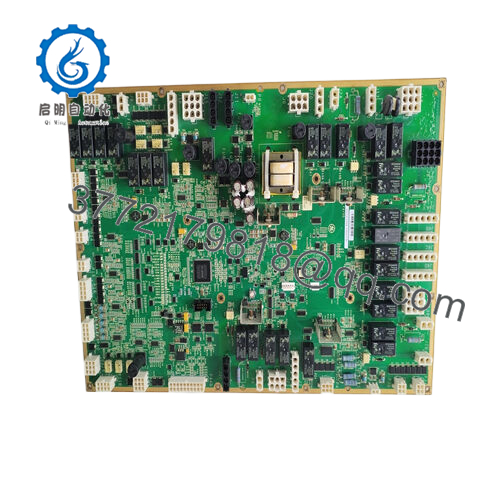
| Functional Designation | VME Vibration Monitor Board |
| Input Channels | 26 channels |
| A/D Converter | 16-bit resolution |
| Effective Resolution | 14 bits |
| Amplitude Accuracy | 0.1% |
| Compatible Probes | Proximity, Velocity, Acceleration, Seismic, Phase |
| Probe Power Supply | -24V DC (stepped down from -28V DC bus) |
| Transducer Load | 12 mA per transducer |
| Vibration Measurement Range | 0.001 to 10 g |
| Frequency Measurement Range | 10 Hz to 10,000 Hz |
| Speed Measurement Range | 0 to 100 mm/sec |
| Operating Temperature | -40°C to +70°C |
| Physical Dimensions | 33.0 cm (H) × 17.8 cm (W) × 2.1 cm (D) |
| Weight | 0.3 kg (board) / 2.7 kg (packaged) |
| Faceplate LEDs | 3 onboard indicators |
| Key IC Components | Xilinx Spartan FPGA, SRAM, RAM chips |
| Connectors | 6 connectors including 2 backplane connectors |
| Country of Origin | United States |
4. Product Introduction & Supply Chain Strategy
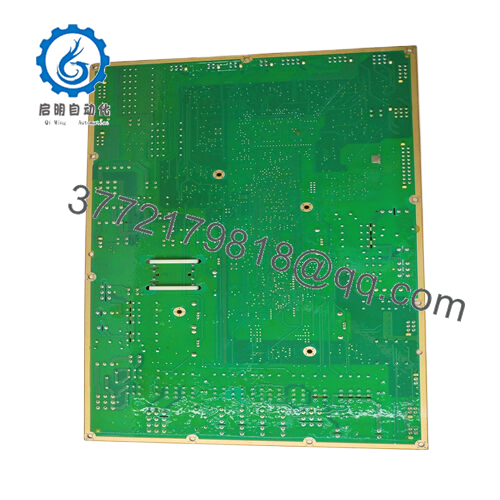
The GE IS200VVIBH1CAB is a VME Vibration Monitor Board designed for GE’s Mark VI Speedtronic turbine control system. It processes analog signals from up to 26 vibration probes — including proximity, velocity, acceleration, seismic, and phase sensors — connected via DVIB or TVIB terminal boards. The board performs high-speed signal conditioning and 16-bit A/D conversion, enabling precise monitoring of rotor axial position, eccentricity, differential expansion, and vibration amplitude for gas and steam turbine protection.As a New Surplus unit, this board represents critical inventory for plants operating legacy Mark VI systems. GE has discontinued active production of the IS200VVIBH1C series, making genuine new surplus the only reliable alternative to refurbished units with questionable provenance. The Total Cost of Ownership (TCO) calculation heavily favors new surplus: a refurbished vibration board may cost 20% less upfront, but latent capacitor aging and prior thermal stress create failure risks that could trigger catastrophic turbine damage or emergency shutdowns costing $500,000+ in lost generation revenue. This New Surplus unit delivers 10-15 years of service life with full warranty protection — essential insurance for baseload power generation assets where vibration monitoring is the primary defense against rotating machinery failure.
5. Installation & Configuration Guide
Stage 1: Pre-Installation (Prep & Safety)
- Lock-out/Tag-out: Isolate the Mark VI VME rack from all power sources — including 125V DC control power, 24V I/O power, and -28V probe power. Verify zero energy state with a calibrated multimeter.
- Documentation: Photograph the existing IS200VVIBH1CAB module — capture all cable labels, probe connections, and LED states. Document which probe types are connected to each channel.
- ESD Protocol: Attach grounded wrist strap to the rack chassis earth bar. The IS200VVIBH1CAB contains sensitive Xilinx FPGA and SRAM components vulnerable to static discharge.
- Tool Preparation: Phillips screwdriver, torque screwdriver (set to manufacturer specifications for VME card retainers), flashlight, and probe connection labels.
Stage 2: Removal
- Power Verification: Confirm all LEDs are extinguished and capacitors are fully discharged (minimum 5-minute wait after power-down).
- Connector Extraction: Carefully remove all probe signal cables from the faceplate. The board uses six connectors including two backplane connectors — label each before removal.
- Board Extraction: Release the VME card retainers. Grasp the board by the faceplate handles and pull straight out with steady pressure. Inspect backplane pins for bending or corrosion. The board contains over 50 integrated circuits — handle with extreme care.
Stage 3: Installation (Clone & Seat)
- VME Jumper Check: Verify any configuration jumpers match the removed board exactly. The IS200VVIBH1CAB may have factory-configured settings for probe type compatibility.
- Board Seating: Align the IS200VVIBH1CAB with the VME backplane slots. Press firmly until the card retainers engage — the faceplate should sit flush against the rack with no gaps.
- Probe Connection Replication: Reconnect all probe cables exactly as photographed. Ensure proper shield grounding for seismic and proximity probes to prevent noise interference.
Stage 4: Power-On & Testing
- Continuity Check: Verify no shorts between -28V probe power and signal returns before applying power.
- Power-Up Sequence: Apply control power first, then -28V probe power. Observe the 3 faceplate LEDs for proper initialization.
- Signal Verification:
- Verify vibration amplitude readings match baseline values for each probe
- Confirm frequency response from 10 Hz to 10,000 Hz using calibration shaker (if available)
- Test alarm thresholds via simulation to ensure protection logic integrity
- Documentation: Record serial number, installation date, and probe calibration data in the plant’s CMMS system.

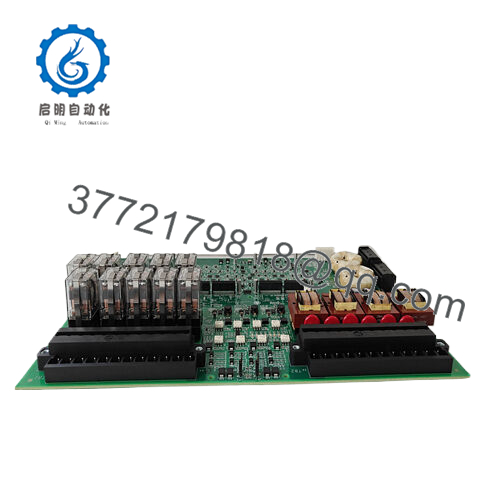
- IS200VVIBH1CAB
6. Firmware/Software Versions & Upgrade Notes
The IS200VVIBH1CAB is a signal processing board with embedded FPGA firmware for vibration signal conditioning. Integration with the Mark VI system requires attention to compatibility:
| Component | Compatibility Consideration |
|---|---|
| FPGA Firmware | Xilinx Spartan firmware must match the revision expected by the Mark VI control software |
| Mark VI Application Code | Vibration scaling factors and alarm setpoints must align with the IS200VVIBH1CAB’s 16-bit A/D range |
| Probe Compatibility | Firmware revision may affect support for specific Bently Nevada probe models |
| VME Bus Communication | Data format in dual-port memory must match the main processor card expectations |
Critical Warning: When replacing a failed IS200VVIBH1CAB, do not simultaneously upgrade Mark VI control software or FPGA firmware. Changing both hardware and software in the same maintenance window creates compound failure risk. If the existing board operates with FPGA firmware V2.x, maintain that version until the new board is proven operational. Document the firmware revision of the old module before removal — significant jumps in FPGA revision can affect signal scaling constants and alarm threshold calculations.
7. Frequently Asked Questions (FAQ)
Q: Why is this New Surplus unit priced higher than refurbished alternatives?
A: Refurbished vibration boards typically carry 30-60 day warranties and have unknown operational histories — many have been thermally stressed in high-temperature turbine enclosures for years. This New Surplus unit is factory-original with zero prior runtime, offering 10-15 years of service life and a 12-month warranty. The price premium eliminates the risk of a 1,000 “savings” triggering undetected vibration monitoring failure that leads to 2M+ in turbine damage.
Q: Is the IS200VVIBH1CAB still manufactured by GE?
A: No. The Mark VI IS200 series is in mature lifecycle phase, with the IS200VVIBH1CAB discontinued from active production. This is genuine New Surplus inventory — original OEM manufacturing, never deployed. For critical turbine applications, we recommend strategic hoarding of 1-2 spare units as buffer stock before availability tightens further.
Q: Can I hot-swap this board while the turbine is running?
A: Absolutely not. The IS200VVIBH1CAB carries -28V DC probe power and processes critical vibration protection signals. Hot-swapping risks arc faults, false vibration trips, and personnel injury. Always execute Lock-out/Tag-out procedures and de-energize the VME rack before replacement.
Q: How many vibration probes can this board support?
A: The IS200VVIBH1CAB supports up to 26 vibration probe channels. These can be any combination of proximity, velocity, acceleration, seismic, and phase probes connected via DVIB or TVIB terminal boards. For larger turbine monitoring requirements, multiple VVIB boards can be installed in the Mark VI rack.
Q: Will my existing Mark VI programming remain intact after replacement?
A: Yes. The IS200VVIBH1CAB is a signal processing board — it does not store application parameters or control logic. Your programming and vibration setpoints reside in the Mark VI main processor. However, you must ensure the replacement board’s A/D scaling and FPGA firmware are compatible with your existing vibration alarm thresholds.
Q: What is your warranty coverage?
A: We provide a 12-month replacement warranty against manufacturing defects. This covers functional failure under normal operating conditions (-40°C to +70°C, nominal voltage ranges). Physical damage, ESD damage from improper handling, or overvoltage events exceeding -28V probe power specifications are excluded. Each unit ships with a QC Test Report documenting full functional verification including A/D accuracy and channel response.
Q: How do I verify this is genuine GE and not counterfeit?
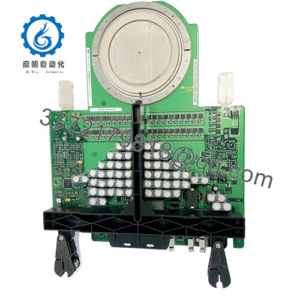
A: Each unit ships with OEM traceability documentation including the original GE packing slip reference and serial number verification. Authentic IS200VVIBH1CAB boards feature specific GE factory markings, the characteristic PCB layout with Xilinx Spartan FPGA, and proper component placement including front-and-back capacitors and inductor coils. We perform incoming inspection for counterfeit indicators including incorrect IC markings, anomalous solder mask colors, and non-GE FPGA programming.