 WhatsApp: +86 16626708626
 Email:
  Phone: +86 16626708626
Description
Key Technical Specifications
| Parameter | Value |
|---|---|
| Memory Capacity | 256 Mbyte SDRAM |
| Serial Bit Rate | 2.12 Gbaud |
| Transfer Rate | 43 to 170 Mbyte/s |
| Packet Size | 4 to 64 bytes dynamic |
| Nodes Supported | Up to 256 |
| Fiber Distance | Multimode 300 m max; single-mode 10 km |
| Latency | 450-500 ns between nodes |
| Interface | PMC (PCI 64/32-bit 33/66 MHz) |
| Power (PMC PIO) | 0.7 A typ +3.3 VDC; 0.7 A typ +5 VDC |
| Operating Temp | 0 °C to +65 °C |
| MTBF | 1,307,078 hours |
Product Introduction
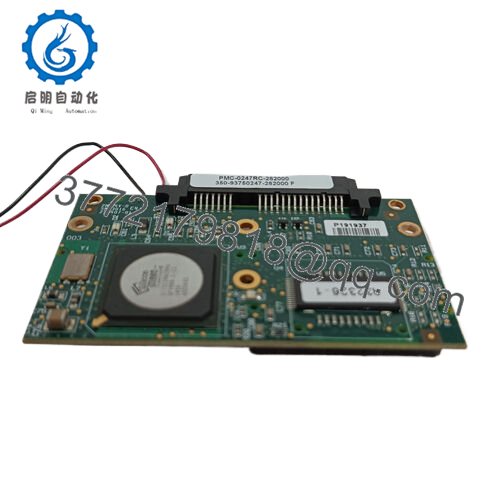
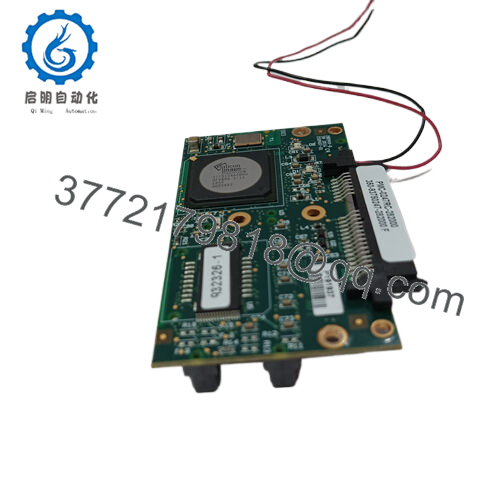
The GE PMC-5565PIORC-210000 is a PMC form factor Reflective Memory node card from the 5565 series. It enables deterministic real-time data sharing over fiber-optic networks in industrial control, simulation, and data acquisition systems. Install it on a PMC carrier for PCI or CompactPCI hosts.
This PIO-mode unit delivers 170 Mbyte/s sustained rates with 256 MB onboard SDRAM for local caching. Data writes broadcast transparently to all nodes without CPU involvement, supporting up to 256 systems. Engineers pick it for low-latency apps where Ethernet falls short, like process control and test stands. Verify carrier compatibility per Abaco specs.
Troubleshooting Quick Reference
| Symptom | Possible Cause | Relevance to this Part | Quick Check Method | Recommendation |
|---|---|---|---|---|
| No PWR LED | Power supply issue on carrier | ❌ Low | Measure +3.3 V / +5 V at PMC pins with Fluke 87 ni | Check carrier PSU and seating before swap |
| LINK LED off | Fiber connection fault | ✅ High | Inspect ST/LC connectors for dirt; test continuity with OTDR | Clean fibers; swap cable; confirm multimode 850 nm |
| ACT LED absent, no data flow | Network mismatch or node ID conflict | ✅ High | Read onboard switches for node ID (unique 1-256); ping via software API | Set unique ID per manual; cycle power |
| Data sync errors | Packet loss or rogue packets | ✅ Medium | Check error counters in driver software (bad data/rogue flags) | Enable redundant mode; monitor FIFO status |
| Interrupts not firing | Config or IRQ conflict | ❌ Low | Verify interrupt mapping in OS (VxWorks/Linux); test single node write | Review API calls; update firmware if available |
| High latency >500 ns | Overloaded FIFOs or ring overload | ✅ High | Monitor transfer rates vs. 170 Mbyte/s max; check node count | Reduce nodes or packet size; add hub like ACC-5595 |
Log symptoms with LED photos and driver error codes. Contact support if checks pass—rarely the card itself in clean installs.ni+1
Frequently Asked Questions (FAQ)
Is the PMC-5565PIORC-210000 hot-swappable?
No. Power down the carrier first. Hot insertion risks backplane damage or data corruption on the fiber ring.ni
What’s the difference between -210000 and -110000?
The -210000 has 256 MB SDRAM versus 128 MB, same PIO mode and multimode fiber. Both hit 170 Mbyte/s max. Confirm your app needs the extra memory.
New surplus—why cheaper than factory new?
These come from verified OEM excess inventory, factory sealed. We skip distributor markups but run full inbound QC. Same warranty, no usage.
Does it retain config across power cycles?
Node ID via onboard switches stays set. Memory clears on power-off—it’s volatile SDRAM. Back up app data elsewhere.
Compatible OS and carriers?
VxWorks, Linux, Windows. Needs PMC carrier like Abaco CP236 or 2BARCBD1 for PCI/CompactPCI. Check PCI 33/66 MHz match.
Firmware upgradable?
Yes, field-upgradeable per GE/Abaco tools. Current version documented on test report. Request details pre-purchase.
Lead time and warranty?
In stock now, ships 1-2 days. 1-year warranty covers full functional testing replacement. Test videos on request

- PMC-5565PIORC-210000
Quality Control SOP
We source GE PMC-5565PIORC-210000 units via OEM packing lists and customs docs. Run anti-counterfeit scans on serials and holograms, then visual check—no scratches, corrosion, or UV fade on SDRAM chips. Audit includes any certs tucked inside.
Mount on our in-house PCI carrier with genuine Abaco PMC adapter. Power up in isolated ring: verify PWR/LINK/ACT LEDs, run 24-hour burn-in with thermal cam on FPGA. Ping tests across simulated 4-node net at 170 Mbyte/s bursts; full I/O via LabVIEW API. Megger insulation at 500 V (>10 MΩ), ground continuity <1 Ω. Fluke 289 logs voltage ripple under load.ni
Read firmware via driver—V4.x typical—and photo switches. QC sign-off, ESD bag, double-box with desiccant. QC label dates it. Full report ships with unit; videos if you email serial.
Technical Pitfalls & Survival Guide
❗ Firmware Mismatch
Rare here since PIO mode locks protocols, but driver versions drift. I’ve debugged rings where VxWorks 6.9 choked on old API—spent a day recompiling. Note your host firmware pre-order; we document ours.
❗ Node ID / Switch Errors
Switches set ID 1-256—dupe kills the ring. Rookie move, but hits pros too. Snap photo of old card’s switches. Mirror exactly. No software override.
❗ Fiber / Wavelength Wrong
ST/LC expects 850 nm multimode—single-mode fries transmitter. Pinout fixed, but dirty ends drop LINK. Clean with 99% iso wipes; test loss <2 dB/km. Don’t mix modes.
❗ Power Budget Overrun
0.9 A max at 3.3 V—add two cards and your carrier browns out. Tally backplane draw, leave 20% headroom. Measured many overruns tripping PSUs
❗ ESD Kill
Handled one sans strap—FPGA let smoke out on first power-up. Winter static worst. Grounded wrist strap mandatory, even bench-testing.
Hit these checks, cut rework by 90%. Field swaps go smooth.