 WhatsApp: +86 16626708626
 Email:
  Phone: +86 16626708626
Description
3. Key Technical Specifications
| Parameter | Value |
|---|---|
| Channels | 32 differential or single-ended low-level analog inputs |
| Input Type | Differential or single-ended (configurable per channel) |
| Full-Scale Input Range | 5 mV to 10 V (programmable) |
| Typical Applications | Temperature transducers, pressure transducers, low-level analog signals |
| Current Loop Input | 4-20 mA optional (requires termination) |
| High-Level Analog Output | Buffered (for external monitoring/recording) |
| Isolation (Channel-to-VMEbus) | 500 VDC |
| Isolation (Channel-to-Channel) | 500 VDC (typical) |
| Input Impedance | High impedance (>1 MΩ) |
| Common-Mode Rejection | >80 dB (typical) |
| Normal-Mode Rejection | >60 dB at 50/60 Hz |
| Accuracy | ±0.1% of full scale (typical, after calibration) |
| Offset Drift | <5 μV/°C |
| Gain Drift | <25 ppm/°C |
| Bandwidth | DC to 10 kHz (typical) |
| Filter | Software-configurable low-pass filter |
| Form Factor | Single-slot 6U VME |
| Dimensions (H×D) | 9.2 in × 6.3 in (234 × 160 mm) |
| Operating Temperature | 0 to +55°C |
| Storage Temperature | -20 to +85°C |
| Power Supply | +5V, ±12V (VMEbus backplane) |
| Power Consumption | ~10-15 W |
| Weight | ~0.4 kg |
| Connector Type | 2× 50-pin IDC or screw terminal (per channel group) |
4. Product Introduction
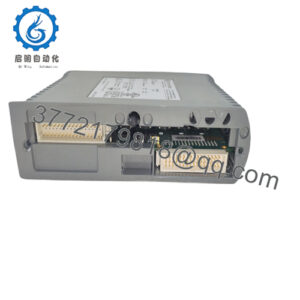
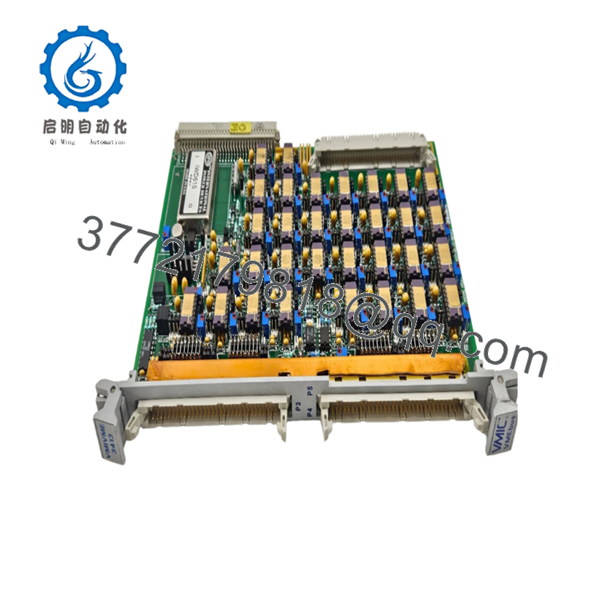
The GE VMIC VMIVME-3413 is a 32-channel signal conditioning board for VMEbus-based industrial control and data acquisition systems. It is designed to accept low-level differential or single-ended inputs directly from temperature and pressure transducers, thermocouples (with external conditioning), or any other low-level analog signal source.
This module stands out for its wide full-scale input range (5 mV to 10 V, programmable per channel), 32-channel density in a single-slot 6U form factor, and 500 VDC isolation from VMEbus, which protects the backplane from field-side transients and ground loops. The optional 4-20 mA current loop input and buffered high-level analog outputs make it versatile for process control, plant monitoring, and embedded automation applications where transducer signals must be conditioned before ADC conversion.

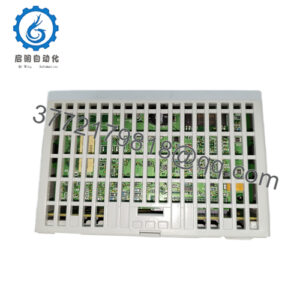
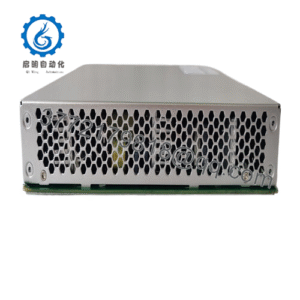
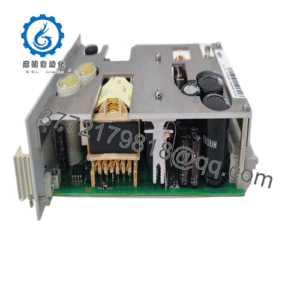
- VMIVME-3413
5. Troubleshooting Quick Reference
| Symptom | Possible Cause | Relevance to this Part | Quick Check Method | Recommendation |
|---|---|---|---|---|
| No LEDs on power-up | VMEbus backplane power failure or incorrect slot | ❌ Low | Measure +5V, +12V, -12V at backplane connector with Fluke multimeter | Check PSU and crate power before replacing; verify board is firmly seated in single slot |
| Board not detected by CPU | Slot address misconfiguration or VMEbus timeout | ⚠️ High | Read VMEbus controller diagnostic buffer; check board presence register | Match slot address to system config; reseat module firmly |
| All channels read 0 or noise | Input wiring fault or gain/offset calibration error | ⚠️ High | Inject known 100 mV reference signal; measure output at ADC | Verify wiring polarity; check calibration constants; recalibrate if drift >0.1% FS |
| Single channel reads erroneous values | Channel input damage or conditioning circuit fault | ⚠️ High | Inject known signal to suspect channel; compare with adjacent channels | Isolate bad channel; if >2 channels fail, replace entire board |
| High noise on all readings | Ground loop or insufficient shielding | ⚠️ High | Oscilloscope on input terminals; check for 50/60 Hz hum | Use shielded twisted-pair cable; verify single-point grounding; enable low-pass filter |
| Drift over time | Temperature effect or calibration drift | ⚠️ Medium | Run self-calibration routine; measure at known reference voltage | Recalibrate board; verify operating temperature <55°C; check for thermal hot spots |
| Current loop doesn’t read 4-20 mA | Termination resistor missing or wired incorrectly | ⚠️ High | Measure resistance across input terminals (should be ~250Ω for 4-20 mA) | Install 250Ω termination resistor; verify 2-wire vs 4-wire transmitter wiring |
Note: If diagnostics are inconclusive, contact technical support with photos of the module, diagnostic logs, wiring diagrams, and multimeter readings. Test videos with channel-by-channel verification available upon request.
6. Frequently Asked Questions (FAQ)
Q: Is this VMIVME-3413 still being manufactured by GE?
A: No, this is an obsolete model. GE Fanuc automation operations were absorbed into GE Electrification, and VMIC VMEbus signal conditioning boards are no longer in active production. What we stock is New Surplus (never used, original packaging) or Professionally Refurbished units tested per SOP. Lead times depend on available inventory.
Q: Does this board work directly with thermocouples?
A: No, this board is designed for low-level voltage inputs (5 mV to 10 V). Thermocouples produce millivolt signals but require cold-junction compensation and linearization. Use an external thermocouple transmitter or signal conditioner to convert thermocouple to 0-10 V or 4-20 mA, then connect to the VMIVME-3413. Don’t wire a thermocouple directly to the input terminals—you’ll get garbage readings without cold-junction compensation.
Q: Can I hot-swap this module in a running VME crate?
A: No, it’s not hot-swappable. The VMEbus specification for this board does not support hot-plug. Power down the crate before inserting or removing the module. Hot-plug can damage the analog front-end conditioning circuits. I’ve seen a board fail immediately after hot-plug because the input amplifiers latched up. Use a grounded wrist strap, and kill the power first.
Q: How do I configure differential vs. single-ended mode?
A: Channel configuration is set via software registers, not DIP switches. The board supports 32 single-ended channels or 16 differential channels (channels paired internally). In your application software, set the channel mode register before starting acquisition. Take note of your old board’s configuration before removal. Mirror the exact settings on the new unit. It’s the most common mistake—running differential mode when you wired single-ended, getting garbage readings. Document your config before you touch anything.
Q: What’s the difference between this and an ADC board like VMIVME-3114?
A: The VMIVME-3413 is a signal conditioning board (no ADC)—it conditions and isolates analog signals before they go to an ADC board. The VMIVME-3114 is a 12-bit ADC board that converts conditioned analog signals to digital. You typically use them together: VMIVME-3413 conditions transducer signals, then VMIVME-3114 (or similar ADC) digitizes them. If your system already has an ADC, you need the 3413 for transducer interfacing. If you’re replacing a failed board, check which one is actually faulty.
Q: Can I use this for 4-20 mA current loop inputs?
A: Yes, the VMIVME-3413 supports optional 4-20 mA current loop with proper termination. You need to install a 250Ω precision termination resistor (creates 1-5 V drop for 4-20 mA), then wire the transmitter in series. Verify your board revision supports current loop (some early revisions are voltage-only). For 2-wire transmitters, ensure the loop power supply is isolated from the VMEbus ground. Don’t assume current loop is enabled—check your board’s jumper settings and software config.
Q: What’s the warranty, and what does it cover?
A: All units come with a 1-Year Warranty covering functional failures under normal operating conditions. It does not cover damage from overvoltage, ESD mishandling, or improper calibration. Every board is tested on an in-house VME test rack with channel-by-channel verification at multiple voltage levels. Test reports with calibration data are available upon request.
Q: Why is this cheaper than buying from the OEM factory?
A: Because the OEM no longer manufactures it. You’re buying surplus stock from closed production lines or decommissioned systems. The price reflects obsolete status, not compromised quality. Every unit undergoes our full inspection SOP: inbound traceability, live VMEbus functional testing, channel-by-channel signal conditioning verification, electrical parameter testing, and ESD-safe packaging. Test videos are available if you ask.
Q: Will this work with my existing VMEbus controller from a different manufacturer?
A: Yes, as long as your controller follows the ANSI/VITA 1 VMEbus standard and supports single-slot 6U boards. The VMIVME-3413 uses standard VMEbus registers for configuration. However, verify your software has drivers for VMIC signal conditioning boards and that the VMEbus backplane provides stable ±12V rails (critical for analog accuracy). Check your rack’s current budget before installing.
Q: Do I need calibration after installation?
A: Refurbished units come with a factory calibration report showing offset, gain, and linearity errors at 25°C. New Surplus units may come with the original OEM certificate if packaging is intact. For critical applications (process control, ISO compliance), run a field calibration after installation using known reference voltages. Recalibrate annually or if you notice drift >0.1% full scale. Full calibration certificates are available upon request for an additional fee.