 WhatsApp: +86 16626708626
 Email:
  Phone: +86 16626708626
Description
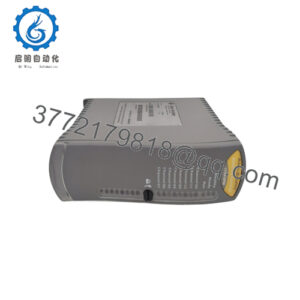
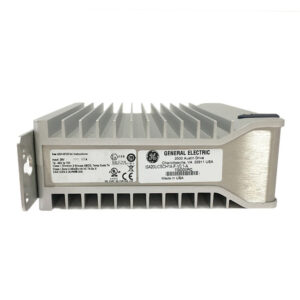
The GE VMIVME-4100 is a cornerstone component in high-precision industrial systems that require the analog reproduction of digital control signals. In sectors such as aerospace simulation, automated test equipment (ATE), and complex chemical processing, the ability to command hardware with exact voltage or current levels is the difference between a successful operation and a system-wide failure. You will typically find the GE VMIVME-4100 integrated into VMEbus-based racks where it serves as the interface between the digital brain of the controller and physical actuators, such as hydraulic valves, motor drives, or analog gauges. In a turbine testing facility, for example, the GE VMIVME-4100 is used to simulate sensor inputs or to drive precision throttle controls that must respond with microsecond accuracy. These environments are often characterized by high levels of electromagnetic interference and the need for long-term signal stability. The robust output stage of the GE VMIVME-4100 is specifically designed to maintain its calibrated accuracy even when operating in the proximity of high-power switching equipment. It is widely used in industrial automation for closed-loop control applications where “drifting” signals could lead to dangerous pressure build-ups or mechanical over-stress.
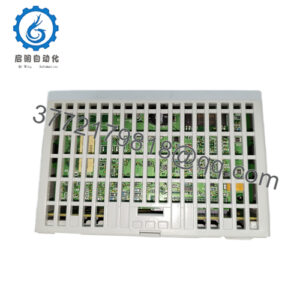
Technically classified as a 12-bit Digital-to-Analog Converter (DAC) board, the GE VMIVME-4100 is a versatile member of the VMIC legacy product line, now supported under the GE Automation umbrella. It functions as a high-density output module, typically providing 16 or 32 independent analog channels within a single VME slot. Within a control system architecture, the GE VMIVME-4100 resides on the VME backplane, receiving digital commands from the host processor and converting them into precise electrical levels. For engineers and system integrators, the value of the GE VMIVME-4100 lies in its software-configurable nature; many versions allow for the selection of different output ranges, such as 0 to +10V, ±5V, or ±10V, without the need for manual hardware adjustments. This flexibility makes the GE VMIVME-4100 an ideal choice for multi-purpose test benches where the requirements for the Unit Under Test (UUT) may change from one day to the next. The board is designed to be fully transparent to the VMEbus, appearing as a block of memory-mapped registers that can be written to with minimal software overhead.
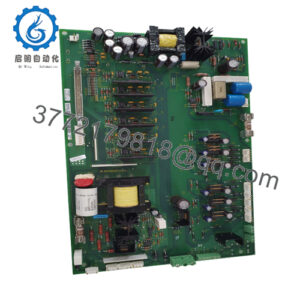
Reliability and precision are the defining characteristics of the GE VMIVME-4100 hardware. Each channel is typically equipped with its own dedicated DAC or a high-speed multiplexed arrangement that ensures minimal crosstalk and maximum signal integrity. The functional performance of the GE VMIVME-4100 is highlighted by its fast settling time, which allows the control system to make rapid adjustments to the process without introducing oscillations or instability. Furthermore, the board often includes onboard calibration constants stored in non-volatile memory, ensuring that the GE VMIVME-4100 remains accurate over its entire operating temperature range. The hardware design is optimized for thermal management, using high-grade components that resist the “aging” effects common in analog circuitry.
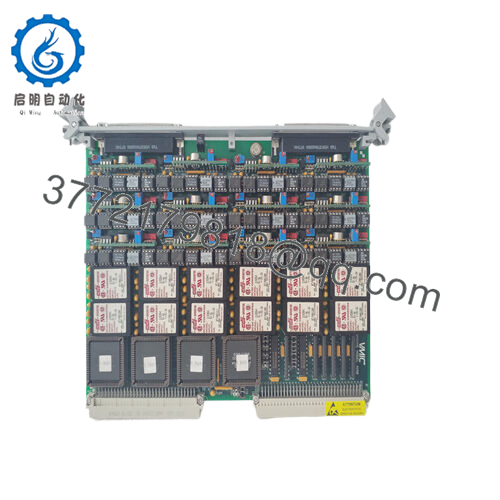
- VMIVME-4100
Compatibility is another major strength, as the GE VMIVME-4100 follows standard VMEbus specifications, allowing it to coexist with a wide variety of CPUs and digital I/O modules from different manufacturers. The ruggedness of the GE VMIVME-4100 is evidenced by its widespread use in military and defense simulators, where it must withstand continuous operation in demanding environments. For long-term reliability, the module features built-in self-test (BIST) capabilities, allowing the host system to verify the health of the analog outputs during the boot sequence or as part of a background diagnostic routine. This proactive error detection is essential for maintaining the safety margins required in heavy industrial applications.
| Parameter | Value |
| Model | GE VMIVME-4100 |
| Brand | GE Automation / VMIC |
| Type | Analog Output Module (DAC) |
| Resolution | 12-Bit Digital-to-Analog |
| Number of Channels | 16 or 32 Channels (Version Dependent) |
| Output Ranges | ±10V, ±5V, 0 to 10V, 0 to 5V |
| Power Supply | +5V and ±12V (or ±15V) from VME Backplane |
| Operating Temperature | 0 to +55 Degrees Celsius |
| Mounting | Standard 6U VMEbus Slot |
| Settling Time | Typically 10 to 30 Microseconds |
| Certifications | CE, UL, RoHS (on newer revisions) |
| Environmental Rating | Industrial Grade |
VMIVME-4105 – High-resolution 16-bit version for even greater precision.
VMIVME-3122 – Companion analog input module for high-speed data acquisition.
VMIVME-2536 – Digital I/O board frequently paired with the GE VMIVME-4100 in control racks.
VMIVME-7750 – VME Single Board Computer often used as the primary controller for this DAC.
VMIVME-4116 – A specialized version with increased current drive capabilities for heavy loads.
VMIACC-0582 – External termination panel and cable assembly for easy wiring to the GE VMIVME-4100.
Installation of the GE VMIVME-4100 requires a clear understanding of the VMEbus addressing scheme. Before inserting the module, verify the base address settings via the onboard jumpers to ensure they match the memory map defined in your software drivers. Proper shielding of the analog output cables is mandatory; use twisted-pair, shielded cabling and ensure the shields are grounded at a single point to prevent ground loops that could introduce noise into the GE VMIVME-4100 signal path. Always ensure the VME chassis is powered down before installing or removing the board to avoid damaging the sensitive CMOS components.
Maintenance for the GE VMIVME-4100 is centered on periodic calibration checks. While the board is designed for stability, we recommend a yearly verification of the output voltages against a NIST-traceable voltmeter to ensure the GE VMIVME-4100 remains within its specified tolerance. Keep the VME chassis air filters clean to ensure the forced-air cooling effectively manages the heat generated by the analog output drivers. If a channel appears to be stuck or drifting, use the onboard diagnostics to isolate whether the issue lies with the GE VMIVME-4100 hardware or the downstream wiring.