WhatsApp: +86 16626708626
 Email:
  Phone: +86 16626708626
Description
Key Technical Specifications
| Parameter | Value |
|---|---|
| Model | CC-PUIO31 |
| Manufacturer | Honeywell |
| System | Experion PKS Series C |
| Module Type | Universal Process I/O / UIO-2 |
| I/O Channels | 32 |
| Channel Configuration | AI, AO, DI, DO |
| Analog Input | 0–20 mA / 4–20 mA |
| AI Resolution | 16 bit |
| AI Input Impedance | 250 Ω |
| AI Input Scan Rate | 10 ms |
| AI Accuracy | 0.1% full-scale at 23.5 ± 2 °C |
| AI Accuracy, −40 to +70 °C | 0.25% full-scale |
| Analog Output | 4–20 mA |
| AO Resolution | 12 bit |
| AO Maximum Resistive Load | 825 Ω at 20 mA / 24 V supply |
| AO Response Time | 0.25 ms non-HART; 80 ms HART mode |
| Digital Input | 32 channels maximum |
| DI SOE Resolution | 1 ms |
| DI Open-Wire Detection | Supported |
| Pulse Input | Any 4 channels |
| Pulse Frequency | 0–15 kHz |
| Minimum Pulse Width | 25 µs |
| Digital Output Type | Solid-state source |
| DO Current | 1 mA minimum to 0.5 A maximum/channel |
| DO Maximum Module Current | 9 A |
| HART | HART 7 |
| HART Modem | One modem per channel |
| Isolation | No system-to-field isolation specified in the function matrix |
| Operating Temperature | −40 to +70 °C module ambient |
| Non-Redundant IOTA | CC-TUIO31, 9 in |
| Redundant IOTA | CC-TUIO41, 12 in |
Honeywell’s Series-C specification defines CC-PUIO31 as a 32-channel universal I/O module. Each channel can be configured for analog input, analog output, digital input, or digital output; any four channels can also be configured for pulse input.
For analog input, Honeywell specifies 16-bit conversion, 0–20 mA or 4–20 mA operation, 10 ms input scanning, and 250 Ω input impedance. The analog-output section specifies 12-bit resolution and 4–20 mA output.
The digital-output section specifies a solid-state source output with a maximum of 0.5 A per channel and 9 A maximum for the module, subject to channel configuration and operating-temperature limitations. Honeywell also notes that a DO channel configured on the UIO can report an “OP Fail” or line-monitoring fault when load current is below 20 mA.
Product Introduction
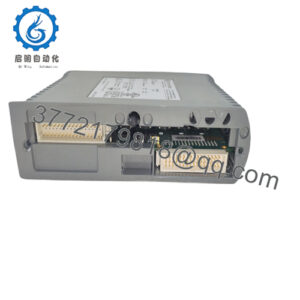
The Honeywell CC-PUIO31 is a 32-channel Universal Input/Output module for Experion PKS Series C systems. Each channel can be configured in software as an analog input, analog output, digital input, or digital output, while any four channels can provide pulse-input functionality. HART 7, open-wire detection, 1 ms SOE, and per-channel FAILOPT are supported.
This UIO-2 architecture is useful where the final signal mix is not fixed during cabinet engineering or where one spare module needs to cover several signal types. It is not simply a generic mixed-signal I/O card; the exact Experion release, IOTA, channel configuration, and field wiring must be verified before replacement.
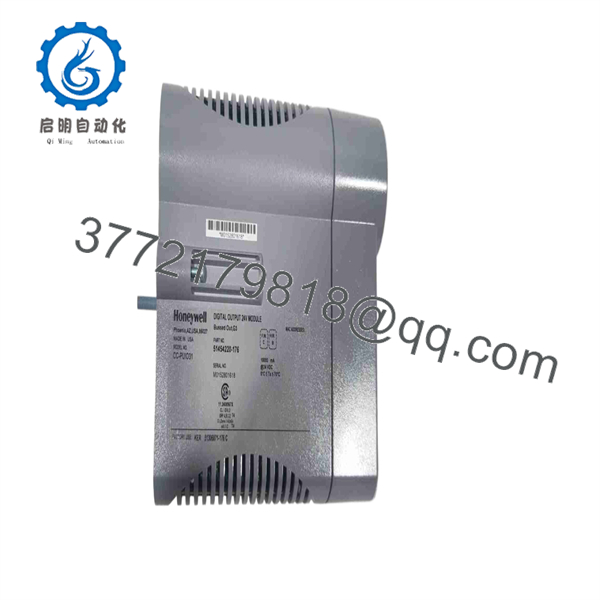
CC-PUIO31
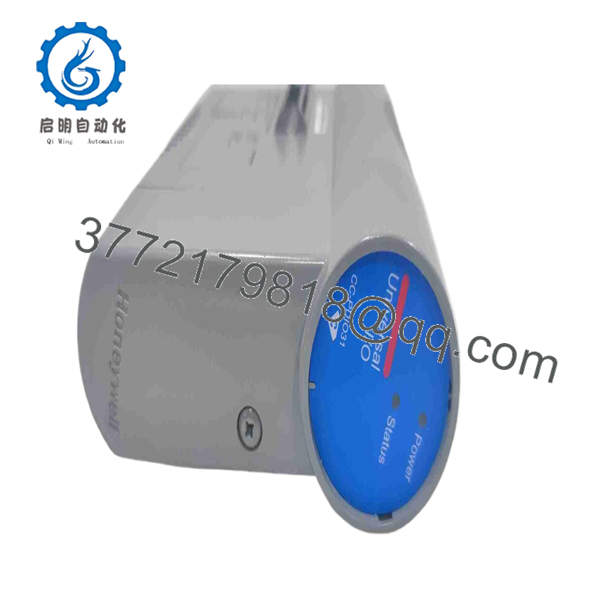
CC-PUIO31
Installation & Configuration Guide
Stage 1: Pre-Installation Preparation — About 5–10 Minutes
⚠️ Safety First: Notify operations, establish the approved process safe state, and follow the site’s LOTO procedure. Do not remove the CC-PUIO31 from an energized cabinet unless the installed Honeywell architecture and site procedure explicitly authorize that operation.
Tools Required:
- ESD wrist strap
- PH1 screwdriver where applicable
- Calibrated digital multimeter
- Wire labels
- Smartphone or camera
- Approved Experion PKS engineering documentation
Data Backup:
- Record the complete CC-PUIO31 label and ordering number.
- Record the hardware revision.
- Photograph the module and IOTA.
- Photograph both terminal levels and all field wiring.
- Identify whether the IOTA is CC-TUIO31 or CC-TUIO41.
- Export or document the current I/O channel configuration.
- Record which channels are AI, AO, DI, DO, SOE, and pulse inputs.
- Record HART-enabled channels.
- Record FAILOPT behavior on critical output channels.
- Verify the installed Experion release before removing the old module.
⚠️ The channel configuration is the critical data. With a universal I/O module, knowing only that “channel 12 is an input” is not enough. Record the exact signal type, range, HART status, SOE status, field wiring, and output fail-state where applicable.
Honeywell identifies CC-PUIO31 as the replacement for the phased-out CC-PUIO01 for greenfield and brownfield expansion with Experion R432 and above.
Stage 2: Removing the Old Module — About 5 Minutes
- Confirm the affected control loop or equipment is in its approved maintenance state.
- Remove the applicable retaining hardware.
- Photograph the module and IOTA before disturbing the wiring.
- Label every field conductor.
- Identify the channel number for every wire.
- Disconnect field wiring without pulling on the conductors.
- Release the module retention mechanism.
- Pull the IOM straight out from the IOTA.
- Inspect the IOTA connector for bent contacts, contamination, or mechanical damage.
⚠️ Keep the old module until commissioning is complete. If one channel behaves unexpectedly, the old module and its label are valuable references.
Stage 3: Installing the New Module — About 5 Minutes
- Verify CC- and the complete ordering number.
- Confirm the replacement hardware revision is appropriate for the installed Experion release.
- Confirm the IOTA is CC-TUIO31 for non-redundant operation or CC-TUIO41 for redundant operation.
- Attach the grounded ESD wrist strap.
- Inspect the replacement connector.
- Align the module with the IOTA.
- Seat the module evenly without forcing the connector.
- Secure the module.
- Reconnect field wiring according to the photographs and approved drawings.
- Verify shields and commons before applying power.
Self-Checklist:
- CC- model verified
- Complete ordering number verified
- Experion release checked
- CC-TUIO31 / CC-TUIO41 verified
- 32 channel assignments backed up
- AI/AO/DI/DO configuration documented
- HART channels documented
- SOE channels documented
- Pulse channels documented
- FAILOPT settings documented
- Field wiring secured
Stage 4: Power-On & Testing — About 10–15 Minutes
- Inspect the installation before energizing the I/O.
- Check for accidental shorts on field circuits.
- Restore cabinet power using the approved procedure.
- Check module status indications.
- Verify that the Experion system recognizes the UIO module.
- Compare the configured channel types against the backup.
- Test representative AI channels using a calibrated current source.
- Test representative AO channels with an appropriate loop/load simulator.
- Test DI channels using controlled 24 VDC/contact simulation.
- Test representative DO channels with an appropriate load.
- Verify SOE operation where configured.
- Verify pulse input operation where configured.
- Confirm HART communication on HART-enabled analog channels.
- Check module and channel diagnostics.
- Confirm FAILOPT behavior on critical outputs before returning the process to normal operation.
⚠️ Do not test a 0.5 A DO channel by shorting it deliberately. Honeywell specifies short-circuit protection, but commissioning should use a controlled load and the documented electrical limits rather than using a fault as a functional test.
Technical Pitfalls Worth Checking
1. ⚠️ Experion Release Compatibility
This is the first software check I would make. Honeywell’s current lifecycle documentation identifies CC- as the recommended replacement for the phased-out CC-PUIO01 with Experion R432 and above. Do not assume an older Experion installation can accept CC- without checking its supported release.
2. ⚠️ CC- Is Not a Simple One-for-One Wiring Replacement
The whole point of UIO-2 is that the channel function is configurable. A replacement therefore requires restoration of the configuration, not just the physical wiring. A channel previously used as 4–20 mA AI cannot be assumed to retain that function merely because the same terminal is wired.
3. ⚠️ Digital Output Load Below 20 mA
Honeywell documents a specific trap: a UIO channel configured as DO can incorrectly report line-monitoring or “OP Fail” when the load current is below 20 mA. If a small relay or low-current load produces an unexpected diagnostic, check the actual current before condemning the module.
4. ⚠️ HART Configuration
CC- supports HART 7 with a HART modem per channel. Verify which channels are configured for HART before replacement. A basic 4–20 mA loop test does not prove that HART communication has been restored.
5. ⚠️ Pulse Input Assignment
Pulse input is available on any four channels, with a documented range of 0–15 kHz and a 25 µs minimum pulse width. Do not change pulse-channel assignments casually during a replacement because the application may depend on those channels for speed, counting, or flow-related calculations.
6. ⚠️ Redundancy and IOTA Selection
The non-redundant configuration uses CC-TUIO31, while the redundant configuration uses CC-TUIO41. Honeywell specifies 9 in and 12 in IOTA sizes respectively. Confirm the actual cabinet arrangement before ordering a replacement.
Frequently Asked Questions (FAQ)
Can the Honeywell CC- be hot-swapped?
Do not assume it can. The permitted replacement method depends on the specific Experion PKS architecture, IOTA, redundancy arrangement, and site maintenance procedure. If the approved Honeywell documentation does not explicitly authorize energized removal, use the controlled shutdown and LOTO procedure.
How many channels does CC- provide?
It provides 32 configurable channels. Honeywell allows the channels to be configured as analog input, analog output, digital input, or digital output. Any four channels can additionally be configured as pulse inputs.
Can CC- replace CC-PUIO01?
Honeywell’s May 2026 System HINTS identifies CC- / CC-TUIO31 / CC-TUIO41 as the recommended replacement for the phased-out CC-PUIO01 / CC-TUIO01 / CC-TUIO11 for greenfield and brownfield expansion with Experion R432 and above. That does not mean every legacy installation can be upgraded by simply inserting the new module; verify the installed Experion release and engineering configuration first.
Does CC- support HART?
Yes. Honeywell specifies HART 7 support for analog I/O and a HART modem per channel. The HART-enabled configuration should be verified in the Experion engineering database after replacement.
Can CC- handle pulse signals?
Yes. Any four channels can be configured for pulse input. Honeywell specifies 0–15 kHz operation with a minimum pulse width of 25 µs.
What IOTA does CC- use?
The Series C specification identifies for non-redundant operation and for redundant operation. The nominal IOTA sizes are 9 in and 12 in respectively.
Is CC- obsolete?
The available Honeywell lifecycle information shows an important distinction: CC-PUIO01 is listed as Phase Out, while CC- is identified as its recommended replacement for R432-and-later expansion. Therefore, I would not label CC- itself obsolete based solely on the predecessor’s lifecycle status. Verify the current OEM lifecycle and supported Experion release when planning a new project.
What condition should I specify when purchasing CC-?
Specify the condition explicitly: Factory Sealed/New Original, New Surplus, or Refurbished/Tested. Also request the complete module label and ordering number. One current supplier listing associates 51454220-176 with CC-, but supplier catalog data should not replace verification against the installed Honeywell documentation.