WhatsApp: +86 16626708626
 Email:
  Phone: +86 16626708626
Description
Key Technical Specifications
| Parameter | Value |
|---|---|
| Model | CC-TDIL01 |
| Manufacturer | Honeywell |
| System | Experion PKS Series C |
| Product Type | 24 VDC Digital Input IOTA |
| Associated I/O | CC-PDIL01 / CC-PDIS01 |
| Channel Capacity | 32 digital inputs |
| IOTA Size | 9 inches / approximately 228 mm |
| Redundancy | Non-redundant |
| Field Input Voltage | 18–30 VDC |
| ON Threshold | 13 VDC minimum or 3 mA minimum |
| OFF Threshold | 5 VDC maximum or 1.2 mA maximum |
| Input Impedance | 4.2 kΩ |
| Input Delay | 5 ms ±20% |
| Isolation | 1,500 VAC RMS or ±1,500 VDC |
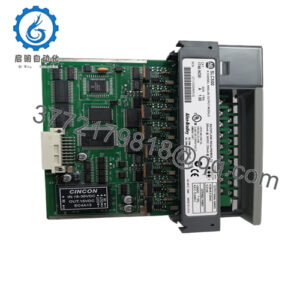
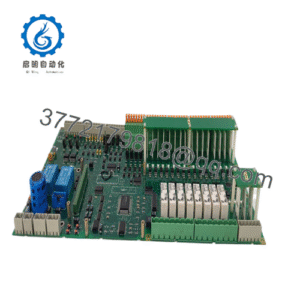
Honeywell’s Series C documentation identifies CC-TDIL01 as the 9-inch non-redundant IOTA for the 32-channel CC-PDIL01 digital input module. The same IOTA is also used with the CC-PDIS01 SOE module.
Product Introduction
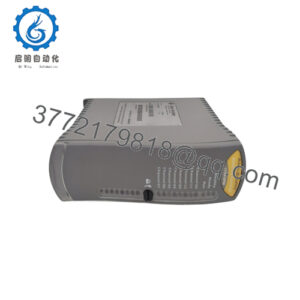
The Honeywell CC-TDIL01 is a 9-inch non-redundant I/O termination assembly for Series C 24 VDC digital input applications. It interfaces with the 32-channel CC-PDIL01 or CC-PDIS01 module and supports field input voltages from 18 to 30 VDC. The associated I/O architecture provides optical galvanic isolation and open-wire diagnostics for applicable configurations.
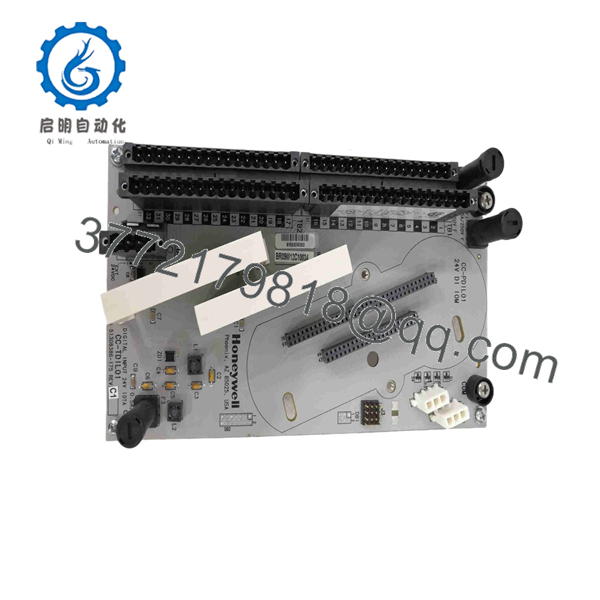
CC-TDIL01
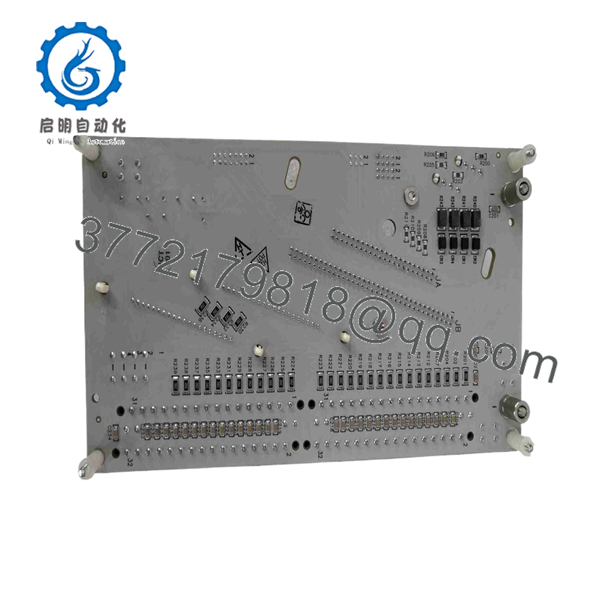
CC-TDIL01
Installation & Configuration Guide
Stage 1 — Pre-Installation
- Confirm that the installed I/O module is CC-PDIL01 or CC-PDIS01.
- Verify that the cabinet requires a 9-inch non-redundant IOTA.
- Confirm the field signal architecture and 24 VDC input range.
- Record all 32 channel assignments, field device tags, polarity, and terminal wiring.
- Back up the applicable Experion PKS I/O configuration.
- Photograph the existing termination arrangement before disconnecting conductors.
- Check the replacement IOTA for model marking, revision, connector condition, corrosion, or evidence of rework.
- ⚠️ Safety: Place affected loops and equipment in the approved maintenance state before removing the IOTA.
- Use a grounded ESD wrist strap and suitable ESD work surface when handling the Series C assembly.
Typical preparation time: 15–30 minutes for a well-documented cabinet.
Stage 2 — Removing Old Module
- Isolate applicable control and field power according to the site maintenance procedure.
- Verify the absence of hazardous voltage before touching field terminals.
- Label each conductor with its channel number and field-device reference.
- Photograph the wiring from multiple angles for traceability.
- Disconnect field wiring carefully, avoiding disturbance to adjacent I/O.
- Remove the associated CC-PDIL01 or CC-PDIS01 module according to the Series C procedure.
- Release the IOTA mounting hardware.
- Remove the CC-TDIL01 and place it in ESD-safe packaging.
- Inspect the cabinet connector and surrounding wiring before installation.
⚠️ Critical: Do not select CC-TDIL01 merely because it physically fits a Series C cabinet. Honeywell’s compatibility matrix associates specific I/O modules with specific IOTA families.
Stage 3 — Installing New Module
- Inspect the replacement CC-TDIL01 for physical damage and contamination.
- Verify the model marking before mounting.
- Position the 9-inch IOTA in the designated Series C cabinet location.
- Secure the assembly according to the applicable Honeywell installation procedure.
- Install the compatible CC-PDIL01 or CC-PDIS01 module.
- Reconnect field wiring channel by channel against the recorded documentation.
- Verify DC polarity and signal identification for every input.
- Confirm that field wiring resistance is appropriate for the intended ON/OFF thresholds.
- Recheck all 32 terminations before restoring power.
- Do not substitute the redundant CC-TDIL11 without verifying the cabinet architecture and available mounting space.
Honeywell specifies CC- as the non-redundant 9-inch IOTA and CC-TDIL11 as the redundant 12-inch counterpart.
Typical replacement time: 30–60 minutes, depending on wiring density and documentation quality.
Stage 4 — Power-On & Testing
- Complete a final visual inspection of all field terminations.
- Restore power using the approved startup sequence.
- Verify that the I/O module initializes without diagnostic faults.
- Confirm that all configured digital input channels are available in Experion.
- Apply representative 24 VDC input signals or use an approved simulation/test source.
- Verify ON-state detection against the specified 13 VDC/3 mA minimum threshold.
- Verify OFF-state detection against the specified 5 VDC/1.2 mA maximum threshold.
- Check open-wire and channel diagnostic indications where applicable.
- Confirm the correct state transition at the controller/operator interface.
- Compare the restored input states with the pre-maintenance record.
- Return affected loops to normal service only after operator and control-engineering approval.
- Record model, revision, traceability information, test results, and removed-part disposition.
⚠️ Field warning: A frequent commissioning mistake is checking only whether a 24 VDC input changes state. The wiring resistance and actual threshold behavior also matter. Honeywell specifies both voltage/current thresholds and guaranteed field-resistance limits for the CC- architecture.
Frequently Asked Questions (FAQ)
Q1: What is the Honeywell CC-?
CC- is a 9-inch non-redundant IOTA used with Honeywell Series C 24 VDC digital input modules.
Q2: Which I/O modules use CC-?
Honeywell documentation identifies CC- and CC- as compatible I/O modules. CC- provides 32-channel 24 VDC digital input, while CC- provides the applicable SOE digital-input function.
Q3: How many channels does the CC- support?
The associated CC- architecture provides 32 digital input channels.
Q4: What is the difference between CC- and CC-TDIL11?
CC- is the 9-inch non-redundant IOTA. CC-TDIL11 is the 12-inch redundant IOTA for the same Series C digital-input family.
Q5: What voltage does the associated CC- accept?
The CC- specifies an 18–30 VDC DI power/input range. Its minimum ON sensing threshold is 13 VDC or 3 mA, while the maximum OFF sensing threshold is 5 VDC or 1.2 mA.
Q6: Does CC- provide electrical isolation?
The associated CC- architecture specifies optical isolation in the I/O module and 1,500 VAC RMS or ±1,500 VDC isolation referenced to common.
Q7: Can CC- be replaced directly with another Series C IOTA?
Not automatically. CC- belongs to the 24 VDC digital-input IOTA family. Verify the I/O module model, redundancy requirement, cabinet size, field wiring, and Honeywell compatibility matrix before selecting a substitute.