WhatsApp: +86 16626708626
 Email:
 Phone: +86 16626708626
Description
Key Technical Specifications
- Part Number: 51304487-150 (conformally coated variant; base part 51304487-100 is non-coated)
- Module Type: Digital Output Bussed 24 V DC (DO24V) IOM
- Channels: 16 discrete outputs
- Output Signal: 24 V DC, bussed configuration (all outputs share a common return)
- Field Power: Internal (system 24 V bus) or external 24 V supply; external source allows galvanic isolation from the Series 8 power system
- Readback: Per-channel output readback diagnostic — requires 24 V DC reference at IOTA terminal TB1-18 to function correctly
- Mounting: Plugs into a Series 8 MU-PDOX02 Input Output Termination Assembly (IOTA)
- IOTA Power: 24 V DC bus fed through the IOTA carrier
- Redundancy: Supported with a second module/IOTA pair and redundancy cable 51305980-836
- Compatibility: Experion PKS C300 Controller, Series 8 I/O (also used in Experion LX builds)
- Coating: Conformal coating on the -150 variant for harsh/hydrogen-sulfide and corrosive environments
- Weight: Approx. 700 g
Verify exact configuration against the Honeywell Series 8 Controller and I/O Specification (S803-150-520) before ordering.
Product Introduction
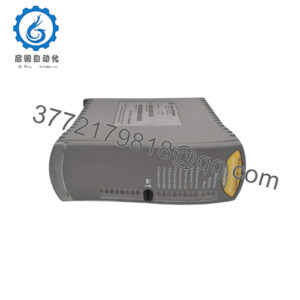
The Honeywell MC-PDOX02 (51304487-150) is a 16-channel digital output I/O module for Experion PKS Series 8 systems running the C300 controller. It switches 24 V DC discrete signals to drive valve solenoids, relay coils, starter circuits, and status indicator lamps. The -150 part number is the conformally coated build, specified for refineries, offshore platforms, and other corrosive atmospheres where bare boards corrode in 18 months.
It mounts on the MU-PDOX02 IOTA, which carries the field terminations. The module’s readback diagnostic verifies each output’s actual on/off state — a genuine fault-detection feature, not marketing. Plants choose this part because it’s a direct, like-for-like replacement in an installed Series 8 chassis: no re-engineering, no firmware gymnastics, just swap and reload the IOTA configuration.
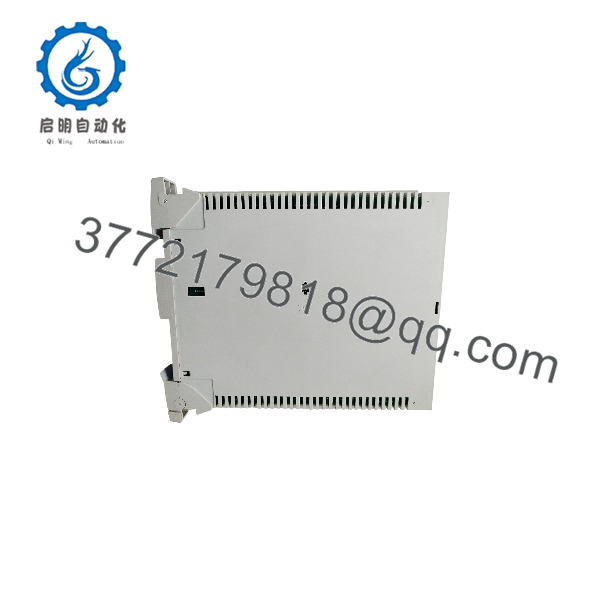
MC-PDOX02 51304487-150
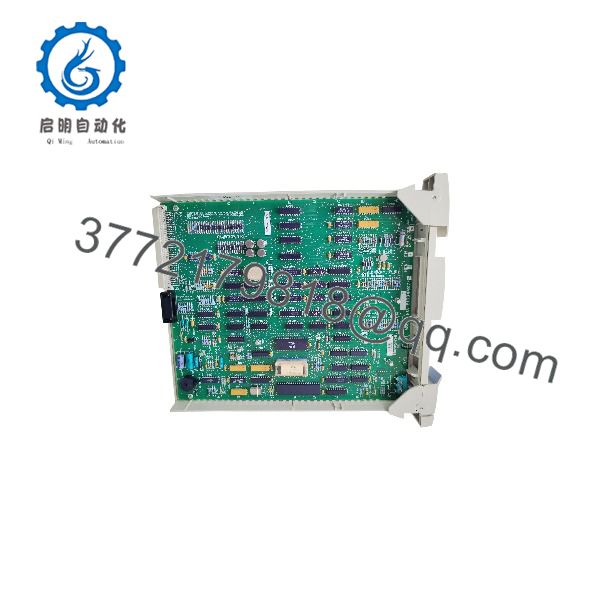
MC-PDOX02 51304487-150
Troubleshooting Quick Reference
| Symptom | Possible Cause | Relevance to this Part | Quick Check Method | Recommendation |
|---|---|---|---|---|
| Module won’t power up, no status LED | Missing 24 V DC at IOTA power bus | ❌ Low | Measure 24 V DC at the IOTA carrier power input with a multimeter | Check IOTA power cables and header board before replacing the IOM |
| All outputs read wrong state in readback | TB1-18 on the IOTA not wired to 24 V DC reference | ❌ Low | Verify 24 V DC present at TB1-18 on the field termination assembly | Wire TB1-18 to the 24 V source — the IOP cannot read outputs back without this reference |
| One channel won’t energize field device | Blown field fuse or failed field device coil, not the module | ⚠️ Medium | Force the output ON in Experion and measure at the IOTA terminal | Check fuse and coil resistance first; single-channel failures on this card are rare |
| Channel states intermittently wrong | Corroded IOTA terminal connections or loose field wire | ⚠️ Medium | Inspect and re-torque IOTA terminal blocks; check for green corrosion | Clean/replace terminations — in corrosive areas the wiring fails before the coated module does |
| Module not recognized by C300 | IOM not fully seated in IOTA or wrong slot assignment | ❌ Low | Reseat the module; check slot mapping in Control Builder | Confirm physical slot matches database configuration |
| Module fault LED after hot swap | IOM inserted with IOTA power still applied | ⚠️ Medium | Power-cycle the IOTA after proper insertion | Follow the swap procedure: power down the IOTA before pulling the module |
Honest note: this module itself rarely fails. When a DO point goes dead, the culprit is usually field wiring, a fuse, or a missing TB1-18 reference — the module passes our bench test the majority of the time. If you’re stuck at 3:00 AM, contact our technical support with photos of the IOTA wiring, the readback diagnostic log from Experion, and the module’s status LED state before pulling the card.
Frequently Asked Questions (FAQ)
Q1: What’s the difference between 51304487-100 and 51304487-150?
The -100 is the standard board; the -150 is the conformally coated version. Same function, same channels, same IOTA. If your plant spec requires coated electronics for corrosive environments (H₂S, coastal salt air, chemical units), order the -150. If your climate-controlled rack room is clean and dry, the -100 works fine — but the -150 in place of a -100 never causes a problem, so it’s the safer spare.
Q2: Can I hot-swap this module?
No — not the way you’d swap a USB drive. The correct procedure is to remove power from the IOTA before pulling the IOM. The module physically plugs into the IOTA’s connector, and inserting or removing it on a live 24 V bus risks damaging both the module and the termination assembly. Schedule the swap, power down the IOTA, swap, power back up, verify in Experion. In a redundant pair, bring the standby module online first, then service the active one.
Q3: Does my configuration stay if I replace the module?
Yes. The I/O configuration lives in the C300 controller’s database, not on the IOM itself. Swap the module, and the controller reloads the channel assignments on startup. One habit worth keeping: before pulling the old module, screenshot or export the IOTA wiring details and channel assignments from Control Builder so you can verify each point after the swap. That verification step takes ten minutes and saves hours of arguing with operations about a point that “was working yesterday.”
Q4: Why does the readback diagnostic read all my outputs as wrong?
Nine times out of ten, TB1-18 on the IOTA isn’t connected to the 24 V DC source. The IOP uses that connection as its reference voltage when it reads back output states. Without it, the diagnostic can’t verify outputs and flags them incorrectly. This is a documented wiring requirement, and it’s the single most common “bad module” return we see that turns out to be a wiring gap, not a hardware fault. Check TB1-18 before ordering a replacement.
Q5: Is this module still supported by Honeywell?
Series 8 I/O and the C300 remain widely deployed and Honeywell continues to support the platform, but this specific hardware generation is mature, and replacement planning is a real consideration for sites on long asset cycles. Our units are New Original / New Surplus — factory-sealed stock from cancelled projects and distributor overstock, serial-verified against Honeywell records. Buying surplus now is the standard strategy for keeping spares on the shelf before availability tightens.
Q6: Can I use this with an external 24 V supply instead of system power?
Yes. The DO24V design accepts either the internal Series 8 power bus or an external 24 V supply via a wiring option on the IOTA. Using the external source galvanically isolates your outputs from the DCS power system — useful when field loads (motor starter coils, long cable runs) inject noise. Select the wiring option per the IOTA documentation before terminating field wires.
Q7: What’s the lead time and warranty?
In-stock units ship within 24–48 hours with tracking. Every unit ships with our test report and a 1-year warranty covering functional failure. For quantities of 5 or more, or for specific revision requirements, contact us with your required assembly revision before ordering — Series 8 modules carry revision letters (Rev F, Rev G, etc.) and some sites pin their spares to a specific revision for consistency.