 WhatsApp: +86 16626708626
 Email:
 Phone: +86 16626708626
Description
Key Technical Specifications
- Part Number: 51204160-175
- Module Type: Digital Input 24 V DC Field Termination Assembly (FTA)
- Input Channels: 32 isolated digital inputs
- Input Voltage: 24 V DC nominal (operating range approximately 20–30 V DC per channel)
- Input Type: Optically isolated discrete inputs
- Input Current: Approximately 200 mA per channel rating at the FTA
- Isolation: 1,500 V DC channel isolation
- Field Devices Supported: Limit switches, proximity switches, push buttons, relay contacts, ESD pushbuttons, pressure/flow status switches
- Power Consumption: 1.5 W max (FTA electronics)
- Operating Temperature: −20 to +60 °C (storage −40 to +85 °C)
- Humidity: 5–95% RH, non-condensing
- Dimensions: Approximately 160 × 100 × 30 mm module footprint (per listed units; confirm against your cabinet layout)
- Weight: Approximately 0.3–0.5 kg (shipping weight ~1 kg packed)
Verify the exact FTA variant and channel count against your existing assembly’s nameplate and the Honeywell I/O documentation before ordering — the -175 suffix and the Y22 configuration define the termination layout your field wiring depends on.
Product Introduction
The Honeywell MC-TDIY22 (51204160-175) is a 32-channel digital input field termination assembly for 24 V DC discrete signals. It’s the wiring interface between your field devices — limit switches, contactor status, push buttons, ESD stations — and the Honeywell I/O subsystem, whether that’s a UCN-era HPM/APM rack or an Experion-family I/O frame using the same FTA standard.
The reason plants buy this exact part: termination hardware is what your field wiring physically lands on. A corroded, damaged, or misconfigured FTA takes 32 points down at once, and re-terminating 32 field wires onto a different FTA layout turns a one-hour swap into a two-day project. The MC-TDIY22 is the like-for-like replacement — same terminal layout, same channel grouping, same cabinet footprint. Land the wires on the same numbered terminals, verify the points, and you’re back.
Troubleshooting Quick Reference
| Symptom | Possible Cause | Relevance to this Part | Quick Check Method | Recommendation |
|---|---|---|---|---|
| All 32 points read bad/offline | FTA-to-IOM interconnect fault or FTA power issue | ✅ High | Check the FTA connection to the I/O module; measure FTA supply voltage | Re-seat or replace the interconnect cable; verify FTA power before condemning the card |
| One point stuck ON or OFF regardless of field state | Broken field wire or failed field contact | ❌ Low | Measure 24 V DC at the FTA terminal with the field device toggled | Field loop issue — verify wiring and the switch itself first |
| Group of 8 points reading wrong | Corroded terminal block on one channel group | ⚠️ Medium | Inspect terminals for green corrosion; measure continuity through the terminal | Clean or re-terminate the affected terminals |
| Intermittent point flicker on vibration | Loose terminal screw — classic on FTAs after years of thermal cycling | ⚠️ Medium | Wiggle-test field wires with the point monitored; re-torque terminals | Re-terminate properly; screw torque matters more than people think |
| Points read inverted after replacement | FTA variant or IOM database mismatch | ❌ Low | Compare the new FTA part number suffix against the database record | Correct the database or confirm the right FTA variant was installed |
| Burned terminal, melted plastic | Shorted field loop or over-current on one channel from miswiring | ✅ High | Inspect the damaged terminal; Megger the field loop (isolated from the FTA) | Replace the FTA and fix the field fault — installing a new FTA on a shorted loop destroys it too |
Straight talk: FTAs fail far less often than the field wiring landing on them. Corrosion, loose screws, and water in junction boxes cause most “bad FTA” calls. Before ordering, spend ten minutes with a multimeter on the terminals of the affected points — it changes the diagnosis surprisingly often. If you’re stuck, contact our technical support with photos of the FTA terminals, the affected point numbers, and the IOM diagnostic status.
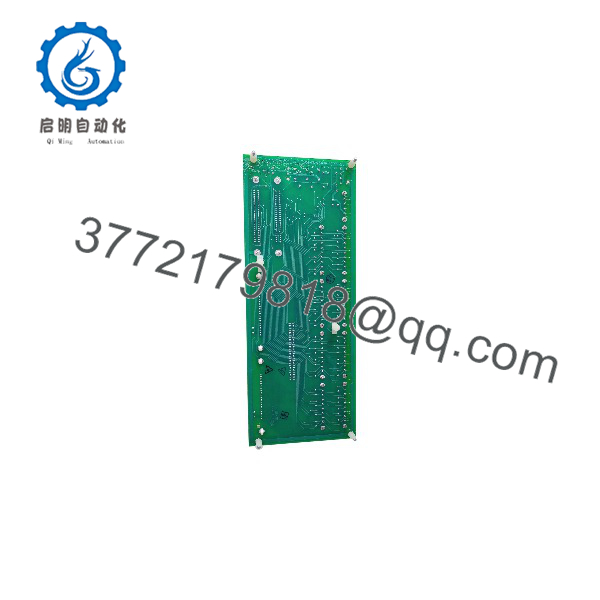
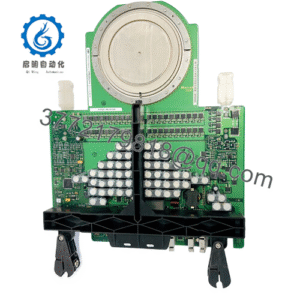
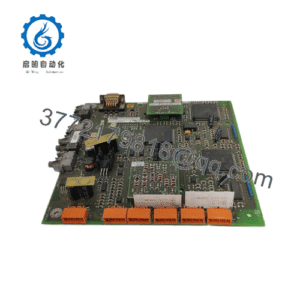
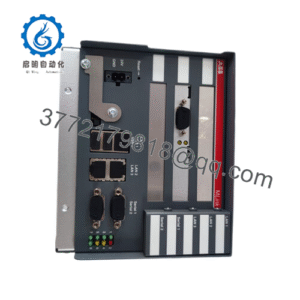
MC-TDIY22 51204160-175
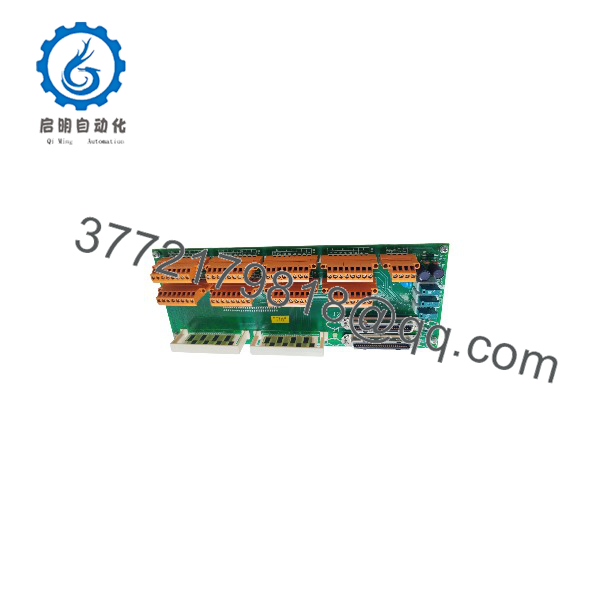
MC-TDIY22 51204160-175
Frequently Asked Questions (FAQ)
Q1: Is this an I/O module or just a termination board? What’s the difference?
It’s a Field Termination Assembly — the wiring interface, not the intelligence. Your field wires land on the FTA; the FTA connects to the actual input/output module in the rack. The distinction matters for troubleshooting: when points go bad, the FTA and its wiring fail far more often than the IOM reading them. Buying this part fixes corroded terminals, cracked boards, and damaged channel groups; it won’t fix a failed input module. Check which one you actually need before ordering — we stock both and we’ll tell you honestly which your symptoms point to.
Q2: Can I hot-swap this FTA?
Treat that claim with caution. Some resellers list the MC-TDIY22 as hot-swappable; the honest engineering answer is that it depends entirely on the host I/O system and your site’s procedure. UCN-era HPM/APM systems were not designed for live FTA removal — pulling a live FTA with 32 energized field loops risks spurious point state changes and, on interlock inputs, nuisance trips. Experion-family I/O has defined online-insertion procedures for modules, but for FTAs, the safe practice is the same everywhere: assess the impact of the affected 32 points, take them to a safe state, then swap. Ask us about your specific host system if you’re unsure.
Q3: Why does the input voltage range matter? My switches run on a different supply.
The FTA expects roughly 20–30 V DC per channel for a valid ON state; below that, points read intermittently OFF, and above it, you stress the isolation. The classic field mistake is feeding the FTA from a field supply that sags under load — a 24 V supply at the far end of a long cable run reads 26 V open-circuit but drops under the input’s draw. If points chatter, measure the actual voltage at the FTA terminal with the point energized, not at the panel. That number, not the panel voltmeter’s, is what the FTA sees.
Q4: Is the MC-TDIY22 still available new? What’s the condition of your stock?
This is legacy-era Honeywell hardware; new production is gone, and the surplus channel is the sourcing route. Our units are New Original / New Surplus — factory-sealed stock from cancelled projects, spares de-inventoried from site closures, and distributor overstock. We verify the part number and revision against Honeywell records, inspect for seal integrity, storage damage, and terminal condition, and photograph the label before shipping. Refurbished units exist in this market too; we label them plainly as such when we offer them, because the price difference is real and so is the difference in terminal screw wear.
Q5: What’s the difference between the various MC-TDIx suffixes?
The suffix defines the channel count, voltage class, and termination layout — the Y22 in MC-TDIY22 specifies this 32-point 24 V DC configuration with its particular terminal arrangement. Other suffixes in the same family carry different point counts or AC input classes. This matters because field wiring drawings reference the specific terminal numbers: if you install a different variant, your wiring crew lands wires on the wrong terminals and every point reads garbage. Order by the full model number, not the “MC-TDI” prefix alone. We’ve seen midnight swaps go wrong over exactly this.
Q6: Can I replace a damaged FTA without re-terminating all 32 wires?
Physically, you have to land every wire on the new FTA — there’s no way around it. But the job is straightforward if you plan it: photograph the existing terminals before disconnecting anything, label each wire with its terminal number, swap the assembly, and land wire-by-wield against the photo. Then verify the full point list against the database before returning the group to service. Done methodically, it’s a half-day job including point checks. Done from memory, it’s a week of chasing single points that read inverted.
Q7: What’s the lead time and warranty?
In-stock units ship within 24–48 hours, packed in ESD-protective wrapping with rigid corner protection — terminal blocks crack in transit if the packer cuts corners. Every unit carries a 1-year warranty covering functional failure and ships with our inspection report. For quantities above 5 units or specific revision requirements, contact us with your nameplate details before ordering — FTA stock moves in waves, and we’d rather confirm the exact revision on hand than discover a mismatch at your dock.