WhatsApp: +86 16626708626
 Email:
  Phone: +86 16626708626
Description
Key Technical Specifications
| Parameter | Specification |
|---|---|
| Manufacturer | Honeywell |
| Model | TK-PRS021 |
| Product Type | C200 Control Processor |
| System | Experion PKS / C200 |
| Construction | Conformally coated |
| User Memory | 4 MB |
| System Supply | 24 VDC |
| Module Supply | +5 VDC / +3.3 VDC internal rails |
| Redundancy | Supported with appropriate redundancy hardware |
| Redundancy Module | TK-PRR021 |
| Chassis | C200 chassis architecture |
| Typical Weight | Approximately 0.50 kg |
| Related Uncoated Model | TC-PRS021 |
| Lifecycle | Legacy / discontinued |
The 4 MB memory specification comes from C200 system documentation. Current parts references also identify TK-PRS021 as a conformally coated C200 processor and associate it with several different 51404305-x part numbers.
Procurement warning: Do not treat TK-PRS, TK-PRS021, and a specific 51404305-x assembly number as interchangeable identification. Available listings associate TK-PRS021 with different assembly numbers, including 51404305-275, -375, and -475.
Product Introduction
The Honeywell TK-PRS021 is the conformally coated C200 Control Processor Module used in Honeywell Experion PKS control systems. It executes control applications and operates within the chassis architecture. Honeywell’s own documentation distinguishes TK- from the uncoated TC-.
This is a legacy controller component, so replacement work requires more than checking whether the processor powers up. Hardware revision, firmware, application configuration, chassis arrangement, and redundancy status should all be verified. Current industrial parts references identify TK- as discontinued by the manufacturer.
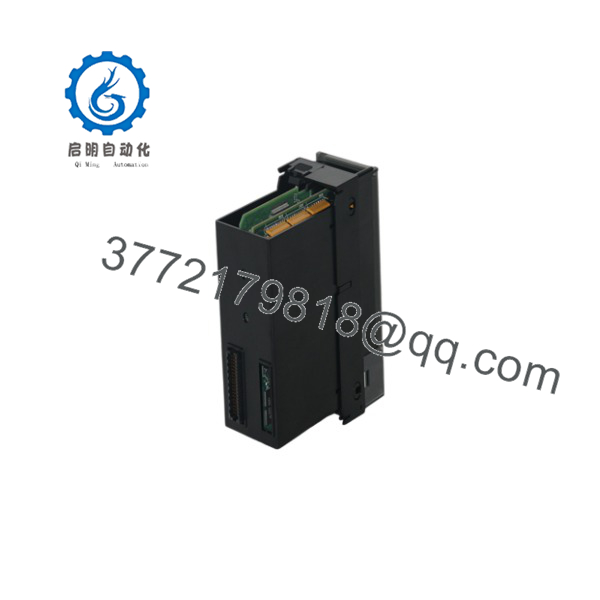
TK-PRS
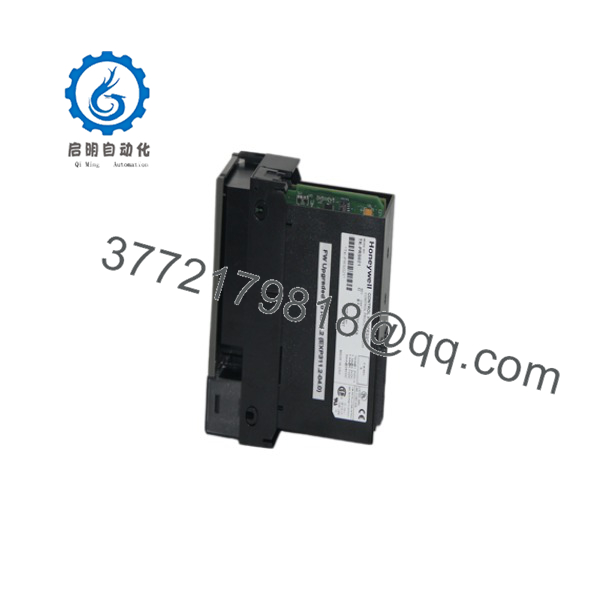
TK-PRS
Installation & Configuration Guide
Stage 1 — Pre-Installation Preparation (~5 minutes)
- Place the process in its approved maintenance state and apply LOTO where required.
- Confirm the complete marking, preferably TK- plus the 51404305-x number.
- Record hardware revision and serial information.
- Back up the /Experion PKS application configuration.
- Determine whether the controller is standalone or redundant.
- Photograph chassis position, connectors, and status LEDs.
- Use appropriate ESD protection.
⚠️ Do not order or install a processor based only on “TK-PRS.” The complete model and assembly number should be verified.
Stage 2 — Removing the Existing Module (~5 minutes)
- Verify the controller’s operational state.
- For redundant systems, identify the active and standby processors.
- Follow the approved Honeywell maintenance procedure.
- Disconnect applicable processor/network connections.
- Release the chassis retention mechanism.
- Carefully withdraw the processor.
- Inspect the backplane connector and adjacent modules.
Keep the original processor until the replacement has completed commissioning.
Stage 3 — Installing the Replacement (~5 minutes)
- Verify and the complete 51404305-x number.
- Confirm hardware revision compatibility.
- Verify that the replacement is the required conformally coated version.
- Use ESD precautions.
- Insert the processor into the correct chassis position.
- Secure the module.
- Reconnect all required controller and communication connections.
- Check that every connector is fully seated.
⚠️ A mechanically compatible processor is not automatically a functionally compatible processor. Firmware and application configuration must also be considered.
Stage 4 — Power-On & Testing (~10–15 minutes)
- Verify the 24 VDC supply.
- Energize the chassis according to the site procedure.
- Check processor status indicators.
- Verify communication with the Experion engineering environment.
- Confirm controller identity and chassis configuration.
- Verify or restore the application configuration.
- Check I/O communication.
- Verify redundant-controller status where applicable.
- Review processor diagnostics and system alarms.
- Return the process to automatic operation only after the required acceptance tests pass.
Frequently Asked Questions (FAQ)
Q1. What is Honeywell TK-PRS?
TK-PRS is an abbreviated designation. In the context, the relevant complete model is , which Honeywell identifies as the conformally coated Control Processor.
Q2. Is TK- the same as TC-?
No. Honeywell distinguishes the two by construction: TK- is coated, while TC- is the corresponding uncoated processor. The environmental requirements and installed bill of materials should determine which version is required.
Q3. What is the supply voltage?
The processor is associated with a 24 VDC system supply. Detailed chassis power calculations should use the applicable power-supply documentation rather than relying only on the nominal voltage.
Q4. Does TK- support controller redundancy?
Yes. The architecture supports redundant controller configurations using the appropriate redundancy hardware. Honeywell identifies TK-PRR021 as the coated redundancy module associated with the system.
Q5. Is TK- obsolete?
It is a legacy/discontinued component. Current industrial parts references explicitly identify TK- as discontinued.
For an operating installation, a tested spare processor is therefore worth managing as a critical inventory item rather than waiting for an emergency failure.
Q6. Why are there different 51404305 numbers for TK-?
This is one of the most important procurement details. Third-party industrial-parts databases associate TK- with several assembly numbers, including 51404305-225, 51404305-275, 51404305-375, and 51404305-475.
These should not automatically be assumed equivalent. Match the complete number and revision on the installed processor.
Q7. What should procurement verify before ordering?
Verify:
- complete model
- Complete 51404305-x assembly number
- Hardware revision
- Conformal-coated construction
- Firmware compatibility
- chassis compatibility
- Redundancy arrangement
- New surplus, refurbished, or used condition
- Functional test report
- Warranty
- Traceability
For a legacy Honeywell system, the full nameplate number is the controlling purchasing reference, not simply “TK-PRS.”