WhatsApp: +86 16626708626
 Email:
 Phone: +86 16626708626
Description
Key Technical Specifications
- Input signal: HTL incremental encoder signals.
- Encoded signals: 0°, 90°, marker pulse, and LED check.
- Frequency range: 0–100 kHz.
- Supply voltage: 12–30 VDC.
- No-load current: Approximately 35 mA.
- Optical output: 850 nm.
- Optical connector: ST-compatible.
- Recommended fiber: 62.5/125 μm glass fiber; 50/125 μm is also listed as suitable.
- Transmission distance: Up to 1,000 m with the matching decoder and specified fiber.
- Signal conversion time: Approximately 2 μs, measured from transmitter input to decoder output.
- Dimensions: 23 × 120 × 115 mm (W × H × D).
- Mounting / protection: DIN-rail mounting; IP20.
These specifications correspond to the Hübner Giessen LWLS-T-1-62,5/125 transmitter, identified as ID 18462 and part number 114-401-H. Confirm the exact marking and HTL input before ordering.
Product Introduction
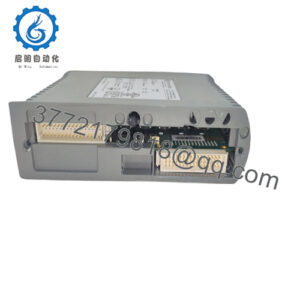
The Johannes Hübner Giessen LWLS-T-1-62,5/125 is a cabinet-mounted fiber-optic transmitter for HTL incremental encoder signals. It encodes the 0°, 90°, marker-pulse, and LED-check signals and sends them over one fiber to a compatible LWLS-D decoder.
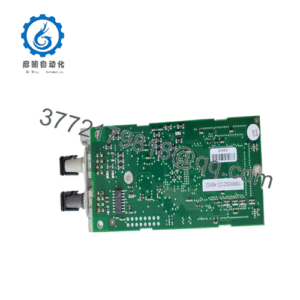
The unit operates from 12–30 VDC and handles signals up to 100 kHz. Its optical output uses an ST-compatible connection and 62.5/125 μm glass fiber; the manufacturer lists transmission distances up to 1,000 m with a matching decoder.
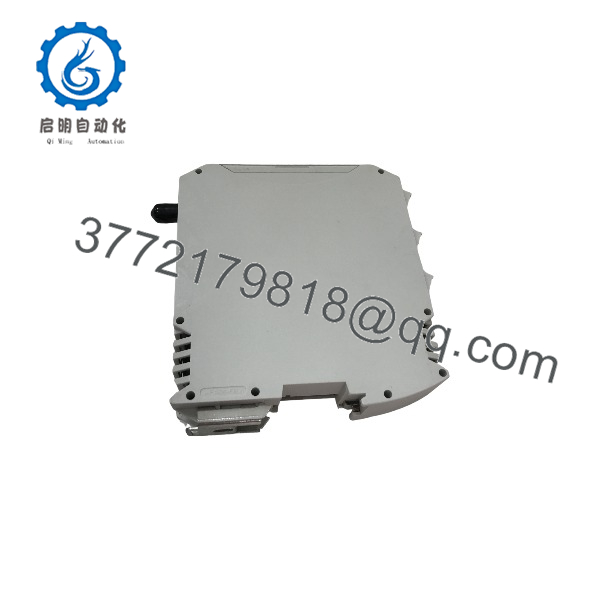
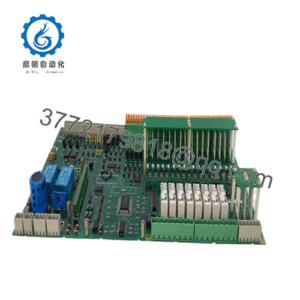
LWLS-T-1-62,5/125
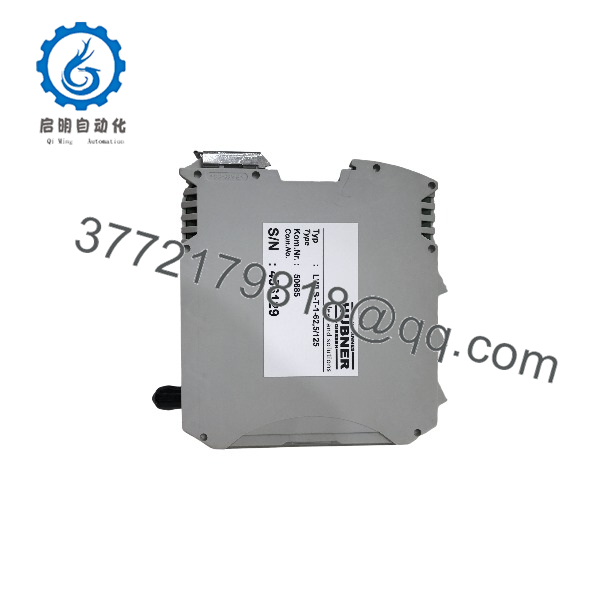
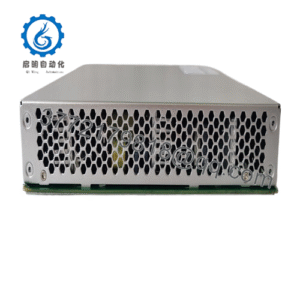
LWLS-T-1-62,5/125
Troubleshooting Quick Reference
| Symptom | Possible Cause | Relevance to This Part | Quick Check Method | Recommendation |
|---|---|---|---|---|
| POWER LED is off | Missing supply, incorrect polarity, loose terminal, or transmitter fault | High | Measure 12–30 VDC at the transmitter supply terminals and check terminal seating | Verify supply and wiring before replacing the transmitter |
| Decoder shows no encoder signals | Fiber disconnected, damaged fiber, wrong fiber type, or decoder fault | High | Check the ST connectors and fiber continuity; verify the link uses the compatible transmitter and decoder | Clean and reseat connectors; test with a known-good compatible fiber link |
| Direction or marker signals are missing | Encoder wiring, signal-level mismatch, or incorrect terminal connections | High | Check the encoder’s HTL outputs at the transmitter terminals against the wiring diagram; verify 0°, 90°, marker, and check signals | Confirm HTL signal levels and pin assignments; do not substitute TTL wiring |
| Intermittent counts at speed | Signal frequency, encoder signal quality, fiber connection, or noise on the electrical input | Medium | Verify input frequency stays within 0–100 kHz; inspect encoder wiring and fiber connectors | Check signal quality and cabling before replacing the transmitter |
| Link works over a short cable but fails over a long run | Fiber attenuation, dirty connectors, incorrect fiber, or mismatched optical components | Medium | Confirm 62.5/125 μm or approved 50/125 μm glass fiber and inspect both ST ends | Check the fiber path and decoder match; verify the site’s actual cable length and routing |
| Fault appears after replacement | Wrong model variant or input level | High | Compare the full model marking; confirm the replacement is the HTL “-1” variant, not a TTL “-2” variant | Match the complete suffix and input configuration before energizing |
The LWLS-T series includes distinct HTL and TTL input variants. The model suffix matters: verify the replacement’s full marking against the existing unit and wiring diagram.
Frequently Asked Questions (FAQ)
What does the LWLS-T-1-62,5/125 do?
It converts HTL incremental encoder signals into an optical signal for transmission to a compatible decoder. The transmitter encodes the 0°, 90°, marker-pulse, and LED-check signals onto one fiber.
Is this the 62.5/125 μm version?
Yes. Hübner Giessen lists LWLS-T-1-62,5/125 as the HTL version for 62.5/125 μm fiber, part number 114-401-H, ID 18462.
Can I replace it with an LWLS-T-2 model?
Not as a like-for-like replacement without checking the encoder output type. The “-1” version is HTL; the “-2” version is TTL. Confirm the site’s signal level and the full wiring configuration first.
Will it connect directly to a PLC?
The transmitter provides an optical link, not a direct PLC electrical output. It is used with a compatible LWLS-D decoder, which converts the optical signal back to electrical encoder signals. Confirm decoder output type and wiring against the receiving equipment.
What fiber and transmission distance should I use?
The manufacturer recommends 62.5/125 μm glass fiber and also lists 50/125 μm. With a matching decoder, the system supports distances up to 1,000 m; verify the actual cable, connectors, and route for the installation.
Is the unit hot-swappable?
The documentation does not specify hot-swap capability. Follow the machine’s isolation procedure, de-energize the circuit as required, and avoid disconnecting or reconnecting field wiring under power unless the system documentation explicitly permits it.
What is the condition and warranty?
Condition, testing, stock, lead time, and warranty depend on the seller; they are not established by the manufacturer’s technical documentation. Request photos of the model label and terminals, confirmation of HTL configuration, and written warranty and test details before ordering.