WhatsApp: +86 16626708626
 Email:
 Phone: +86 16626708626
Description
Core Product Summary
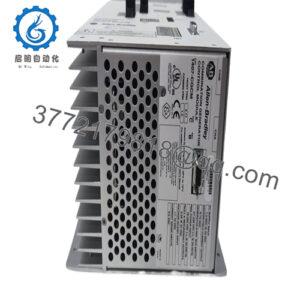
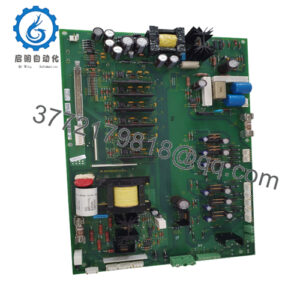
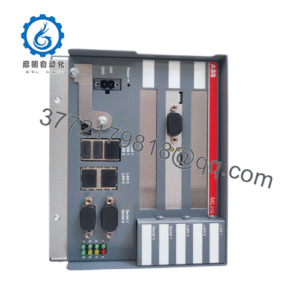
The ICS Triplex T8310C is a Trusted TMR Expander Processor module for the Trusted safety system. It occupies the dedicated processor slots of a T8300 Expander Chassis and provides the slave interface between the Expander Bus and the expander chassis backplane.
The module uses a Hardware Implemented Fault Tolerant (HIFT) Triple Modular Redundant (TMR) architecture with three independent fault containment regions. It enables multi-chassis expansion while preserving the fault-tolerant, high-bandwidth Inter-Module Bus (IMB) capabilities of the system. Dual-redundant 20–32 V DC power is taken from the expander backplane. The “C” suffix denotes the conformal-coated version.
Key Technical Specifications
| Parameter | Value |
|---|---|
| Product type | Trusted TMR Expander Processor |
| System family | Trusted TMR / Trusted 8000 Series |
| Architecture | HIFT TMR, three main fault containment regions, 3-2-0 fault tolerance |
| Module location | T8300 Expander Chassis processor slots (PL1 or PL2) |
| Backplane supply | 20 V DC to 32 V DC |
| Power dissipation | 45 W (Series B); 20 W (Series C) |
| Isolation | 50 V basic insulation, module to backplane supply |
| Fusing | Not user-serviceable |
| Expander bus distance (copper) | Up to 30 m with TC-301 cable |
| Expander bus distance (fibre) | Up to 10 km with T8314 Fibre TX/RX Units |
| Operating temperature | 0 °C to +60 °C |
| Storage temperature | –25 °C to +70 °C |
| Relative humidity | 10 % to 95 %, non-condensing |
| Dimensions (H × W × D) | 266 mm × 31 mm × 303 mm |
| Weight | 1.33 kg |
Detailed Product Overview
The ICS Triplex T8310C resides exclusively in the processor positions of a Trusted T8300 Expander Chassis. Its primary role is to act as the slave interface that links the triplicated Expander Bus to the expander chassis Inter-Module Bus (IMB). This arrangement allows additional I/O chassis to be connected to a main Trusted controller while retaining the full fault-tolerant characteristics of the system.
The module is built on a Hardware Implemented Fault Tolerant (HIFT) TMR architecture. Three independent fault containment regions (FCR A, B and C) operate in lock-step. Each region contains its own interfaces to the Expander Bus and IMB, active/standby logic, control circuitry, communications transceivers and power supplies. Faults are contained within the expander bus, the module itself or the expander chassis, preventing propagation that would reduce overall system availability.
Dual-redundant nominal 24 V DC feeds from the expander backplane power the module. An on-board supply provides conversion, conditioning and protection. Internal fuses are not user-serviceable. The module supports active/standby operation; the two processor positions in the expander chassis are linked by a double-width cable hood so that one module can take over if the other fails.
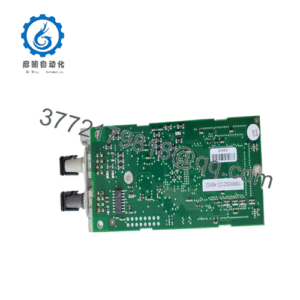
Copper expansion uses the TC-301 cable arrangement for distances up to 30 m. Longer runs (up to 10 km) are achieved with T8314 Fibre TX/RX Units and the associated fibre cabling. The module is available in a conformal-coated version (suffix C) for improved resistance to environmental contaminants.
Status indicators on the front panel show overall health, active/standby state and activity on the three expander-bus channels. The design supports both automatic hot-standby change-over and manual spare-module replacement strategies.
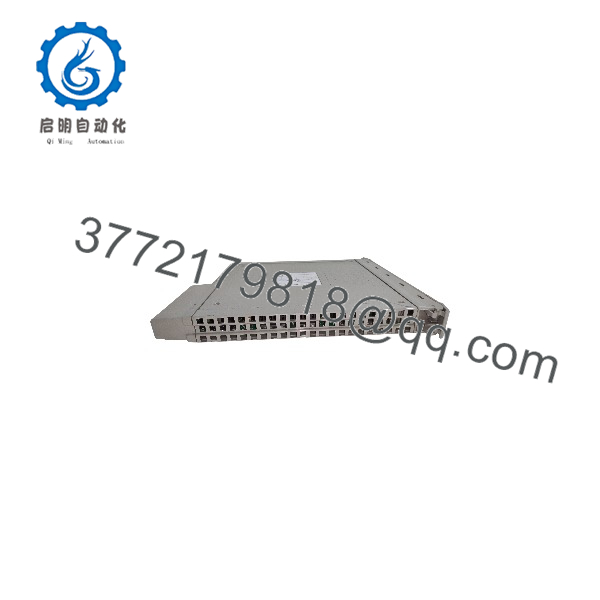
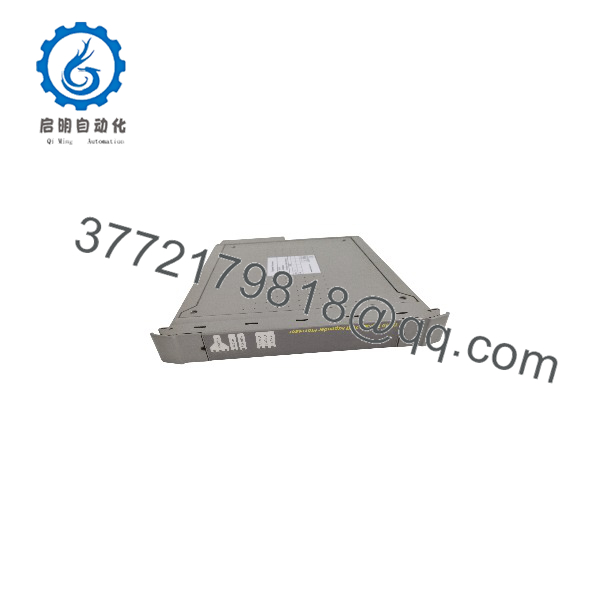
T8310C
T8310C
Dimensions, Mounting & Connection Notes
- Overall dimensions: 266 mm (H) × 31 mm (W) × 303 mm (D)
- Weight: 1.33 kg
- Mounting: Inserts only into the dedicated processor slots (PL1 or PL2) of a T8300 Expander Chassis; secured by ejector levers
- Companion link: Double-width cable hood joins the two processor positions for active/standby operation
- Power connection: Taken from the expander chassis Inter-Module Bus backplane (dual redundant)
- IMB connector: 185-way DIN 41642 type
- Front panel: Status LEDs for Healthy, Active, Standby and the three expander-bus channels (Tx/Rx A, B, C)
System Compatibility & Integration Requirements
| Item / Dependency | Verified Compatibility or Requirement | Practical Note |
|---|---|---|
| Chassis | T8300 Expander Chassis | Must occupy dedicated processor slots PL1 or PL2 |
| System family | Trusted TMR / Trusted 8000 Series | Slave interface for expander bus |
| Companion module | Second T8310/T8310C in adjacent processor slot | Linked by double-width cable hood for active/standby |
| Expander interface (controller end) | T8311 / T8311C Expander Interface | Required at the controller chassis |
| Copper expansion cable | TC-301 | Maximum 30 m |
| Fibre expansion | T8314 Fibre TX/RX Units + associated fibre cables | Maximum 10 km |
| Power | Dual-redundant 20–32 V DC from expander backplane | Taken automatically from IMB |
| Configuration | Trusted system configuration tools | Defines expander chassis and slot mapping |
FAQ
What is the ICS Triplex T8310C?
It is a Trusted TMR Expander Processor that provides the slave interface between the Expander Bus and the backplane of a T8300 Expander Chassis.
Where must the T8310C be installed?
Only in the dedicated processor slots (PL1 or PL2) of a T8300 Expander Chassis. It cannot be placed in ordinary I/O slots.
What does the “C” suffix mean?
The “C” denotes the conformal-coated version of the module.
How far can the expander bus be extended?
Up to 30 m using TC-301 copper cable, or up to 10 km using T8314 Fibre TX/RX Units.
What power does the module require?
Dual-redundant 20–32 V DC taken from the expander chassis backplane. Power dissipation is 45 W for Series B hardware and 20 W for Series C hardware.
Does the T8310C support redundant operation?
Yes. Two modules can be installed in the companion processor slots and linked by a double-width cable hood for active/standby operation.
What architecture does the module use?
Hardware Implemented Fault Tolerant (HIFT) Triple Modular Redundancy with three independent fault containment regions operating in lock-step (3-2-0 degradation path).