WhatsApp: +86 16626708626
 Email:
 Phone: +86 16626708626
Description
Key Technical Specifications
| Parameter | Value |
|---|---|
| Product family | MicroLYNX 4/7 integrated microstepping controller |
| Motor compatibility | 2-phase or 4-phase bipolar stepper motors |
| Supply voltage | 24–75 VDC |
| Output current | 5 A continuous, 7 A peak |
| Microstepping resolution | Up to 51,200 steps/rev |
| Digital inputs / outputs | Six isolated I/O lines, +5 to +24 VDC; expandable to 24 |
| Input filtering | Programmable digital filtering |
| Processor capability | 32-bit floating-point math, logic, and BASIC-like programming |
| Communication | Isolated independent RS-232 and RS-485 |
| Communication speed | Selectable baud rate up to 38.4 kbps |
| Optional communication | CAN bus; RS-232 or RS-485 on Port 2 with expansion module |
| Connection style | Pin-header connector |
| Weight | 0.64 lb / approximately 0.3 kg |
| Driver class | MicroLYNX 7 A driver version |
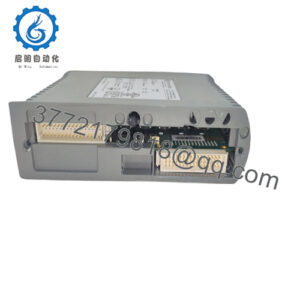
The MX-CS100-701 is the MicroLYNX 7 A version with a pin-header connector. It combines a microstepping stepper driver and machine/process controller, operates from 24–75 VDC, and delivers 5 A continuous or 7 A peak output current.
Product Introduction
The IMS MicroLYNX MX-CS100-701 is an integrated microstepping motor driver and motion controller for 2-phase or 4-phase bipolar stepper motors. It is used in positioning, indexing, dispensing, inspection, semiconductor, packaging, and general machine-control applications where standalone motion logic is required.
The -701 version provides the higher-current 7 A driver and pin-header connections. Its onboard BASIC-like programming, 32-bit floating-point math, isolated I/O, and independent RS-232/RS-485 ports allow it to run motion sequences without a separate PLC or motion controller.
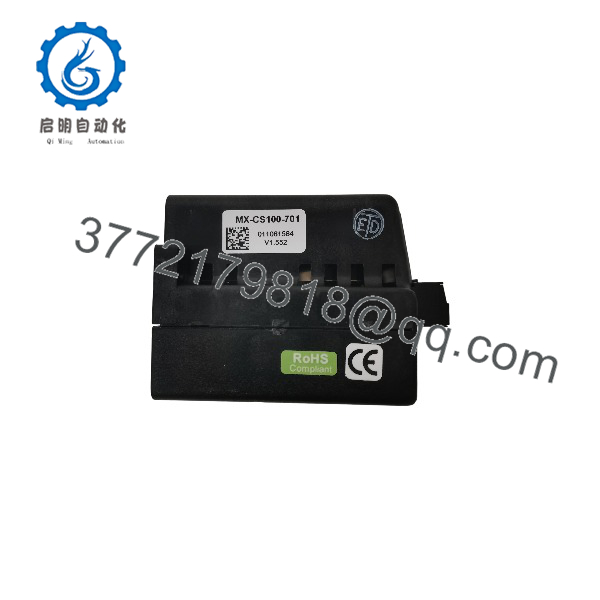
MX-CS100-701
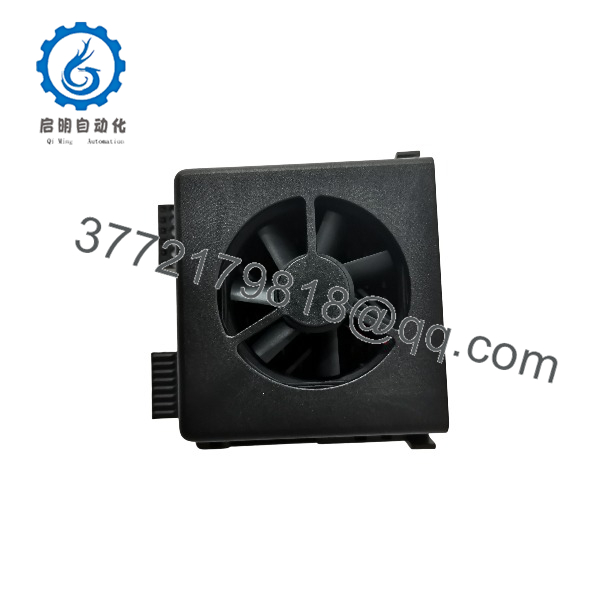
MX-CS100-701
Troubleshooting Quick Reference
| Symptom | Possible Cause | Relevance to this Part | Quick Check Method | Recommendation |
|---|---|---|---|---|
| No LEDs or no response | DC supply, fuse, wiring fault, or poor connector seating | ❌ Low | Measure 24–75 VDC at the drive input terminals; inspect fuse and ground connection | Check power supply and wiring before replacing the drive |
| Motor does not move | Enable input inactive, incorrect command, motor phase fault, or drive fault | ✅ High | Verify ENABLE state, command source, motor phase resistance, and driver error status | Check I/O and motor wiring before replacing the drive |
| Motor stalls or loses steps | Excessive load, acceleration too high, low supply voltage, or incorrect current setting | ✅ High | Reduce acceleration, verify motor current setting, measure DC bus voltage under load | Tune motion profile and current setting before condemning the drive |
| Erratic motion or vibration | Loose motor coupling, resonance, incorrect microstep setting, or noisy I/O | ✅ Medium | Inspect mechanical coupling, test at lower speed, and verify microstep configuration | Correct mechanics and tuning first; replace only after mechanical checks pass |
| No RS-232/RS-485 communication | Baud-rate mismatch, wiring fault, COM port setting, or ground issue | ✅ High | Verify TX/RX polarity, baud rate, parity, stop bits, and cable shield grounding | Test with a known-good serial cable and terminal program |
| I/O does not respond | Incorrect voltage level, common-return wiring, or damaged isolated I/O channel | ✅ Medium | Apply a known-good +5 to +24 VDC signal and monitor the corresponding I/O point | Verify I/O wiring and voltage levels before replacing the controller |
| Overtemperature shutdown | Excessive motor current, poor heat sinking, high ambient temperature, or blocked airflow | ✅ High | Measure motor current, inspect heatsink mounting, and check ambient temperature | Reduce current, improve cooling, and verify duty cycle before replacement |
If the fault remains unresolved, send photos of the drive, motor nameplate, wiring, LED status, and communication logs before ordering a replacement.
Frequently Asked Questions
Can I hot-swap the MX-CS100-701?
No. Disconnect the 24–75 VDC supply and motor power before removing or installing the drive. Stepper drives can retain hazardous voltage after shutdown; use a grounded ESD wrist strap and verify the DC bus is discharged before handling.
Is the MX-CS100-701 obsolete?
Yes. The MicroLYNX MX series is discontinued by the manufacturer. Current supply is generally limited to New Surplus, refurbished, or tested pre-owned inventory.
What is the difference between MX-CS100-701 and MX-CS100-401?
The -701 is the 7 A driver version, while the -401 is the 4 A driver version. Both use the MicroLYNX controller platform, but verify motor current, supply voltage, connector style, and firmware compatibility before substituting one for the other.
Will it directly replace another MicroLYNX model?
Only after matching the driver current, connector style, I/O configuration, firmware, and communication requirements. Do not assume that all MX-CS100 variants are pin-compatible or use the same motor-current settings.
Will my motion program remain after replacement?
Not automatically. The application program and configuration may reside in the MicroLYNX controller’s memory. Back up the program, I/O configuration, communication settings, and motion parameters before removing the old unit.
Why is this surplus drive less expensive than a new OEM unit?
Because IMS/Novanta no longer manufactures it, pricing reflects available surplus inventory rather than current OEM production. New Surplus stock is unused original product; it may have older date codes but should not have field-operating hours.
What should I check before ordering?
Confirm motor phase current, supply voltage, microstepping resolution, I/O voltage, communication protocol, connector style, and firmware version. The MX-CS100-701 is specified for 24–75 VDC input and 5 A continuous / 7 A peak output.