WhatsApp: +86 16626708626
 Email:
 Phone: +86 16626708626
Description
Core Product Summary
The Kongsberg Maritime RDIOR400 (part no. 600950) is a remote digital input/output interface module with relay output channels, belonging to the RIO400 remote input and output system. It serves as the interface between the Kongsberg Serial Process Bus (SPBus) and digital input or output signals to and from field devices — valves, relays, indicator devices and similar equipment — feeding a controller computer in a Kongsberg Maritime automation system.
Within the RIO400 architecture, a controller computer (such as an RCU500 or other Kongsberg controller with an SPBus interface) communicates with distributed I/O modules over the SPBus, providing a cost-effective way to connect any number of inputs and outputs regardless of the distance between the remote equipment and the controller. The RDIOR400 contributes the digital I/O and relay-output portion of that signal gathering: field digital states are read into the automation system, and commands are returned to field devices through the module’s outputs.
The module follows the RIO400-series design conventions: dual SPBus interfaces allowing optional communication redundancy, electrical isolation of each SPBus interface from the control system, DIN standard rail mounting with plug-in connections, a status LED for normal operation or error condition, and loop-check/debugging from the operator station or a local data terminal. Consistent with the RIO400 line, the design includes protective and diagnostic functions such as a short-circuit proof loop current driver, fail-safe activation of outputs upon loss of communication, built-in self-test (BIST), Line Fault Detection (LFD), Earth Fault Detection (EFD), dual watchdogs, and SIL 1 compliance. Units in circulation carry hardware revision designations such as Rev. 3.1.1 and Rev. 3.2.0.
Note: the exact channel configuration (digital I/O and relay output counts), supply ratings and physical dimensions of the RDIOR400 are given in the module’s own Kongsberg datasheet, which is not publicly accessible; these values are not reproduced here and should be confirmed against the manufacturer’s documentation for your specific hardware revision.
Key Technical Specifications
| Parameter | Value |
|---|---|
| Product type | Remote digital input/output interface module with relay outputs (RIO400 series) |
| Model | RDIOR400 |
| Part number | 600950 |
| Series | RIO400 — Kongsberg Maritime Remote Input and Output system |
| Observed hardware revisions | Rev. 3.1.1, Rev. 3.2.0 (nameplate data from units in circulation) |
| Function | Interface module between the SPBus and digital inputs or outputs to and from field devices |
| Communication | Serial Process Bus (SPBus) to the controller computer / automation system |
| SPBus interfaces | Dual SPBus interfaces (allow optional redundancy); each interface electrically isolated from the control system |
| Installation | DIN standard rail mounting, plug-in connections |
| Status indication | Status LED for normal operation or error condition |
| Loop functions | Loop-check and debugging from operator station and local data terminal |
| Output protection | Short-circuit proof loop current driver; fail-safe activation of outputs upon loss of communication |
| Diagnostics | Built-in test (BIST) for self-diagnostics and fault identification; Line Fault Detection (LFD); Earth Fault Detection (EFD); dual watchdogs |
| Safety compliance | SIL 1 compliant (RIO400-series design) |
| Channel configuration (digital I/O / relay outputs) | Per module datasheet — confirm against manufacturer documentation for the specific revision |
| Supply voltage / power consumption | Per module datasheet — confirm against manufacturer documentation |
| Dimensions / weight | Per module datasheet — confirm against manufacturer documentation |
Detailed Product Overview
In a distributed marine automation topology, signals do not come to the controller — the controller’s I/O goes to the signals. The RIO400 system implements this principle: instead of home-running every field cable to a central cabinet, RIO400 modules are mounted near the process equipment (engine rooms, cargo areas, pump rooms, tank decks) and connected back to the controller computer over a single Serial Process Bus. The RDIOR400 is the family member that handles discrete signals: it reads digital inputs (device states, limit switches, status contacts, alarm contacts) and drives digital outputs and relay outputs (commanding valves, relays, starters and indicator devices).
The dual-SPBus design is the module’s key reliability feature. In a non-redundant installation, a single SPBus carries all communication; in a redundant configuration, the second interface provides a fully independent communication path, with each SPBus interface electrically isolated from the control system. If one bus is lost — cable damage, connector fault, or a faulted bus segment — the module continues communicating over the other, and the controller retains supervision of the field signals.
Fault handling is engineered for unattended operation. On loss of communication, outputs activate to a fail-safe state, so that actuators under the module’s control revert to a defined condition rather than freezing at the last command. The short-circuit proof loop current driver protects the input loop hardware, and loop-check can be performed from the operator station or a local data terminal — allowing commissioning and fault-finding without repeatedly visiting the field termination. Self-monitoring includes a built-in self-test for fault identification, Line Fault Detection (LFD) for open/short circuit detection on monitored loops, Earth Fault Detection (EFD) for insulation faults, and dual watchdogs covering both the communication and application sides of the module.
Installation follows Kongsberg’s field-module conventions: DIN standard rail mounting and plug-in connections keep mechanical installation and unit replacement quick — relevant on vessels where I/O density grows over refit cycles. The front status LED distinguishes normal operation from error conditions, and loop-check and debugging are supported both from the operator station and from a local data terminal.
When specifying replacements, note the revision level: units in circulation include Rev. 3.1.1 and Rev. 3.2.0, and the replacement unit should match the hardware revision and system configuration (module address, I/O configuration and communication setup) of the unit being replaced.
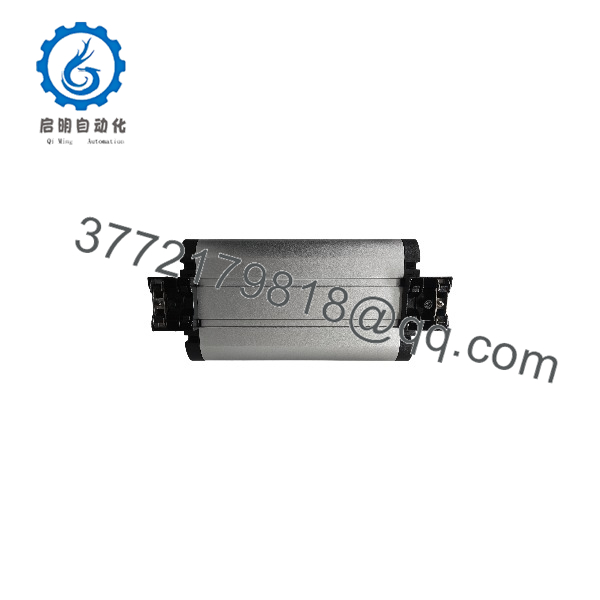
RDIOR400
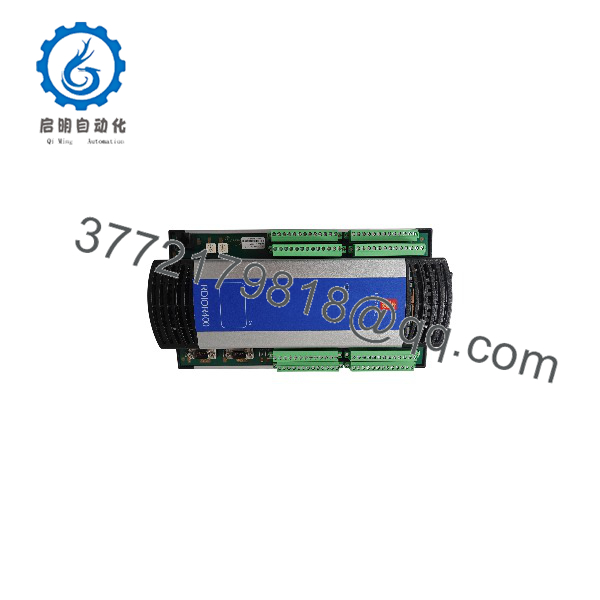
RDIOR400
System Compatibility & Integration Requirements
| Item / Dependency | Verified Compatibility or Requirement | Practical Note |
|---|---|---|
| System family | Kongsberg Maritime Remote Input and Output system (RIO400) | Distributed I/O for Kongsberg maritime automation systems |
| Controller connection | Serial Process Bus (SPBus) to a controller computer in the process network | Controllers with SPBus interface, e.g. RCU500 (documented SPBus link to RIO 400 remote I/O units) |
| Bus redundancy | Dual SPBus interfaces for optional redundant communication | Second bus recommended for safety-relevant or high-availability I/O |
| Isolation | Each SPBus interface electrically isolated from the control system | Preserves bus integrity against field-side faults |
| Sibling RIO400 modules | RDIO400 (digital I/O), RAIV400 (analogue voltage input), RAOC400 (analogue I/O), RMP400 multipurpose modules | Mixed module types share the SPBus per system design |
| Commissioning | Loop-check and debugging from operator station and local data terminal | Supports remote and local fault-finding |
| Output behaviour | Fail-safe activation of outputs upon loss of communication | Verify the defined fail-safe state per channel during system design |
| Safety | SIL 1 compliant (RIO400-series design) | For higher safety integrity requirements, consult the K-Safe system configuration |
| Replacement | Match hardware revision (e.g. Rev. 3.1.1 / Rev. 3.2.0), module address, I/O configuration and communication settings to the installed system | Confirm against the module datasheet and system documentation |
Dimensions, Mounting & Connection Notes
| Item | Detail |
|---|---|
| Mounting | DIN standard rail mounting |
| Connections | Plug-in connections for quick installation and replacement |
| Location | Designed for installation near the field equipment served, inside cabinets or enclosed panels |
| Status indication | Front status LED — normal operation or error condition |
| Field wiring | Digital input/output and relay output wiring per the module datasheet and system installation documentation; observe relay contact ratings for the connected loads |
| Bus wiring | SPBus A / SPBus B (dual interfaces for optional redundancy); observe bus termination and addressing requirements per system documentation |
| Dimensions / weight | Not published in publicly accessible official documents — refer to the manufacturer’s RDIOR400 module datasheet |
| Revision check | Verify hardware revision (observed: Rev. 3.1.1, Rev. 3.2.0) and configuration before replacement |
FAQ
What is the Kongsberg RDIOR400?
The RDIOR400 (part no. 600950) is a remote digital input/output interface module with relay outputs in the Kongsberg Maritime RIO400 remote I/O system. It interfaces digital signals to and from field devices with the automation system’s Serial Process Bus (SPBus).
What does “RDIOR” mean in the model name?
The designation identifies a Remote Digital Input/Output module with Relay output channels, distinguishing it from the RDIO400 (digital I/O without relay outputs) in the same RIO400 family.
How does the RDIOR400 connect to the control system?
Via the Serial Process Bus (SPBus). The module has dual SPBus interfaces, allowing optional redundant communication; each interface is electrically isolated from the control system.
Which controllers work with the RDIOR400?
RIO400 modules are driven by a controller computer over the SPBus — for example, the Kongsberg RCU500, whose datasheet documents the SPBus link to RIO 400 remote I/O units.
What happens if communication is lost?
Outputs activate to a fail-safe state upon loss of communication, so connected field devices revert to a defined condition rather than holding the last command.
What diagnostics does the RDIOR400 provide?
Per the RIO400-series design: built-in self-test (BIST), Line Fault Detection (LFD), Earth Fault Detection (EFD), dual watchdogs, a status LED for run/error indication, and loop-check/debugging from the operator station or a local data terminal.
Is the RDIOR400 suitable for safety applications?
The RIO400-series design is SIL 1 compliant. For higher safety integrity needs, consult the Kongsberg K-Safe system configuration and the applicable safety documentation.
How is the RDIOR400 mounted?
On a DIN standard rail with plug-in connections, for easy installation and replacement.
What should I check when replacing an RDIOR400?
Confirm part no. 600950 and the hardware revision (observed revisions include 3.1.1 and 3.2.0), and verify the module address, I/O configuration and communication settings match the installed system configuration.
Where can I find the exact channel counts, power ratings and dimensions?
In the manufacturer’s RDIOR400 module datasheet — channel configuration, supply ratings and physical data are revision-specific and should be confirmed against Kongsberg Maritime’s documentation before ordering or engineering.