WhatsApp: +86 16626708626
 Email:
  Phone: +86 16626708626
Description
Key Technical Specifications
| Parameter | Specification |
|---|---|
| Manufacturer | Kongsberg Maritime |
| Model | TRX32 |
| Part Number | 303088 |
| Requested Revision | G; physical-label verification recommended |
| Product Type | Transceiver circuit board |
| OEM Description | PCB TRX32, 501 |
| Compatible System Documented by OEM | HiPAP 501 |
| Transmitter Channels | 32 |
| Receiver Channels | 32 |
| Architecture | 32 transmitter/receiver pairs |
| Transducer Connection | One transmitter/receiver pair per transducer element |
| Computing | On-board computing capability |
| Ethernet | Ethernet connector P9 |
| External Synchronization | P4 |
| Serial I/O | P5 and P7 |
| JTAG | P3 |
| Configuration | Links and switches |
| Status Monitoring | LEDs for Ethernet, I/O activity, and power supply status |
| Board Installation | Plug-in module |
| Retention | Two board ejectors |
| Application | HiPAP high-precision acoustic positioning |
| OEM Spare Listing | 303088 PCB TRX32, 501 |
Kongsberg’s HiPAP documentation states that the TRX32 is a 32-channel multi-frequency transmitter and receiver circuit board. It contains 32 transmitters and 32 receivers, with each transmitter/receiver pair connected to a specific element of the transducer.
Front-Panel Interfaces
| Interface | Function |
|---|---|
| P3 | JTAG connector |
| P4 | External synchronization |
| P5 | Serial I/O for development/debugging |
| P7 | Serial I/O for development/debugging |
| P9 | Ethernet connector |
| LEDs | Ethernet activity, I/O activity, power-supply status |
| SW1 / SW2 | Configuration switches |
These interfaces are documented in Kongsberg’s HiPAP TRX32 maintenance documentation.
Product Introduction
The Kongsberg TRX32 303088G is a transceiver PCB used in Kongsberg’s HiPAP high-precision acoustic positioning equipment. Kongsberg’s own HiPAP documentation identifies the as a 32-channel multi-frequency transmitter/receiver board. Its architecture contains 32 transmitters and 32 receivers, with each transmitter/receiver pair associated with an individual element in the acoustic transducer.
The board is therefore fundamentally different from a conventional PLC digital I/O module. Some third-party listings describe as an I/O board, but the Kongsberg OEM documentation describes its primary function as acoustic transceiver processing. Kongsberg’s spare-parts table specifically lists 303088 as “PCB , 501” for the HiPAP 501 system.
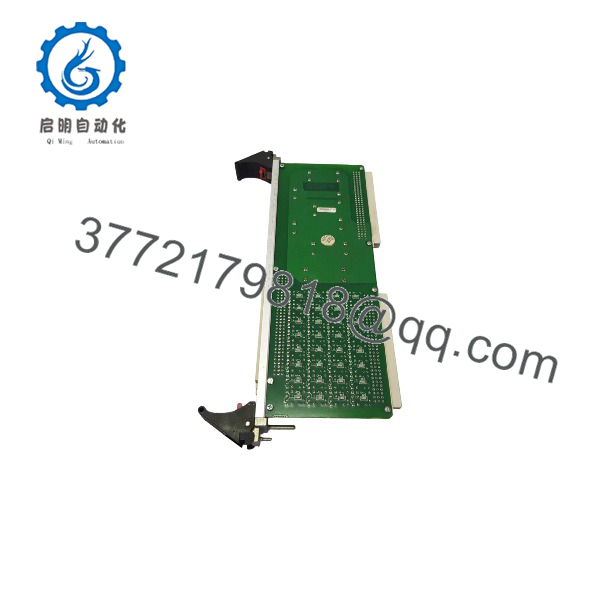
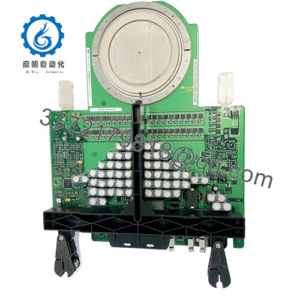
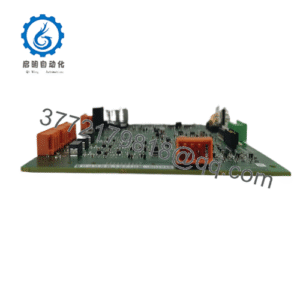
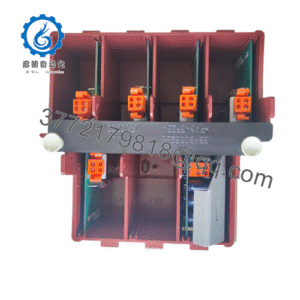
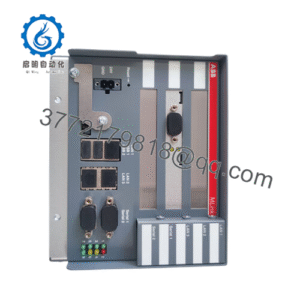
TRX32 303088G
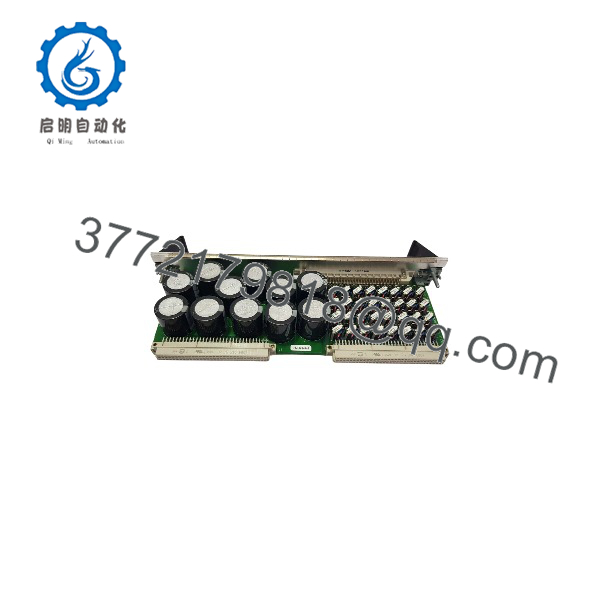
TRX32 303088G
Transmit and Receive Architecture
During operation, the manages the electronic transmit and receive paths associated with the acoustic transducer. The 32 transmitter and 32 receiver channels allow the board to handle the individual transducer elements required by the HiPAP acoustic positioning architecture.
The board also contains computing resources and configuration hardware. Kongsberg documents status LEDs for Ethernet activity, I/O activity, and power supplies, together with external synchronization, serial interfaces, and JTAG access.
This architecture is important during troubleshooting. A communication or positioning problem does not necessarily indicate a failed PCB. Possible fault locations include the transducer, transducer cabling, power supply, synchronization source, Ethernet connection, cooling system, or another board in the transceiver rack.
HiPAP System Application
The is documented within Kongsberg HiPAP 501/451/351/101 equipment. The current Kongsberg instruction manual describes the board and its installation within the transceiver unit. The spare-parts section identifies 303088 PCB , 501 as a recommended spare for the HiPAP 501/451/351 system family.
For procurement, the system model should therefore be recorded together with the board number. A customer requesting 303088G should ideally provide:
- HiPAP system model
- Existing board label
- Complete part number
- Hardware revision
- Serial number
- PCB identification
- Existing firmware/software information, where applicable
Revision G Verification
The available OEM material confirms 303088 but does not establish that the trailing G represents a standardized published electrical revision.
For that reason, it is better to state:
/ 303088G — revision G as marked on the supplied unit
rather than inventing a revision-specific specification.
This is particularly important for legacy marine electronics because visually similar boards can belong to different equipment generations or transceiver configurations.
Installation & Configuration Guide
5.1 Verify the HiPAP System
Before replacing the board, confirm that the host system corresponds to the Kongsberg equipment for which the board is specified.
Kongsberg’s spare-parts documentation identifies:
303088 → PCB , 501
for the HiPAP 501/451/351 system family.
Do not install the board solely because the connector arrangement appears mechanically compatible.
5.2 Power Isolation
The is installed as a plug-in circuit board inside the transceiver unit.
Before removal:
- Shut down the applicable HiPAP equipment according to the vessel’s maintenance procedure.
- Isolate the relevant power supplies.
- Allow stored energy to discharge according to the Kongsberg maintenance procedure.
- Use appropriate ESD protection.
- Disconnect or secure associated equipment as required.
- Do not handle exposed PCB circuitry unnecessarily.
Kongsberg maintenance documentation explicitly describes the circuit boards in the transceiver rack as plug-in modules secured by two ejectors.
5.3 Board Removal
The documented procedure uses the board ejectors to release the plug-in board from the rack.
Before removal, record:
- Board position
- Board label
- Part number
- Revision
- Cable/connector arrangement
- Switch/link positions
- Status LED condition
Preserving the original configuration information is important when replacing a legacy transceiver board.
5.4 Configuration Hardware
The contains links and switches used for application configuration. Kongsberg’s documentation identifies SW1 and SW2 on the board.
Do not copy switch settings from another unless the two boards are confirmed to have the same system configuration.
Before energizing the replacement:
- Compare SW1 settings.
- Compare SW2 settings.
- Check configurable links.
- Verify board position.
- Verify external synchronization configuration.
- Confirm Ethernet connections.
5.5 External Synchronization
The provides an external synchronization interface at P4. Kongsberg’s HiPAP documentation describes this interface as part of the board’s synchronization architecture.
If an installation uses external triggering/synchronization, verify the synchronization wiring before commissioning.
Kongsberg documentation for the also specifies a differential synchronization interface, with the input used to control the start of transmission when the board operates in external-trigger mode.
5.6 Ethernet and Service Interfaces
The board includes:
- P9: Ethernet
- P5: serial I/O
- P7: serial I/O
- P3: JTAG
P5 and P7 are documented as development/debugging interfaces, while P3 provides JTAG access. These should not be treated as normal vessel control interfaces without reference to the applicable Kongsberg service documentation.
5.7 Commissioning
After installation, check the board before returning the HiPAP system to operational service.
Recommended checks:
- Board mechanically seated.
- Ejectors fully secured.
- Correct board identification recognized.
- Power-supply LEDs normal.
- Ethernet activity/status normal.
- I/O activity consistent with system operation.
- External synchronization operating correctly, where used.
- Transducer communication established.
- Acoustic transmission operating correctly.
- Acoustic reception operating correctly.
- HiPAP positioning performance verified.
For a vessel in operation, final acceptance should follow the vessel’s approved maintenance and testing procedure.
5.8 Replacement Trap: vs. Filter Board
Kongsberg documentation distinguishes the transceiver board from the filter board.
The spare-parts list identifies:
- 303088 — PCB , 501
- 304337 — PCB Filter
These are separate spare parts.
Therefore, 303088G should not be substituted with 304337 merely because both are associated with equipment.
5.9 Replacement Trap: “32 Channel” Does Not Mean 32 Digital I/O Channels
Some third-party listings incorrectly describe as a 32-channel digital I/O module. Kongsberg’s OEM documentation describes the 32 channels as transmit/receive acoustic channels: 32 transmitters and 32 receivers.
For an engineering or procurement database, the preferred classification is:
Marine acoustic transceiver PCB / HiPAP transceiver board
rather than:
32-channel PLC digital I/O module.
FAQ
What is Kongsberg 303088G?
It is a Kongsberg transceiver circuit board associated with the HiPAP high-precision acoustic positioning system. Kongsberg identifies part number 303088 as the .
How many channels does the have?
The has 32 transmitter channels and 32 receiver channels. Kongsberg describes it as a 32-channel multi-frequency transmitter/receiver circuit board.
Is a digital I/O module?
No. Its primary documented function is acoustic transmission and reception for the HiPAP system. The “32 channels” refer to the transceiver architecture rather than 32 conventional PLC digital I/O points.
Which Kongsberg system uses 303088?
Kongsberg’s spare-parts documentation identifies 303088 as PCB , 501 for the HiPAP 501/451/351 system family.
What is the function of the board?
The board contains 32 transmitters and 32 receivers. Each transmitter/receiver pair is connected to a specific element of the transducer, and the board also contains computing capability.
Does the have Ethernet?
Yes. Kongsberg identifies P9 as the Ethernet connector and provides LEDs for Ethernet activity.
Does support external synchronization?
Yes. P4 is the external synchronization interface. Kongsberg documentation describes synchronization signals associated with starting the transceiver’s transmission.
What service interfaces are available?
The documented interfaces include P5 and P7 serial I/O and P3 JTAG. These are primarily service, development, debugging, or configuration interfaces rather than general-purpose plant I/O.
What is the difference between 303088 and 304337?
Kongsberg’s spare-parts list identifies 303088 as the PCB and 304337 as the PCB Filter. They are separate boards and should not be treated as interchangeable.
What does the “G” in 303088G mean?
The available public Kongsberg documentation confirms 303088, but I could not verify an OEM document that defines the trailing G as a specific electrical or firmware revision. The safest procurement practice is to record 303088G exactly as printed on the physical board and request a label photograph when exact-revision matching is required.
What should be checked before purchasing a replacement ?
Verify:
- Kongsberg designation
- Part number 303088
- “G” revision marking, if present
- HiPAP system model
- PCB label and serial number
- Connector condition
- Board revision/configuration switches
- Physical condition
- Test status
- Packaging and ESD protection
- New Original / New Surplus / Used / Refurbished condition
For a legacy HiPAP spare, matching the system model and complete board identification is more important than matching the name alone.