WhatsApp: +86 16626708626
 Email:
 Phone: +86 16626708626
Description
Key Technical Specifications
- Rated Power: 3.9 kW
- Motor Type: Asynchronous (induction) servo motor — synchronous control via mounted encoder
- Rated Torque: 10.8 Nm
- Rated Speed: 3,455 rpm at 120 Hz rated frequency
- Rated Voltage: 390 V, 3~ (nameplate: 3~Mot 390 V)
- Rated Current: 9.1 A
- Encoder Feedback: Mounted feedback device, 3,455 PPR (matches the 3,455 rpm rated speed — verify exact encoder type on your unit’s ID plate)
- Cooling: Separate forced-ventilation fan (external fan unit, e.g., Lenze 4656EZ class, 1~ 230 V ±10%) — required because the motor runs at high slip frequencies where self-cooling is insufficient
- Brake: Optional holding brake (some units built with, some without — the “RS” family includes brake variants; confirm your ID number)
- Protection Rating: IP54
- Frame: 080 frame size, speed class 22
- Configuration Note: Lenze configures these motors per ID number — provide the full ID number when ordering so the feedback device, brake, and fan options match your installation
- Typical Application: Muller Martini Avanti and comparable bindery/finishing axes; also general servo axes on Lenze 9300/i500 drive systems
Verify the full ID number from your motor’s nameplate against our stock before ordering — MDFKA motors were built in many configuration variants, and the encoder and brake options are not interchangeable across them.
Product Introduction
The Lenze MDFKARS080-22 is a 3.9 kW asynchronous servo motor — an induction machine with mounted encoder feedback, built for servo duty on Lenze drives like the 9300 series. It delivers 10.8 Nm at 3,455 rpm (120 Hz), which puts it squarely in the class of high-speed, continuously cycling axes on bindery and finishing equipment. The Muller Martini Avanti is its most common home.
The design uses forced separate ventilation rather than shaft-mounted cooling, which matters for its duty cycle: at low speeds and high torque, a self-cooled motor cooks its windings while this one stays in its thermal envelope. That’s why the external fan unit must run whenever the motor runs. Lenze has discontinued this frame, so tested refurbished and sealed-surplus units are the practical replacement path — matched by ID number to your installation, because “same model” is not the same as “same configuration.”
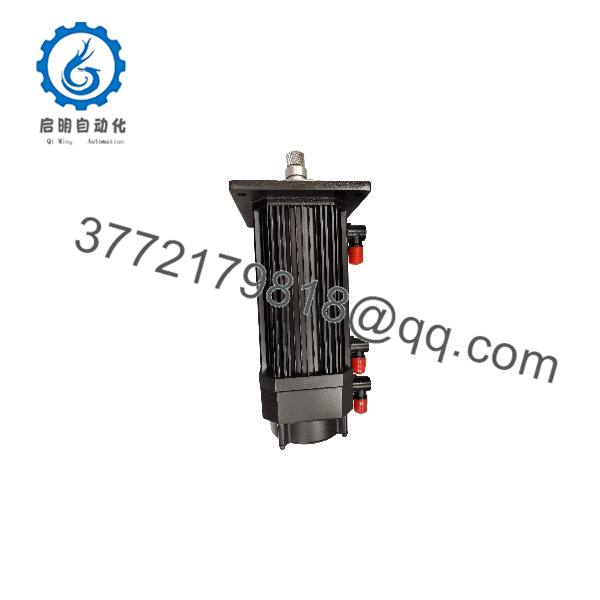
MDFKARS080-22
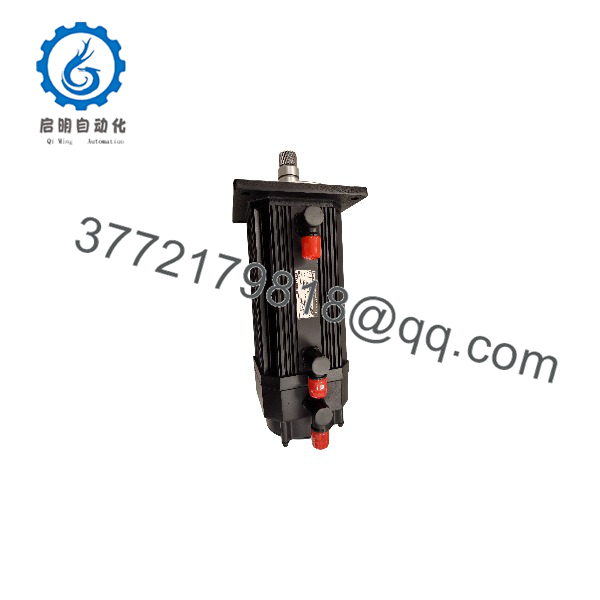
MDFKARS080-22
Troubleshooting Quick Reference
| Symptom | Possible Cause | Relevance to this Part | Quick Check Method | Recommendation |
|---|---|---|---|---|
| Motor overheats, trips drive thermal fault | External fan not running — the motor depends on forced ventilation | ⚠️ Medium | Check the 230 V fan supply and fan operation at startup; feel the airflow at the motor cowl | Fix the fan circuit first — running this motor without forced air cooks the windings |
| Position/speed faults, drive trips on feedback loss | Encoder failure or damaged feedback cable | ✅ High | Check encoder cable for chafe in the drag chain; swap the cable if suspect; monitor feedback counts while rotating the shaft by hand | Replace cable first, then encoder/motor if faults persist |
| Motor hums, won’t rotate, draw high current | Lost phase in supply cable or failed drive output stage | ❌ Low | Measure all three phases at the motor terminal box with the drive commanded to run | Check the drive and power cable before pulling the motor |
| Grinding noise and vibration under load | Worn bearings (typical failure point at high-hour counts) | ✅ High | Listen at each end bell; check radial shaft play with a dial indicator | Replace bearings or the motor; verify coupling alignment on reinstallation |
| Drive trips on overcurrent at moderate speed | Winding degradation or partial short between turns | ✅ High | Measure phase-to-phase winding resistance (should match within ±5%); Megger phase-to-ground at 500 V (>10 MΩ) | Unbalanced resistance or low megohms confirms motor replacement |
| Weaker performance than before over months | Encoder drift or mechanical wear (gearbox, coupling) — not the motor’s power stage | ⚠️ Medium | Run a known test profile; compare torque demand in the drive diagnostics against historical values | Identify the degrading element before ordering hardware |
Honest note: on these motors, bearings and encoders account for the vast majority of failures — the induction winding itself is nearly bulletproof. Overheating complaints almost always trace to the external fan circuit, and feedback faults almost always trace to cables. If you’re stuck, contact our technical support with the drive fault codes, winding resistance measurements, and the motor’s full ID number.
Frequently Asked Questions (FAQ)
Q1: Why does the ID number matter so much on this motor?
Lenze built the MDFKA series to order — the base model MDFKARS080-22 covers the power frame, but the full ID number on the nameplate defines the encoder type and resolution, the presence or absence of a holding brake, the connector type, and the fan arrangement. Two motors with the same model number but different ID numbers will not accept each other’s feedback connectors or brake wiring. This is the single most common sourcing mistake on this family: someone orders “an 080-22,” it arrives, and the encoder plug doesn’t fit. Send us the complete ID number when requesting a quote and we match the configuration exactly.
Q2: Is this motor really a “servo” if it’s asynchronous?
Yes — it’s an induction machine built and controlled as a servo. The mounted encoder closes the speed and position loops on the drive, and the motor’s rotor design tolerates the continuous high-slip, high-cyclic operation that servo duty demands. Compared to a permanent-magnet synchronous servo, you give up some torque density and efficiency but gain robustness — no magnet to demagnetize from overheating, simpler construction, and a rotor that survives harsh washdown and vibration environments better. For bindery axes running millions of cycles, that trade is the right one, which is why Muller Martini specced them.
Q3: My motor overheats at low speed. Is it failing?
Check the external fan before blaming the motor. This design relies on separate forced ventilation — the fan mounted on the back or side pushes cooling air regardless of shaft speed. At low shaft speeds, a self-cooled motor has no airflow; this one has full airflow, but only if the fan runs. The fan has its own 230 V single-phase supply, and its circuit is often powered separately from the drive. A tripped fan breaker or a failed fan capacitor produces exactly the symptom you’re describing: fine at high speed, hot at low speed. Ten minutes with a multimeter at the fan terminals usually resolves the diagnosis.
Q4: Can I replace it with a modern Lenze servo motor instead?
Mechanically, often yes — same frame, same mounting, adapters available. Electrically, it means re-engineering: new drive commissioning, feedback mismatch resolution, machine control parameter changes, and on a Muller Martini Avanti, that’s a machine-level integration project, not a motor swap. The pragmatic path for keeping an existing line running is a like-for-like replacement matched by ID number — tested units restore the axis in a day. When you’re planning a machine rebuild or the drives are due for replacement anyway, that’s the moment to consider a platform migration. Ask us for both quotes and compare honestly.
Q5: What’s the difference between New Surplus and Refurbished on this motor — and what’s your process?
New Surplus units are factory-sealed motors from cancelled projects and de-inventoried stock, never installed — matched by ID number, verified by nameplate, and shipped in protective crating. Refurbished units are motors pulled from working machines, run through our rebuild process: bearing replacement, encoder verification on a test fixture, winding resistance and insulation testing (500 V Megger, >10 MΩ), brake function test where fitted, and a supervised test run under load on our in-house rig with thermal monitoring. Both carry a 1-year warranty and a test report. We’ll tell you plainly which condition each unit on our shelf is in — the price difference is real, and so is the tradeoff.
Q6: Can I rebuild just the bearings or encoder instead of replacing the motor?
Often, yes — and it’s frequently the smart move. Bearings are the highest-wear item on this motor, and a bearing swap at a fraction of replacement cost buys years of life if the windings and encoder test healthy. Our repair service covers exactly that: bearing replacement, encoder replacement, brake overhaul, and a full electrical test with documentation. The decision point is the winding condition: healthy windings plus worn bearings = repair; low insulation resistance or unbalanced phase resistance = replace. Send us the measurements or ship us the motor and we’ll give you an honest verdict, not a reflex replacement quote.
Q7: What’s the lead time and warranty?
In-stock units ship within 24–48 hours on a pallet — these motors ship crated with the fan and connector hardware protected, never loose in a courier bag, because damaged encoder mounts and bent connector flanges turn a good motor into scrap. Every unit carries a 1-year warranty covering functional failure, with our test report and the matched ID configuration documented before shipping. For a specific ID number or quantity, contact us first — MDFKA stock moves unit by unit because each configuration is unique, and we’ll confirm honestly whether we have your exact configuration or what the realistic sourcing timeline is.