WhatsApp: +86 16626708626
 Email:
  Phone: +86 16626708626
Description
Key Technical Specifications
| Parameter | Value |
|---|---|
| Manufacturer | Metso Automation; legacy platform associated with Valmet Automation |
| Model | AI8H D201189 |
| Base Part Number | D201189 |
| Product Type | HART-enabled analog input module |
| I/O Function | Analog current measurement with HART digital communication |
| Input Channel Count | 8 |
| Primary Field Signal | 4–20 mA DC process-transmitter loops |
| Digital Overlay Protocol | HART |
| Typical Connected Devices | Pressure, temperature, flow, level transmitters, and HART-enabled valve positioners |
| HART Function | Process-value acquisition, device diagnostics, configuration access, and smart-device status retrieval |
| System Family | Legacy Metso MasterPiece 2001 / ACN CS DCS I/O environment |
| Rack Format | 3U Eurocard-style rack-mounted I/O module |
| Mounting | System I/O rack; verify the installed terminal-base and connector type |
| Field Isolation | Verify exact revision and documentation before installation; vendor references describe isolated field-loop interfaces |
| Module Variant Warning | D201189 standard/short-connector version and D201189L long-connector version require matching terminal-base hardware |
| Supported Wiring | Verify two-wire loop-powered and any four-wire transmitter arrangement against the exact system documentation |
| Input Scaling | Engineering range and device configuration depend on the DCS application and HART transmitter configuration |
| HART Network Limitation | Treat each channel as an instrument loop unless the approved system configuration documents supported multidrop operation |
| Application Environment | Process plants, pulp and paper systems, utilities, mining, chemical processing, and other legacy Metso DCS installations |
| Lifecycle Status | Legacy / end-of-life spare; verify exact hardware revision, terminal base, and system compatibility before purchase |
Available technical-market references identify the Metso AI8H D201189 as an eight-channel HART analog input module for 4–20 mA field devices within legacy MasterPiece 2001/ACN CS DCS architectures. A critical mechanical distinction is the terminal-interface variant: D201189 and D201189L should not be cross-installed without the matching terminal base or adapter.
Product Introduction
The Metso AI8H D201189 is an eight-channel HART analog input module for bringing 4–20 mA process signals and HART device data into a legacy Metso MasterPiece 2001 or ACN CS control system. It connects field transmitters and HART-capable devices to the DCS for process monitoring, alarm handling, loop control, calibration support, and instrument diagnostics.
This is a spare-parts-sensitive module. Confirm the exact hardware version, connector length, terminal base, rack position, field loop arrangement, and controller application before ordering. A D201189L long-terminal version is not a direct mechanical replacement for the standard short-connector module unless the terminal-base interface also matches.
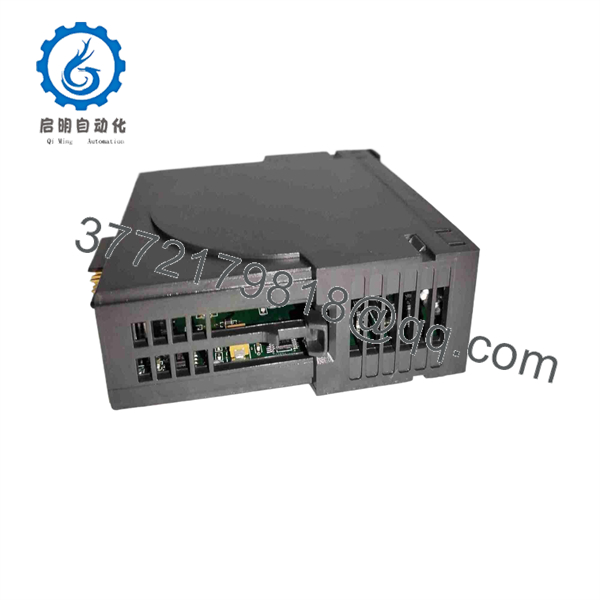
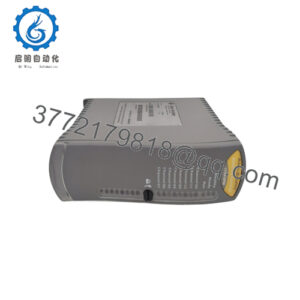
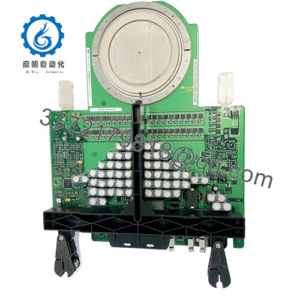
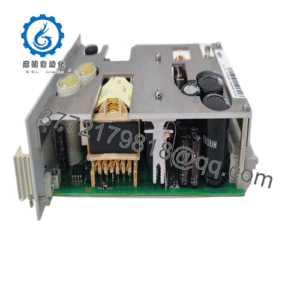
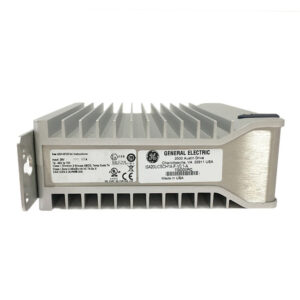
AI8H D201189
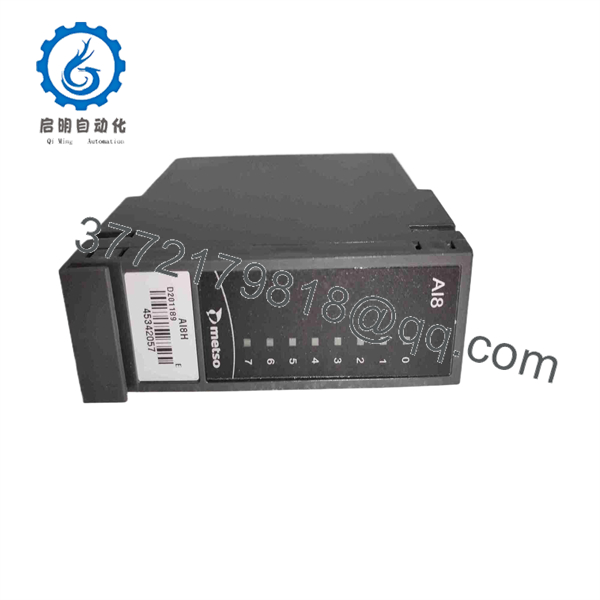
AI8H D201189
Troubleshooting Quick Reference
| Symptom | Possible Cause | Relevance to this Part | Quick Check Method | Recommendation |
|---|---|---|---|---|
| All eight analog inputs read zero | Missing module/rack power, module not seated, failed I/O rack interface, incorrect configuration | ⚠️ Medium | Check the rack supply and controller diagnostics; reseat the module under an approved procedure; verify the module is assigned to the expected rack location | Check rack power and configuration before replacing the AI8H |
| One channel reads 0 mA or under-range | Open loop, blown transmitter fuse, failed transmitter, broken field cable, incorrect loop supply | ❌ Low | Measure loop current in series with a calibrated meter; verify transmitter supply and continuity at the terminal base | Repair the field loop before replacing the input module |
| One channel reads fixed high value | Shorted wiring, transmitter output saturated, wrong transmitter range, damaged input channel | ⚠️ Medium | Measure actual loop current with a meter; compare the result with the DCS value and transmitter local display | If actual current is normal but only the DCS channel remains incorrect, investigate the channel and terminal base |
| Several channels show the same wrong value | Common wiring error, shared loop supply issue, incorrect database mapping, wrong terminal-base connection | ❌ Low | Compare each transmitter’s measured current with the DCS raw input; inspect common terminals and card-to-terminal-base engagement | Multi-channel symptoms usually point to field wiring, common supply, or configuration—not simultaneous module failure |
| HART diagnostics are unavailable but 4–20 mA values are correct | HART communication disabled, insufficient loop resistance, incompatible transmitter configuration, excessive noise | ⚠️ Medium | Verify the transmitter is HART-enabled; check loop resistance and signal quality; connect a handheld HART communicator at the field device | The analog channel can work while HART communication fails. Correct loop impedance and configuration before replacing the card |
| HART communicator works locally but DCS cannot see device data | Incorrect HART channel assignment, DCS configuration issue, module revision mismatch, HART polling/configuration limitation | ⚠️ Medium | Compare local communicator response with DCS diagnostics; verify channel mapping and configured HART device tag/address | Review engineering configuration and module compatibility before replacing hardware |
| Input fluctuates when nearby VFDs or motors start | Poor shielding, ground loop, unstable loop supply, cable damage, electromagnetic interference | ⚠️ Medium | Trend raw input and 24 V loop supply during motor starts; inspect shield termination and field junction boxes | Correct cable routing, grounding, and supply stability. Do not replace the card until noise sources are ruled out |
| Input has a steady offset from the field meter | Incorrect transmitter calibration, wrong engineering scaling, loop-current measurement error, module accuracy issue | ⚠️ Medium | Compare transmitter display, calibrated milliamp reading, and DCS raw count at 4 mA, 12 mA, and 20 mA | Calibrate/configure the transmitter or DCS scaling first. Replace the module only if the known-good loop current is consistently misread |
| Replacement does not mate with existing terminal hardware | versus D201189L connector-length mismatch | ✅ High | Compare the removed module’s connector depth, full label, terminal base, and rack geometry with the offered unit | Do not force insertion. Source the matching standard or long-connector version and terminal base |
| Module powers up but all channels map to the wrong tags | Wrong slot assignment, database mismatch, terminal block moved, rack address/configuration error | ✅ High | Compare old and new rack locations, application database, channel list, and terminal numbers; test one loop at a time | Verify every channel with simulated 4 mA and 20 mA before restoring live process signals |
| DCS reports intermittent module communication loss | Loose rack connection, oxidized contacts, rack power dip, controller/rack bus issue | ⚠️ Medium | Inspect connector pins, card guides, retention hardware, and rack voltage under load; check bus diagnostics | Clean and reseat connectors according to the maintenance procedure. Replace the module only after rack and bus health are confirmed |
| A loop signal disappears after module replacement | Field wire landed on the wrong terminal, terminal-base mismatch, common disconnected, loop fuse disturbed | ✅ High | Compare pre-removal photos and wiring labels; verify loop current at the transmitter, marshalling point, and module terminal | Do not troubleshoot from memory. Trace the loop end-to-end and confirm terminal numbering against the approved drawing |
| Device reports a field fault but process value still appears valid | HART diagnostic event, sensor drift, device-status alert, configuration mismatch | ❌ Low | Read full HART status using the DCS or a handheld communicator; check transmitter diagnostics and calibration history | Treat the device alert seriously. The module may be correctly reporting a field-instrument problem |
| New card works but HART device tags are missing | Configuration not restored, asset-management database not updated, uncommissioned device mapping | ⚠️ Medium | Restore the approved DCS/HART configuration and compare device tags, polling configuration, and engineering database | Update the system configuration. Hardware replacement alone does not rebuild instrument asset records |
❗ Connector warning: The standard and D201189L long-connector version are not interchangeable without the matching terminal-base arrangement. If the replacement will not fully seat, stop. Do not force the card; you can damage the module connector, rack backplane, or terminal base.
❗ HART warning: A normal 4–20 mA value does not prove HART is healthy. HART communication needs a compatible transmitter, sufficient loop impedance, correct channel configuration, and clean wiring. Always test both the analog reading and HART diagnostic access after installation.
❗ Loop-power warning: Measure current in the actual loop. Do not diagnose a 4–20 mA input card using only voltage readings. A broken common, failed barrier, fuse, isolator, or transmitter supply can create symptoms that look exactly like a failed analog input channel.
❗ Replacement warning: Photograph the module label, terminal base, connector depth, rack slot, field terminals, and DCS channel list before removal. I have seen a spare with the wrong connector variant turn a 15-minute card swap into a full shift of wiring verification.
If troubleshooting remains unresolved, provide technical support with photos of the complete label, terminal base, rack location, field wiring, transmitter model, HART communicator screen, DCS diagnostics, and calibrated current readings at 4 mA, 12 mA, and 20 mA.
Frequently Asked Questions
What does the Metso AI8H do?
The AI8H receives eight 4–20 mA process signals and supports HART digital communication with compatible field devices. It converts transmitter current signals into DCS process values while allowing access to HART device status, diagnostics, and configuration information.
How many channels does the have?
It has eight HART-capable analog input channels. Each channel is intended for a process-instrument loop, such as a pressure, flow, level, temperature, or valve-position feedback device.
Does the support standard 4–20 mA transmitters without HART?
Yes. A standard 4–20 mA transmitter can be used for analog process measurement even if it does not support HART. HART capability adds digital diagnostics and configuration access on top of the same analog current loop. Confirm the installed DCS configuration and field wiring for the specific application.
What is the difference between and D201189L?
The key difference is the field-connector and terminal-interface arrangement. is identified as a long extended-terminal version, while is the standard/short-connector version. They cannot be directly cross-installed unless the matching terminal base or adapter is also used. Always compare the old module’s full label and physical connector depth before ordering.
Can I hot-swap the ?
Do not assume hot-swap capability without the approved MasterPiece/ACN CS maintenance procedure. Before removing the module, determine whether its channels feed control loops, shutdown monitoring, alarm functions, or critical process indications. Place affected loops in a safe maintenance condition, document current values and alarms, and follow the site’s work permit and ESD requirements.
Will the DCS configuration stay intact after replacing the card?
The DCS configuration normally remains in the controller or engineering database, but you must not assume point mapping, HART configuration, or diagnostics will automatically return without verification. Record the rack position, channel-to-tag mapping, device tag, range, alarm limits, HART configuration, and terminal wiring before replacement. Then prove each channel using a calibrated current source or transmitter simulation before returning the loop to service.
Why does the analog value work but HART communication fail?
This usually indicates a field-loop or configuration issue rather than a failed analog input. HART requires an enabled HART transmitter, correct loop resistance, proper device addressing, clean wiring, and a compatible DCS configuration. A local handheld communicator can often talk to the device even when the DCS channel is not configured to poll it.
Why is the DCS reading 22 mA or an over-range value?
First, measure the real loop current. A transmitter may be intentionally signaling a fault above 20 mA, it may be misconfigured, or the loop may have a wiring or supply problem. If the meter shows normal current but the DCS consistently shows over-range, inspect the terminal base, input channel, and engineering scaling.
Is obsolete?
It belongs to a legacy Metso MasterPiece 2001/ACN CS environment, so it should be treated as end-of-life, stock-dependent equipment. Keep documented tested spares, matching terminal interfaces, application backups, wiring drawings, and transmitter configuration records. The terminal variant can be as important as the base part number when sourcing a replacement.
What condition should I request for a critical process-control spare?
Request New Original / New Surplus with clear photos of the full label, connector depth, terminal interface, packaging, and serial information. For Refurbished (tested) stock, request a report covering rack recognition, all eight channels, calibrated 4 mA/12 mA/20 mA measurements, HART communication with a known-good transmitter, isolation checks where applicable, and sustained operation. Ask for test photos or video, confirmed stock, lead time, written warranty, and return terms before purchasing.