WhatsApp: +86 16626708626
 Email:
  Phone: +86 16626708626
Description
Key Technical Specifications
| Parameter | Value |
|---|---|
| Model | HA-SC23 |
| Brand | Mitsubishi Electric |
| Servo Series | MELSERVO-SC |
| Motor Type | AC servo motor |
| Rated Output | 0.2 kW |
| Rated Speed | 3,000 r/min |
| Compatible Servo Amplifier | MR-SC20 |
| Rated Current | 4.2 A peak-to-peak / 1.5 A RMS |
| Feedback | Motor encoder / detector |
| Encoder Connection | CN2 via Mitsubishi servo amplifier |
| Permissible Radial Shaft Load | 176 N at L = 30 mm |
| Permissible Thrust Load | 147 N |
| Recommended Shaft Coupling | Flexible coupling |
| Operating Ambient Temperature | 0–40 °C |
| Ambient Humidity | 80% RH or less, non-condensing |
Mitsubishi’s MELSERVO-SC documentation lists HA-SC23 under the MR-SC20 combination, with a 0.2 kW motor rating and 3,000 r/min speed. The same documentation specifies 176 N permissible radial load and 147 N permissible thrust load at the stated shaft-load condition.
Product Introduction
The Mitsubishi HA-SC23 is a 0.2 kW AC servo motor from the MELSERVO-SC family, designed for closed-loop positioning and motion-control applications. Mitsubishi specifies the HA-SC23 for use with the MR-SC20 servo amplifier.
For legacy equipment, the original motor/amplifier pairing matters. Mitsubishi states that the HA-SC23 can be operated with an MR-H20AN when the MR-H-E02 option card is installed. For a migration to current motor technology, Mitsubishi identifies HC-MF23 as the corresponding replacement, but explicitly notes that it does not have mounting compatibility with the HA-SC23.
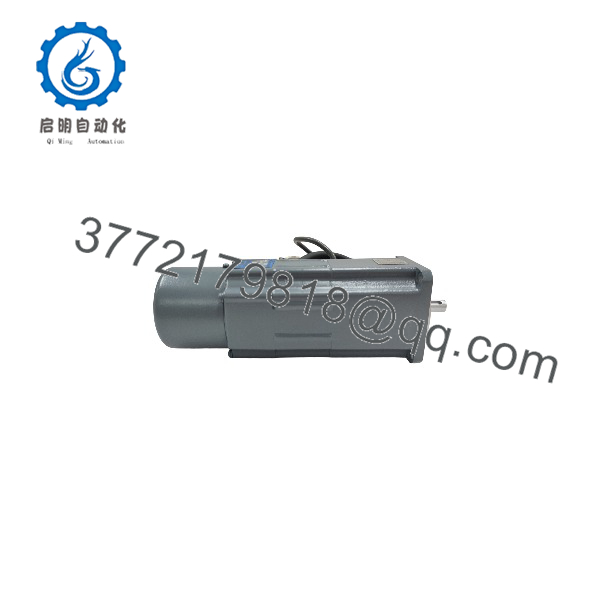
HA-SC23
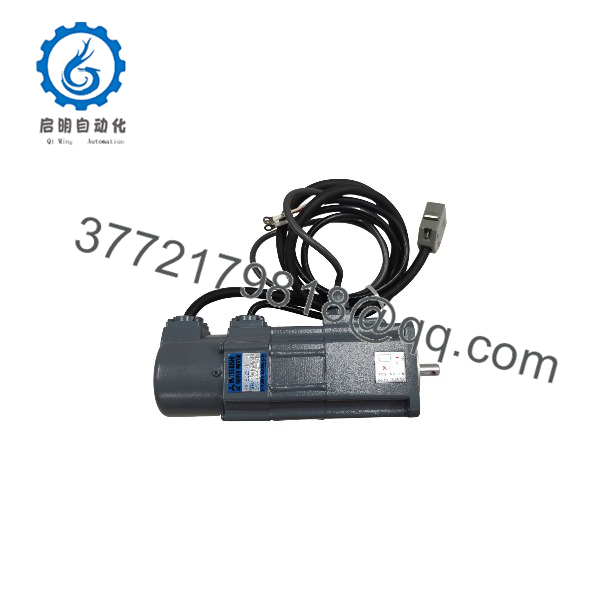
HA-SC23
Installation & Configuration Guide
Stage 1: Pre-Installation Preparation — 5–10 minutes
⚠️ Safety First: Stop the machine and place the axis in a safe mechanical state. Apply lockout/tagout before disconnecting the servo system. Do not work on the motor or amplifier while energized.
Tools Required:
- ESD wrist strap
- Phillips screwdriver
- Multimeter
- Wire labels
- Camera or smartphone
- Appropriate mechanical alignment tools
Data Backup:
- Record the existing nameplate information.
- Photograph motor power and encoder connections.
- Record the existing MR-SC20 parameter settings.
- Photograph all amplifier configuration settings before removal.
- Record the existing motor-to-machine coupling arrangement.
- Keep the old motor available until commissioning is complete.
Stage 2: Removing the Old Motor — 10 minutes
- Verify that servo power is isolated.
- Confirm that the mechanical load cannot move unexpectedly.
- Label the U/V/W motor leads and encoder cable.
- Disconnect the motor power and detector connections without pulling on the cable.
- Remove the mechanical coupling.
- Remove the motor mounting bolts.
- Withdraw the motor without striking the encoder.
- Inspect the coupling, shaft, mounting face, and cable condition.
⚠️ Do not use the encoder housing as a lifting or carrying point. Mitsubishi specifically warns against mechanical shock to the encoder during transportation and installation.
Stage 3: Installing the New HA- — 10 minutes
- Verify that the replacement nameplate reads .
- Check the motor shaft and mounting surface for damage.
- Install the motor without forcing the shaft into alignment.
- Use a flexible coupling where appropriate.
- Align the motor shaft with the driven machine shaft.
- Tighten mounting hardware according to the machine manufacturer’s specified torque.
- Reconnect U/V/W motor power leads.
- Reconnect the encoder/detector cable.
- Verify grounding continuity.
Mitsubishi specifies a permissible shaft-core alignment difference of 0.05 mm or less in the referenced installation procedure.
Self-Checklist:
- Correct HA- model
- Mounting face clean
- Shaft alignment checked
- Coupling installed correctly
- U/V/W wiring verified
- Encoder connection secured
- Ground connection verified
- Mechanical fasteners tightened
Stage 4: Power-On & Testing — 5–10 minutes
- Check the motor circuit for wiring errors before energizing.
- Verify the MR-SC20 amplifier is configured for the HA-.
- Mitsubishi documentation identifies the motor combination as a parameter setting; an incorrect motor/amplifier combination can generate a parameter error and may damage the motor.
- Power the servo system with the machine in a controlled state.
- Check the amplifier display for alarms.
- Confirm encoder feedback.
- Perform a low-speed jog.
- Check direction of rotation.
- Verify positioning accuracy.
- Gradually return the axis to normal operating speed and load.
⚠️ Do not assume a physically similar servo motor is electrically interchangeable. The servo amplifier’s motor-selection parameters must correspond to the installed motor.
Legacy Replacement Note
If the original MR-SC20 system is being migrated, Mitsubishi documents the following relationships:
- HA- → MR- in the original MELSERVO-SC system.
- HA- → MR-H20AN + MR-H-E02 when using the HA- with the MR-HAN platform.
- HA- → HC-MF23 as a Mitsubishi-identified current replacement, but Mitsubishi states that the HC-MF23 does not have mounting compatibility with HA-. Mechanical dimensions and specifications therefore need to be checked before migration.
Frequently Asked Questions (FAQ)
Can the Mitsubishi HA- be used with an MR-?
Yes. MR- is the documented matching servo amplifier for HA- in the MELSERVO-SC system. The amplifier’s motor parameter must be configured for the HA-.
Is the HA- still a current Mitsubishi servo motor?
The HA- belongs to Mitsubishi’s older MELSERVO-SC generation. Mitsubishi’s current documentation identifies newer servo families, while its legacy migration documentation provides replacement guidance for HA-. Treat HA- as a legacy replacement part and verify stock and condition before purchase.
What is the Mitsubishi replacement for HA-?
Mitsubishi’s FAQ identifies HC-MF23 as the replacement corresponding to HA-. However, Mitsubishi explicitly states that the HA- and HC-MF23 are not mounting-compatible, so this should be treated as a migration rather than a simple mechanical drop-in replacement.
Can HA- work with an MR-H20AN?
Yes, Mitsubishi states that the MR-H20AN can operate HA- when equipped with the MR-H-E02 option card. One option card is required per amplifier.
What should I check before replacing an HA-?
Check the complete motor/amplifier combination, nameplate data, encoder connection, mechanical mounting dimensions, shaft alignment, coupling, and amplifier parameters. Do not select a replacement solely from the 0.2 kW rating.
What are the shaft-load limits for HA-?
Mitsubishi’s installation documentation specifies a permissible radial load of 176 N and thrust load of 147 N, with the radial-load value specified at L = 30 mm from the flange mounting surface to the load center. These limits apply independently.
Does the programming stay in the HA-?
The motor itself does not contain the PLC or motion-program logic. In an MR–based system, the relevant control parameters reside in the servo amplifier/control system. Before replacement, document and back up the amplifier parameters, then verify the motor-selection parameter after installation.