WhatsApp: +86 16626708626
 Email:
  Phone: +86 16626708626
Description
Key Technical Specifications
| Parameter | Value |
|---|---|
| Manufacturer | Mitsubishi Electric |
| Model | HC703BS-E51 |
| Product Series | CNC MELSERVO HC |
| Motor Type | AC servo motor |
| Rated Output | 7.0 kW |
| Rated Speed | 3,000 r/min |
| Rated Torque | 22.3 N·m |
| Stall Torque | 49 N·m |
| Maximum Torque | 105 N·m |
| Rated Current | 30.5 A |
| Stall Current | 67.2 A |
| Detector | Incremental encoder, 1,000,000 pulses/revolution |
| Brake | Built-in electromagnetic brake |
| Shaft | Straight shaft |
| Armature Resistance | 0.025 Ω per phase at 20 °C |
| Armature Inductance | 0.9 mH between wires at 20 °C |
| Motor Inertia | 170 kg·cm² |
| Protection Rating | IP65 |
| Insulation Class | Class F |
| Approximate Weight | 38 kg with brake |
| Overall Length | Approximately 345 mm |
| Mounting | Four Ø13.5 mm mounting holes |
| Amplifier Requirement | Use a compatible Mitsubishi servo amplifier |
| Application | CNC machine tools, machining centers, and large positioning axes |
The published specifications identify HC703BS-E51 as a 7.0 kW Mitsubishi CNC MELSERVO HC-series AC servo motor with a brake and incremental detector. Verify final dimensions, connector details, amplifier pairing, and environmental ratings against the Mitsubishi manual for the exact motor revision.
Product Introduction
Mitsubishi HC703BS-E51 is a 7.0 kW CNC MELSERVO HC-series AC servo motor for high-load machine-tool axes and industrial positioning systems. It provides 3,000 r/min rated speed, 22.3 N·m rated torque, a straight shaft, built-in electromagnetic brake, and a high-resolution incremental detector.
The HC703BS-E51 suits large CNC axes where the amplifier requires substantial continuous and peak current. Check the matched Mitsubishi amplifier, motor power cable, encoder cable, brake voltage, mounting pattern, and load inertia before installation.
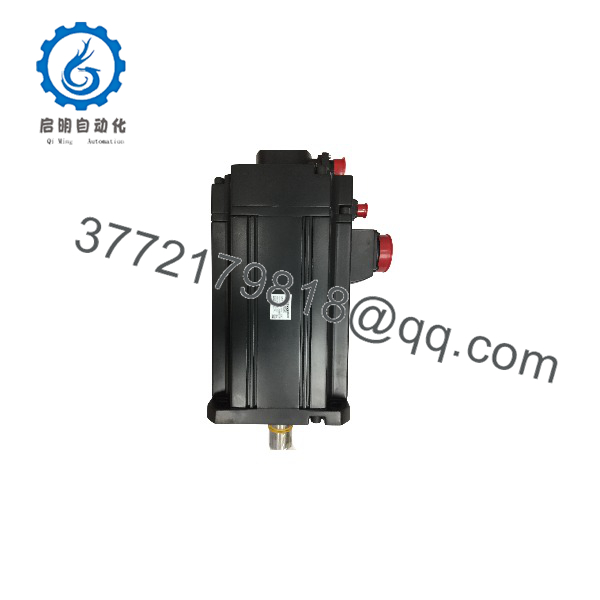
HC703BS-E51
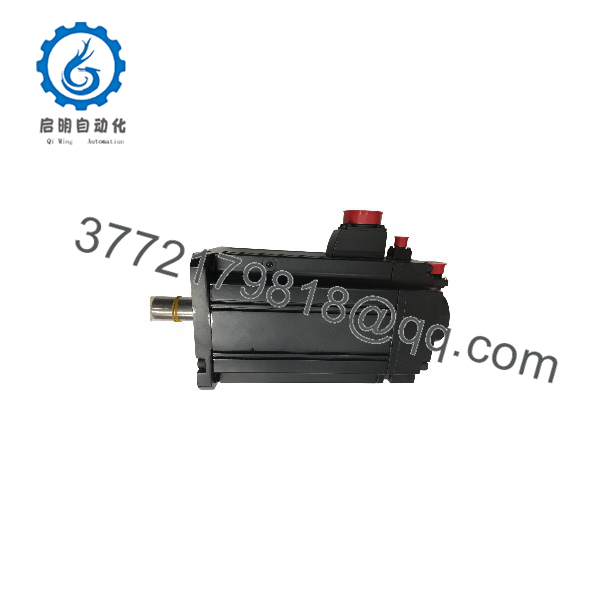
HC703BS-E51
Troubleshooting Quick Reference
| Symptom | Possible Cause | Relevance to This Part | Quick Check Method | Recommendation |
|---|---|---|---|---|
| Motor does not rotate | Servo amplifier inhibit, alarm, wiring fault, or motor winding failure | ✅ High | Check amplifier alarm history, enable input, and motor cable continuity with power isolated | Clear the amplifier-side fault before replacing the motor |
| Encoder alarm at power-up | Damaged encoder cable, incompatible detector, or encoder failure | ✅ High | Inspect the encoder connector and cable shield; verify the amplifier recognizes the 1,000,000 pulses/revolution detector | Do not substitute a motor with a different detector specification |
| Brake does not release | Incorrect brake voltage, failed brake coil, or control wiring fault | ✅ High | Measure the brake release voltage at the motor brake leads using the Mitsubishi wiring diagram | Never force the shaft or run the motor with the brake mechanically engaged |
| Excessive motor current | Mechanical overload, incorrect tuning, seized axis, or phase fault | ✅ High | Compare amplifier current feedback with the 30.5 A rated current and inspect the machine for binding | Check load mechanics and amplifier parameters before condemning the motor |
| Motor overheats | Excessive duty cycle, poor ventilation, overload, or misalignment | ✅ High | Monitor motor temperature, load ratio, and cycle time; inspect coupling alignment | Correct the mechanical or tuning problem before installing another motor |
| Positioning error increases | Encoder feedback problem, coupling slip, backlash, or tuning issue | ✅ High | Compare commanded and actual position; inspect coupling, shaft key, and encoder diagnostics | Verify mechanics and feedback wiring before replacing the servo motor |
| Strong vibration or noise | Misalignment, bearing wear, resonance, or incorrect gain settings | ✅ Possible | Run at low speed with the load uncoupled where permitted; check vibration and amplifier tuning | Do not continue operation if bearing noise or shaft play is present |
| Motor runs but axis stalls | Load inertia too high, acceleration too aggressive, or insufficient amplifier capacity | ✅ High | Compare reflected load inertia and acceleration settings with the matched amplifier limits | Confirm the amplifier supports the motor’s rated and peak current requirements |
| Brake releases but axis drops | Brake wear, incorrect brake wiring, or vertical-axis holding problem | ✅ High | Test brake holding torque under a controlled, secured condition | Secure vertical loads mechanically; do not rely on an unverified brake |
| No response after replacement | Incorrect motor parameters or incompatible amplifier | ✅ High | Compare motor code, detector setting, rated current, and brake configuration in the amplifier | Load the approved motor data and verify the exact amplifier pairing |
Critical warning: The motor must be matched to the correct Mitsubishi servo amplifier. Do not apply motor power directly or megohm-test encoder electronics. If the fault remains, provide the motor nameplate, amplifier model, alarm code, encoder and power-cable photos, and diagnostic history to technical support.
Frequently Asked Questions (FAQ)
What is the Mitsubishi HC703BS-E51?
It is a 7.0 kW Mitsubishi CNC MELSERVO HC-series AC servo motor. The published specifications list 3,000 r/min rated speed, 22.3 N·m rated torque, a built-in electromagnetic brake, and an incremental detector rated at 1,000,000 pulses/revolution.
Which amplifier is compatible with HC703BS-E51?
The exact compatible amplifier must be selected from Mitsubishi’s HC-series motor-amplifier tables. Do not choose by output power alone. Confirm rated current, peak current, encoder interface, brake circuit, motor connector, and parameter support for the specific amplifier revision.
Does include a brake?
Yes. The “BS” designation is listed with a built-in electromagnetic brake and straight shaft. Verify the brake release voltage and wiring from the motor manual before energizing it.
Can I replace another HC-series motor with ?
Not without a full compatibility check. Compare rated output, speed, torque, shaft dimensions, mounting holes, brake, detector type, connector arrangement, motor inertia, and amplifier capacity. A physically similar motor can still produce encoder or overcurrent alarms.
What should I check before installation?
Record the existing motor and amplifier model numbers, photograph every connector, verify the coupling and shaft dimensions, check the brake circuit, and confirm that the machine’s power supply and amplifier support the motor’s 30.5 A rated current and 67.2 A stall current.
Is the new or refurbished?
The part number alone does not establish condition. List the actual status as New Original, New Surplus, or Refurbished (tested). For refurbished stock, document insulation checks, winding resistance, brake operation, shaft and bearing condition, encoder feedback, and a controlled test with a compatible amplifier.
Why might this motor cost less than a factory replacement?
Lower pricing can reflect surplus inventory, discontinued equipment, removed-from-service stock, or tested refurbished stock. Ask for nameplate photographs, serial-number details, condition disclosure, test results, warranty terms, and confirmation that the encoder and brake match your installed system.