WhatsApp: +86 16626708626
 Email:
  Phone: +86 16626708626
Description
Key Technical Specifications
| Parameter | Value |
|---|---|
| Manufacturer | MKS Instruments |
| Part Number | 683B-24883 |
| Model | Type 683 |
| Product Type | Digital exhaust throttle control valve |
| Valve Function | Vacuum exhaust/throttle control |
| Communication | DeviceNet |
| Actuation | Direct gear drive |
| Full Stroke Time | Approximately 1.7 s |
| Position Resolution | 1/12,000 of full stroke |
| Pressure Control | Closed-loop pressure control |
| Control Algorithm | Built-in PID |
| Ambient Motor Temperature | −20 °C to +40 °C |
| Standard Process Temperature | 0 °C to 100 °C |
| High-Temperature Option | Up to 150 °C |
| Valve Body | 316L stainless steel reported |
| Seal Material | Viton reported |
| Application | Semiconductor etch/PVD/CVD equipment |
MKS 683B-24883 is identified by multiple independent listings as a Type 683 exhaust throttle control valve. A current secondary-market description specifies DeviceNet communication, approximately 1.7-second full stroke time, and 1/12,000 full-stroke position resolution.
An equipment inventory for an Applied Materials DPS 2 AdvantEdge Poly Etcher specifically lists MKS 683B-24883 as the RFG throttle-valve component. Another repair inventory associates 683B-24883 with a 300 mm ASP throttle valve assembly.
⚠️ Some secondary sources publish conflicting specifications for this part number. For example, one listing incorrectly describes it as a 0–500 psi pressure-measurement module. That conflicts with the Type 683 valve identification found in multiple equipment and semiconductor-spares records.
Product Introduction
The MKS 683B-24883 is a Type 683 digital exhaust throttle valve used for vacuum exhaust control in semiconductor processing equipment. It regulates chamber conductance through a motor-driven throttle mechanism and communicates through DeviceNet.
The part is particularly relevant to legacy semiconductor tools where chamber pressure control depends on the original throttle-valve geometry and DeviceNet interface. An Applied Materials equipment inventory directly identifies 683B-24883 as an RFG throttle-valve component.
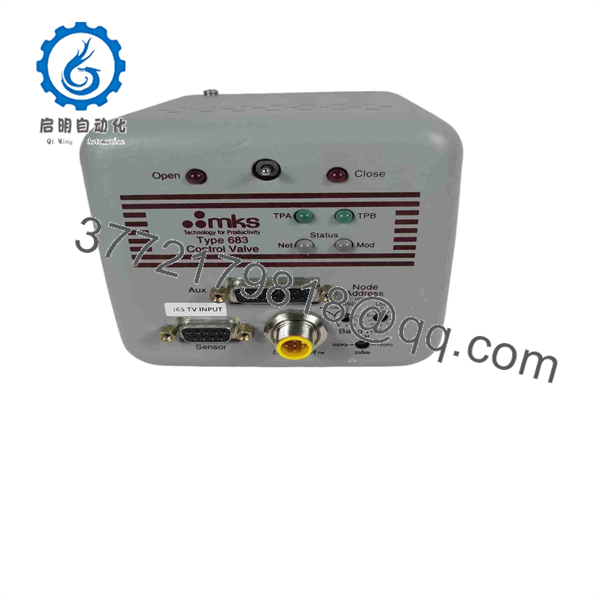
683B-24883
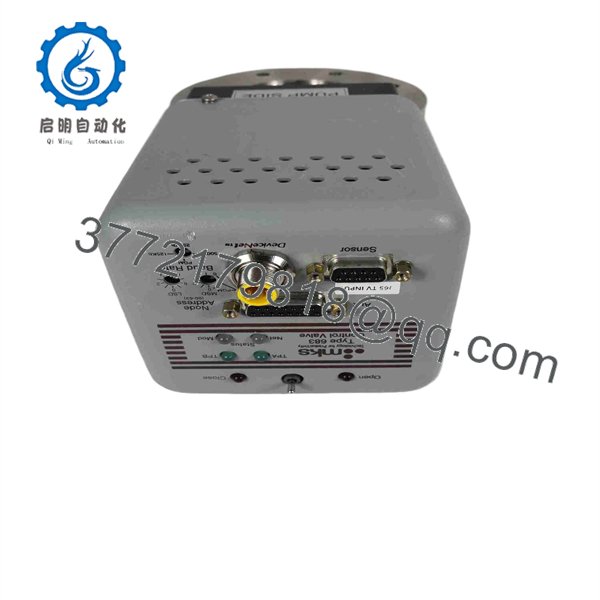
683B-24883
Installation & Configuration Guide
Estimated replacement time: 45–90 minutes, excluding chamber qualification.
Stage 1: Pre-Installation Preparation
⚠️ Safety First
- Place the semiconductor tool into its approved maintenance state.
- Stop the active process and follow the chamber shutdown sequence.
- Isolate electrical, pneumatic, vacuum, RF, and process-gas energy as required.
- Verify the chamber has reached the required temperature.
- Vent the chamber according to the equipment manufacturer’s procedure.
- Follow the fab’s cleanroom and contamination-control requirements.
Tools Required
- ESD wrist strap
- Cleanroom gloves
- Torque-controlled hand tools
- Digital multimeter
- Approved vacuum-compatible cleaning materials
- Camera for installation documentation
- DeviceNet diagnostic equipment, where applicable
Configuration Backup
Before disconnecting the existing valve:
- Photograph the complete valve assembly.
- Record 683B-24883 and all visible revision information.
- Record the DeviceNet node/address configuration.
- Photograph DeviceNet wiring.
- Record valve position/pressure-control settings.
- Record chamber and controller alarm history.
- Save the existing process configuration.
Stage 2: Removing the Existing Valve
- Confirm the chamber is isolated and safely vented.
- Verify the valve and adjacent components are at a safe temperature.
- Photograph flange orientation and cable routing.
- Disconnect DeviceNet and power/control wiring.
- Remove the valve mounting hardware.
- Support the valve during removal.
- Remove it without contaminating or damaging the vacuum sealing surfaces.
- Protect the removed valve for possible comparison or failure analysis.
Inspect:
- Valve body
- Flapper/throttle mechanism
- Flange sealing surface
- O-ring/gasket
- Electrical connector
- DeviceNet connector
- Cable strain relief
⚠️ Do not rotate or manually force the throttle mechanism unless the MKS maintenance procedure explicitly permits it.
Stage 3: Installing the New Valve
- Verify the replacement is MKS 683B-24883.
- Confirm the mechanical configuration against the removed valve.
- Verify flange size and orientation.
- Inspect the sealing surfaces.
- Install the approved gasket/O-ring.
- Position the valve without placing mechanical stress on the chamber plumbing.
- Install mounting hardware.
- Tighten hardware using the chamber manufacturer’s specified sequence and torque.
- Reconnect DeviceNet.
- Reconnect power/control wiring.
- Confirm cable shielding and grounding.
Self-Checklist
- Correct 683B-24883 part number
- Correct valve configuration
- Correct flange/interface
- Seal installed correctly
- Mounting hardware torqued
- DeviceNet wiring verified
- Grounding verified
- Valve mechanism free from contamination
Stage 4: Power-On & Testing
- Restore the controller/valve power.
- Confirm DeviceNet communication.
- Check the valve’s reported hardware/software information if available.
- Verify the valve initializes without an alarm.
- Command a controlled valve-position change.
- Confirm the position feedback follows the command.
- Perform the required chamber leak test.
- Verify base pressure.
- Apply the approved pressure-control test.
- Confirm stable chamber pressure response.
- Run the applicable chamber conditioning procedure.
- Review process-monitor data before returning the chamber to production.
⚠️ Do not qualify the valve solely by checking DeviceNet communication. A valve can communicate correctly while exhibiting mechanical problems, incorrect position calibration, leakage, or process-performance deviations.
Frequently Asked Questions (FAQ)
1. What is MKS 683B-24883?
It is an MKS Type 683 digital exhaust throttle control valve used in vacuum-processing equipment. Secondary-market documentation identifies it as a DeviceNet-controlled throttle valve.
2. What does the valve actually control?
It controls the effective exhaust conductance of a vacuum chamber, allowing the equipment controller to regulate chamber pressure. The Type 683 description reports both pressure-control and valve-position-control modes.
3. Does 683B-24883 use DeviceNet?
Yes. The available Type 683 documentation identifies DeviceNet as its communication protocol. This makes the DeviceNet node configuration an important part of a replacement procedure.
4. Which semiconductor equipment uses 683B-24883?
An Applied Materials equipment inventory identifies 683B-24883 as an RFG throttle-valve component on a DPS 2 AdvantEdge Poly Etcher. A separate repair inventory associates the part with a 300 mm ASP throttle-valve assembly.
5. Can I substitute another MKS Type 683 valve?
Do not assume interchangeability. Verify:
- Complete MKS part number
- Valve body configuration
- Flange/interface
- Actuator configuration
- DeviceNet electronics
- Position calibration
- Process-temperature requirement
- Chamber/tool model
The similar-looking 683B-23795, for example, appears alongside 683B-24883 in repair inventories, but that alone does not establish direct interchangeability.
6. Is 683B-24883 new or refurbished?
Both new-surplus/open-box and used examples appear in the secondary market. One recent listing describes a Type 683 683B-24883 as New–Open Box, while other listings offer used units.
For production equipment, specify the required condition explicitly and request photographs of the nameplate, valve body, flange, connector, and any available functional-test report.
7. What should I verify before ordering?
Provide the supplier with:
- MKS 683B-24883
- Type 683 identification
- Tool manufacturer and model
- Chamber/module designation
- Existing valve photographs
- Flange configuration
- DeviceNet configuration
- Required condition
- Required warranty
For semiconductor equipment, mechanical fit alone is not sufficient. Pressure-control behavior and chamber process qualification should be part of the acceptance criteria.