WhatsApp: +86 16626708626
 Email:
 Phone: +86 16626708626
Description
Core Product Summary
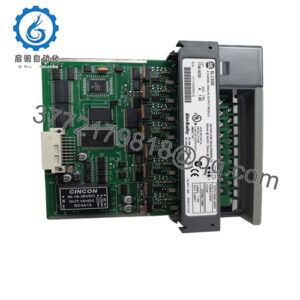
The Molex SST-PB3-CLX is a PROFIBUS DP scanner module for the Allen-Bradley 1756 ControlLogix backplane, and it also integrates with Honeywell PlantScape systems. It connects a ControlLogix processor to a PROFIBUS DP network, exchanging cyclic I/O data with remote I/O, drives, and other DP field devices. A defining capability of the module is that it can operate as a PROFIBUS DP master and as a DP slave on the same network at the same time, supporting one active output connection plus up to fifteen listen-only connections.
The scanner supports all standard PROFIBUS baud rates from 9.6 kbaud up to 12 Mbaud and can manage up to 125 DP slaves per network. It can be placed in any slot of a local or remote 1756 chassis, presents slave I/O data directly in the controller’s I/O data arrays, and maintains network and per-slave diagnostic status. Network wiring uses a 9-pin D-sub PROFIBUS connector, and configuration is performed with the SST PROFIBUS configuration tool on a PC, or through RSLogix 5000 Add-On Profiles on the -RLL variant.
Key Technical Specifications
| Parameter | Value |
|---|---|
| Product type | PROFIBUS DP scanner / remote I/O module for 1756 ControlLogix backplane |
| Also compatible with | Honeywell PlantScape |
| DP role | Master and slave operation simultaneously |
| Network connections | 1 output connection, up to 15 listen-only connections |
| Max DP slaves scanned | 125 |
| Supported baud rates | 9.6 k, 19.2 k, 45.45 k, 93.75 k, 187.5 k, 500 k, 1.5 M, 3 M, 6 M, 12 M baud |
| Network port | 9-pin D-sub female (PROFIBUS) |
| Chassis placement | Any slot, local or remote 1756 chassis |
| Operating mode | Asynchronous — scanning begins as soon as the module is online, independent of the RPI trigger |
| Controller data mapping | Slave I/O data mapped into ControlLogix 5550 I/O data arrays, starting at byte offset 4 |
| Configuration | SST PROFIBUS configuration tool (PC); -RLL variant additionally supports RSLogix 5000 Add-On Profiles |
| Status indication | On-board status LEDs / display for network and diagnostic states |
| PROFIBUS controller | ASPC2 |
Engineering Selection Highlights
- Dual master/slave role — the module can act as DP master and DP slave on one network simultaneously, which matters when a higher-level PROFIBUS master must read the ControlLogix side while the scanner runs its own DP slaves.
- Up to 125 slaves, 16 connection paths — one output connection plus up to 15 listen-only connections; verify that your topology and connection count fit this envelope before specifying an alternative 1756-style PROFIBUS scanner.
- Asynchronous scanning — the scanner starts exchanging I/O as soon as the card is online and does not wait for a Requested Packet Interval trigger, so the RPI setting in the module configuration can be left at its default rather than tuned for network timing.
- Slot flexibility — installation is permitted in any slot of a local or remote 1756 chassis, simplifying panel layout and remote-I/O expansion planning.
- Deterministic data mapping — slave data is mapped into the ControlLogix 5550 controller’s I/O data arrays beginning at byte offset 4, so ladder-logic addressing must be planned around this fixed offset during program design.
- On-board diagnostics — the scanner maintains network and I/O status data, including per-slave diagnostics, diagnostic counters, and PROFIBUS controller statistics readable from the controller, reducing the need for separate network diagnostic tools.
- Variant selection — the base SST-PB3-CLX is configured through the SST PROFIBUS configuration tool; the SST-PB3-CLX-RLL adds RSLogix 5000 Add-On Profile support that requires no ladder logic. A slave-only version, the SST-PB3S-CLX-RLL, is available for applications where the module only needs to present a ControlLogix chassis to an existing DP master.
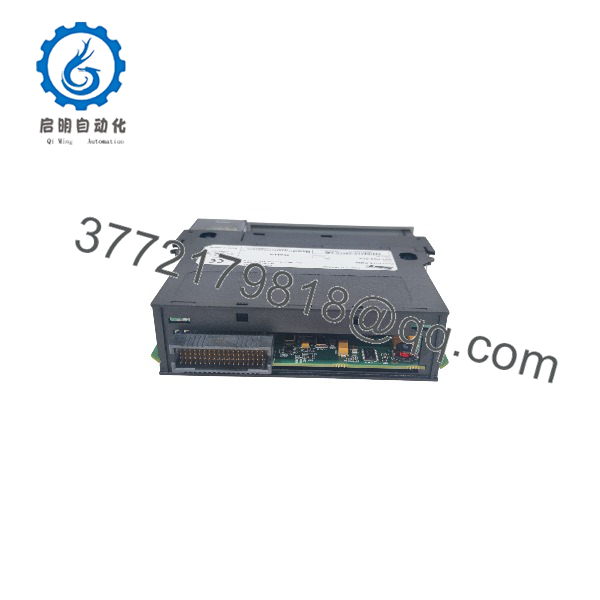
SST-PB3-CLX
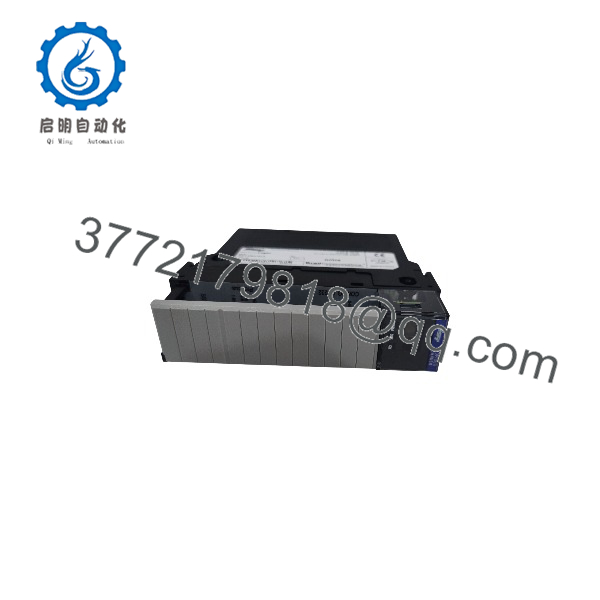
SST-PB3-CLX
System Compatibility & Integration Requirements
| Requirement / Item | Details |
|---|---|
| Compatible chassis | Allen-Bradley 1756 ControlLogix chassis, local or remote, any slot |
| Compatible controllers | ControlLogix 5550 processors; Honeywell PlantScape via Control Builder configuration |
| Network type | PROFIBUS DP |
| Baud rate range | 9.6 kbaud to 12 Mbaud |
| Network connector | 9-pin D-sub PROFIBUS connector on the module |
| Suggested cabling | Standard PROFIBUS line types per the PROFIBUS installation guidelines; suggested cable PA9D01-42 series |
| Configuration software | SST PROFIBUS configuration tool (PC-based); RSLogix 5000 Add-On Profile (-RLL variant); generic 1756 module profile also supported |
| Configuration port | Dedicated configuration port on the module |
| Download methods | Configuration tool download; RSLogix 5000 AOP download; serial terminal download of binary configuration; upload from an online scanner supported |
| Data mapping | Slave I/O mapped into controller I/O data arrays from byte offset 4; mapping depends on addresses assigned in the master configuration |
| Connections supported | 1 output connection, up to 15 listen-only connections |
Dimensions / Mounting / Connection Notes
The module installs directly into any slot of a 1756 ControlLogix chassis and requires no separate mounting hardware beyond the chassis itself. PROFIBUS network wiring terminates on the module’s 9-pin D-sub female connector; PROFIBUS trunk cabling should follow standard PROFIBUS line-type selection rules for the chosen baud rate and cable length. A configuration port on the module accepts the PC configuration connection used by the SST PROFIBUS configuration tool.
Detailed Product Overview
The Molex SST-PB3-CLX solves a specific industrial integration problem: Allen-Bradley ControlLogix platforms do not natively speak PROFIBUS DP, yet PROFIBUS remains one of the most widely deployed fieldbus protocols in process industries, particularly in installations with a large installed base of DP-capable drives, remote I/O, and instrumentation. By installing the SST-PB3-CLX into a spare slot in a local or remote 1756 chassis, the module becomes the bridge between the two worlds, scanning a PROFIBUS DP network as a master while presenting the collected data transparently to the ControlLogix controller.
What distinguishes this scanner from simpler gateway approaches is its simultaneous master and slave capability. In a conventional gateway, the controller-side and network-side data flows are decoupled and each direction is configured independently. With the SST-PB3-CLX, the module can run its own DP master cycle, polling up to 125 slaves, while simultaneously acting as a DP slave that a higher-level PROFIBUS master can read. This supports one output connection plus up to fifteen listen-only connections, which allows redundant or monitoring controllers to observe the same network data without disturbing the active scan.
The module operates in an asynchronous mode: as soon as the card is online in the chassis, it begins scanning the PROFIBUS network and does not wait for a Requested Packet Interval trigger. This simplifies commissioning, because the RPI setting in the chassis configuration can remain at its default value while the PROFIBUS cycle runs on its own timing determined by the configured baud rate — anywhere from 9.6 kbaud up to the 12 Mbaud maximum of the PROFIBUS specification. All standard rates in between are supported.
Slave input and output data is mapped directly into the ControlLogix 5550 controller’s I/O data arrays, beginning at a fixed byte offset of 4, with the exact layout determined by the addresses assigned during master configuration. The scanner also maintains network and I/O status information, exposing slave diagnostics, master statistics, and PROFIBUS controller statistics to the controller program, so network health can be monitored without a separate diagnostic tool.
Configuration is performed with the SST PROFIBUS configuration tool on a PC, which handles DP master configuration, online browsing of the slave network, download and upload of configuration files, and online diagnostics. On the SST-PB3-CLX-RLL variant, RSLogix 5000 Add-On Profile support allows configuration directly within the Rockwell programming environment with no ladder logic required; a generic 1756 module profile is also available for installations that prefer manual configuration. For Honeywell PlantScape systems, configuration is supported through PlantScape Control Builder.
Operation is supported by clear on-board status indication: LEDs and display states identify module health, network state, and slave-level faults, which speeds commissioning and field troubleshooting. Combined with its any-slot placement in local or remote chassis, the SST-PB3-CLX provides a compact, well-instrumented path for ControlLogix and PlantScape users to integrate PROFIBUS DP networks into their control systems.
Applications & System Role
- Connecting a ControlLogix control system to PROFIBUS DP remote I/O, valve positioners, motor starters, and distributed field devices in process and factory automation.
- Integrating variable frequency drives and servo drives that expose a PROFIBUS DP slave interface into a 1756-based control architecture.
- Presenting data from a ControlLogix chassis upward to a plant-level PROFIBUS master or SCADA system, using the module’s simultaneous slave capability.
- Honeywell PlantScape installations requiring a PROFIBUS DP interface to third-party field devices.
- Migration and hybrid-network applications where legacy PROFIBUS equipment must be retained while the supervisory control layer moves to ControlLogix.
FAQ
Q: Does the SST-PB3-CLX act as a PROFIBUS master or a slave?
A: Both, simultaneously. It can run as a DP master scanning up to 125 slaves while also presenting itself as a DP slave to a higher-level master on the same network, supporting one output connection and up to 15 listen-only connections.
Q: Which chassis does it install into?
A: Any slot in an Allen-Bradley 1756 ControlLogix chassis, local or remote. No additional mounting hardware is required.
Q: How is the module configured?
A: With the SST PROFIBUS configuration tool on a PC. The -RLL variant additionally supports RSLogix 5000 Add-On Profiles for configuration directly in the Rockwell environment, and a generic 1756 module profile is also supported. Honeywell PlantScape systems configure the module through Control Builder.
Q: What PROFIBUS baud rates are supported?
A: All standard PROFIBUS rates from 9.6 kbaud up to 12 Mbaud, including 19.2 k, 45.45 k, 93.75 k, 187.5 k, 500 k, 1.5 M, 3 M, and 6 M baud.
Q: How does slave data appear in the ControlLogix controller?
A: Slave input and output data is mapped into the controller’s I/O data arrays starting at byte offset 4. The layout depends on the addresses assigned in the master configuration file.
Q: Do I need to tune the RPI setting for the PROFIBUS scan?
A: No. The scanner operates asynchronously — it begins scanning as soon as it comes online and does not wait for the Requested Packet Interval trigger, so the RPI can be left at its default.
Q: What connector is used for the PROFIBUS network?
A: A 9-pin D-sub female PROFIBUS connector on the module’s front end, wired with standard PROFIBUS cabling.
Q: How can I monitor network health?
A: The module exposes slave diagnostics, diagnostic counters, and network statistics to the controller, and the SST PROFIBUS configuration tool provides online monitoring and slave error diagnosis. On-board LEDs and display states also indicate module and network status.