WhatsApp: +86 16626708626
 Email:
 Phone: +86 16626708626
Description
Core Product Summary
The Molex SST-PFB3-VME is a PROFIBUS network interface card from the SST PROFIBUS Generation III (PFB3) family, a board line originally introduced by Woodhead and now offered under Molex. It fits a VMEbus slot and provides VME-based controllers and industrial computers with a direct connection to PROFIBUS networks, including DP-V0, DP-V1 and FDL (layer 2) communication.
Each channel on the board can act as a PROFIBUS DP master (Class 1 or Class 2), as a DP slave, and send or receive FDL messages, with simultaneous operation in all of these modes. Standard PROFIBUS baud rates from 9.6 kbaud up to 12 Mbaud are supported. On the VME side, the card uses 16-bit transfers (VME D16) with both A24 standard and A16 short I/O addressing, and exchanges data with the host through a dual-port RAM window. A serial port on the card handles startup, boot configuration and diagnostics.
Key Technical Specifications
| Parameter | Value |
|---|---|
| Product family | SST PROFIBUS Generation III (PFB3) |
| Form factor | VMEbus interface card |
| Network | PROFIBUS (DP-V0, DP-V1, FDL layer 2) |
| Operating modes per channel | DP master Class 1, DP master Class 2, DP slave, FDL send/receive; modes can operate simultaneously |
| Supported baud rates | 9.6 k, 19.2 k, 93.75 k, 187.5 k, 500 k, 1.5 M, 3 M, 6 M and 12 Mbaud |
| VME data transfers | 16-bit (VME D16) |
| VME addressing | A24 (standard) and A16 (short I/O) |
| Host memory requirement | Minimum 256 Kbyte window in the host memory map |
| Card configuration | 10-position DIP switch (S1) sets the short I/O base address; 1 Kbyte block on a 1 Kbyte boundary |
| Serial service port | Default 115200 baud, 8 data bits, no parity, 1 stop bit; rates from 9600 to 115 kbaud configurable via Boot.ini |
| Boot/startup | Serial access available while boot code runs; AutoRun command (e.g., AutoRun=pfb3.ss3) starts firmware automatically |
Engineering Selection Highlights
- The board is designed for VMEbus systems conforming to the VME64 specification (VITA 1.1, 1997); confirm the host chassis and CPU board meet this before specifying the card.
- The host must be able to generate and accept 16-bit transfers with both A24 and A16 short I/O addressing — a controller that only supports D32/A32 transfers cannot communicate with this card.
- Plan for a minimum 256 Kbyte window in the host memory map; the card’s dual-port RAM occupies this window for process data exchange, so it must be free in the system memory layout.
- If interrupt-driven operation is required, a physical VME interrupt line must be available; on the two-channel version (SST-PFB3-VME-2), the interrupt is shared between channels.
- The short I/O base address is set by a 10-position DIP switch before installation (positions 1–6 map to address bits A15–A10), so the address map of the VME rack must be checked to avoid conflicts with other short I/O boards.
- Commissioning and firmware loading happen through the card’s serial port during the boot phase; budget for a null-modem-style connection (lines 2 and 3 swapped for a PC COM port) during setup.
- Configuration and diagnostics can be performed with the Windows-based Profibus Console tool, available as a separate item — include it in the project bill of materials if configuration tooling is not already on hand.
System Compatibility & Integration Requirements
| Item / Dependency | Verified Compatibility or Requirement | Practical Note |
|---|---|---|
| Host system | VMEbus controller conforming to VME64 (VITA 1.1, 1997) | Verify chassis backplane and CPU board support before installation |
| Bus transfers | VME D16 with A24 standard and A16 short I/O addressing | Host must support 16-bit transfers in both address modes |
| Memory map | Minimum 256 Kbyte window in host memory | Reserve the window for the card’s dual-port RAM |
| Interrupts | Physical VME interrupt line required for interrupt operation; shared between channels on the 2-channel card | Polling is the alternative if no interrupt line is free |
| Address setting | 10-position DIP switch selects the 1 Kbyte short I/O base block (switches 1–6 = A15–A10) | Must be set before the card is installed in the rack |
| Firmware | Loaded via the serial port; AutoRun command (e.g., AutoRun=pfb3.ss3) enables automatic startup | Serial port is accessible only while the boot code runs at startup |
| Configuration software | Profibus Console, a Windows 32-bit application, available as a separate order item | Used for commissioning PROFIBUS DP-V0 and DP-V1 networks |
| Data access | DP-V1 and PA variable access; OPC data access server support | Useful when process data must be exposed to supervisory software |
Dimensions, Mounting & Connection Notes
- The card installs in a VMEbus slot of a VME64-compliant rack or controller.
- The 10-position DIP switch (S1) must be set before installation to define the short I/O base address; positions 1 through 6 correspond to address bits A15 through A10.
- The card’s serial port connects to a PC COM port with lines 2 and 3 swapped (wired the same as a PC 9-pin COM port); no handshaking is required.
- The serial port defaults to 115200 baud with no parity, 8 data bits and 1 stop bit; pressing any key within 3 seconds (default) of a channel reset enters serial communication mode.
- The card contains static-sensitive components: avoid touching connectors or pins, and store it in an anti-static bag when not in use.
- Installation, adjustment and servicing should be carried out only by qualified electrical personnel familiar with the equipment and its hazards.
- An externally wired emergency stop circuit, independent of the controller, must be provided to disable the system in case of improper operation.
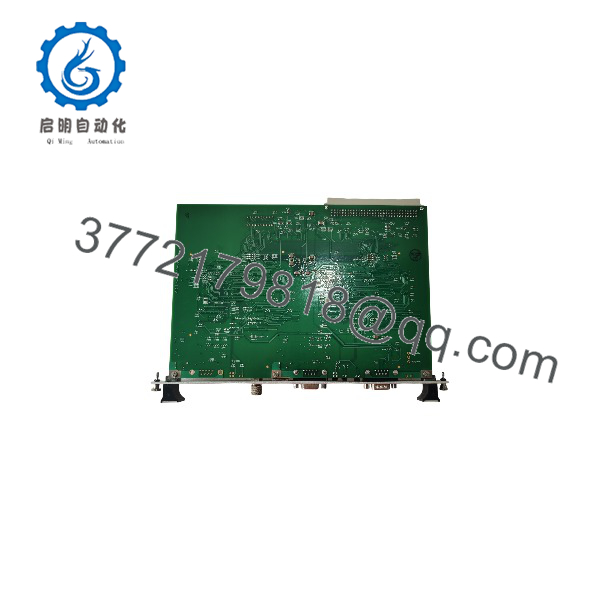
SST-PFB3-VME
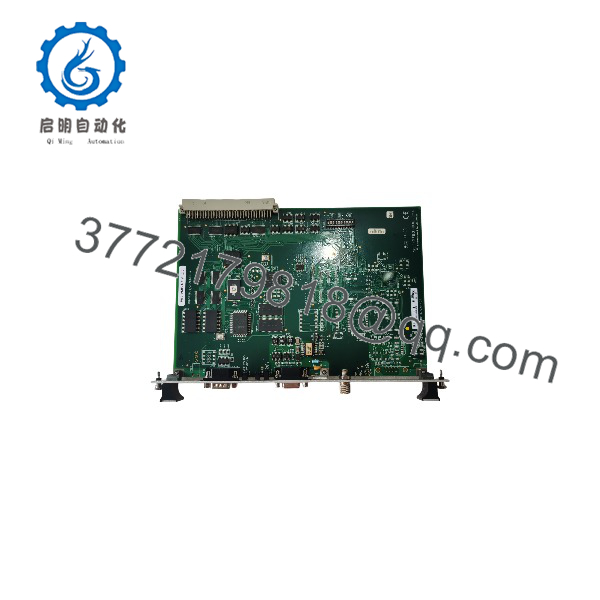
SST-PFB3-VME
Detailed Product Overview
The SST-PFB3-VME belongs to the third generation of SST PROFIBUS interface cards, a board family that Woodhead — later acquired by Molex — built around a dedicated communications processor design. Where PC-hosted members of the same generation use PCI slots, this variant targets the VMEbus, which remains the backplane of many long-lived industrial controllers and embedded automation computers. The practical consequence for a system integrator is straightforward: the card lets a VME host participate in a PROFIBUS network without adding protocol-stack load to the host CPU, because the board handles bus timing, token handling and DP services on its own.
What distinguishes this generation in engineering terms is the flexibility of each channel. A PROFIBUS network is normally designed around a strict role division — one Class 1 master polls slaves cyclically, Class 2 masters perform acyclic reads and writes, and slaves respond. The PFB3 boards allow a channel to operate as a Class 1 master, a Class 2 master and a DP slave at the same time, and to exchange FDL messages on top of that. For the system designer, this means a gateway-style application can often be built with one board where an earlier design would have needed two, and a controller acting as a slave to a supervisory master can still poll its own downstream devices.
Integration effort concentrates on the VME side. The card requires a host that conforms to the VME64 specification and supports 16-bit transfers in both A24 standard and A16 short I/O address space, plus a 256 Kbyte window in the host memory map for the dual-port RAM interface that carries process data. The short I/O base address is selected with the on-board 10-position DIP switch before installation, which means the rack’s address map must be reviewed during project planning rather than at commissioning. Interrupt operation requires a physical VME interrupt line; on the two-channel version the line is shared between the two channels, which is worth noting in systems where interrupt routing is already dense.
Startup and maintenance behavior differs from older SST PROFIBUS VME cards in one important way: the serial port is accessible while only the boot code runs, and an AutoRun command in the boot configuration starts the communications firmware automatically on power-up. Commissioning therefore happens at boot time over a serial terminal connection, with the port defaulting to 115200 baud, 8 data bits, no parity and one stop bit. Firmware and network configuration are managed with the separate Windows-based Profibus Console tool, which supports commissioning of both DP-V0 and DP-V1 networks.
For procurement and engineering teams, the verification points that matter most are the host side: VME64 conformance, D16 transfer support in A24 and A16 space, an available 256 Kbyte memory window, an interrupt line if interrupts will be used, and a free 1 Kbyte short I/O block matching the DIP switch setting. On the network side, confirming the required baud rate — the card covers the full standard PROFIBUS range up to 12 Mbaud — and the mix of cyclic and acyclic traffic determines whether a single board is sufficient or whether the two-channel version is the better fit.
Applications & System Role
The Molex SST-PFB3-VME sits in the communication layer of a VME-based automation architecture. Where a VMEbus controller or industrial computer needs to exchange process data with PROFIBUS devices — remote I/O, drives, valves, operator interface stations or other controllers — this board provides the network endpoint so the VME host does not have to run the PROFIBUS protocol stack itself.
Its simultaneous master and slave capability allows a single board to fill two roles: as a DP master Class 1 it cyclically polls slave devices; as a master Class 2 it handles acyclic configuration and diagnostic reads and writes; as a DP slave it can present the VME host’s data to a higher-level PROFIBUS master. FDL layer 2 messaging covers peer-to-peer communication that does not fit the DP model, such as direct data exchange between two controllers.
The DP-V1 and PA variable support, combined with OPC data access, makes the card a practical fit for systems where acyclic parameter access to PROFIBUS PA field devices or supervisory data exposure is required. Typical deployment is in VME-based controllers where deterministic fieldbus communication with decentralized peripherals is a system requirement.
FAQ
What is the Molex SST-PFB3-VME?
It is a PROFIBUS interface card from the SST PROFIBUS Generation III family, produced by Woodhead (now part of Molex), that connects a VMEbus-based controller or industrial computer to a PROFIBUS network.
What communication functions does the Molex SST-PFB3-VME provide?
Each channel supports PROFIBUS DP-V0, DP-V1 and FDL (layer 2) messaging, and can operate simultaneously as a DP Class 1 master, a DP Class 2 master and a DP slave.
Which baud rates does the Molex SST-PFB3-VME support?
It supports the standard PROFIBUS baud rates of 9.6 k, 19.2 k, 93.75 k, 187.5 k, 500 k, 1.5 M, 3 M, 6 M and 12 Mbaud.
What are the host system requirements for the Molex SST-PFB3-VME?
The host must conform to the VMEbus VME64 specification (VITA 1.1, 1997), support 16-bit transfers (VME D16) with both A24 standard and A16 short I/O addressing, and provide a minimum 256 Kbyte window in the host memory map.
How is the card’s I/O address configured?
A 10-position DIP switch (S1) on the card sets the 1 Kbyte short I/O base address before installation; switch positions 1 through 6 correspond to address bits A15 through A10.
How is the Molex SST-PFB3-VME started and configured?
The card’s serial port is accessible while the boot code runs, and an AutoRun command (for example, AutoRun=pfb3.ss3) in the boot configuration starts the firmware automatically on power-up. The serial port defaults to 115200 baud, 8 data bits, no parity and 1 stop bit.
What software is used to configure PROFIBUS networks on this card?
The Profibus Console, a Windows 32-bit application available as a separate item, is used for commissioning PROFIBUS DP-V0 and DP-V1 networks, with diagnostic support for startup and troubleshooting.
Does the Molex SST-PFB3-VME support acyclic data access?
Yes, the card supports DP-V1 acyclic services and access to DP-V1 and PA variables, and can expose process data through an OPC data access server.