 WhatsApp: +86 16626708626
 Email:
  Phone: +86 16626708626
Description
3. Key Technical Specifications
| Parameter | Specification / Value |
| Manufacturer | Motorola Computer Group (Emerson) |
| PCB Component Code | 84-W8403F01D |
| Associated Base Assembly | 01-W3403F03H / MVME2101 Architecture |
| Processor Capability | Interface mapping for 200 MHz MPC8240 PowerPC core |
| Bus System interface | VME64 Standard Double-Height Format |
| Network Interfaces | Integrated 10/100 Base-TX Fast Ethernet Engine |
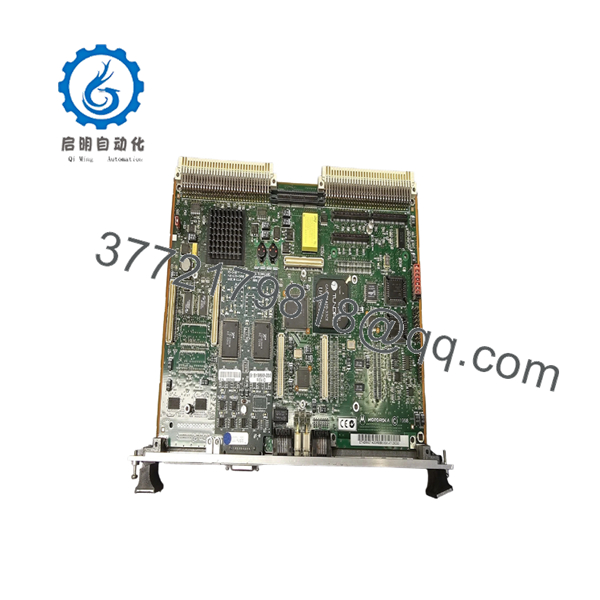
| Mezzanine Expansion Layout | 1 IEEE P1386.1 PMC Slot + 3 High-Density PC-MIP Extension Ports |
| Subsystem Memory Link | Maps directly to 32 MB Base SDRAM via local board controller |
| Onboard NVRAM Capacity | Onboard Flash EEPROM expansion spaces (Up to 1 MB) |
| Signal Breakout System | Form factored for P2-Octal transmission transition cards |
| Cooling Profile | Natural convection cooling inside a standard VME enclosure |
4. Product Introduction & Supply Chain Strategy
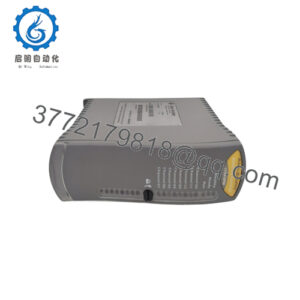
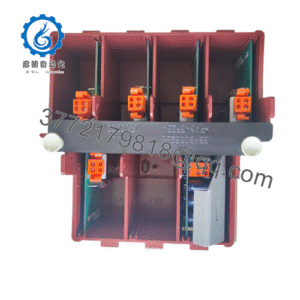
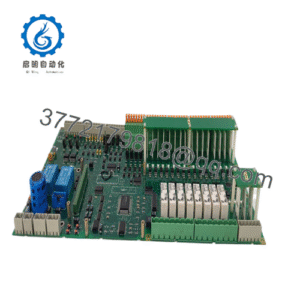
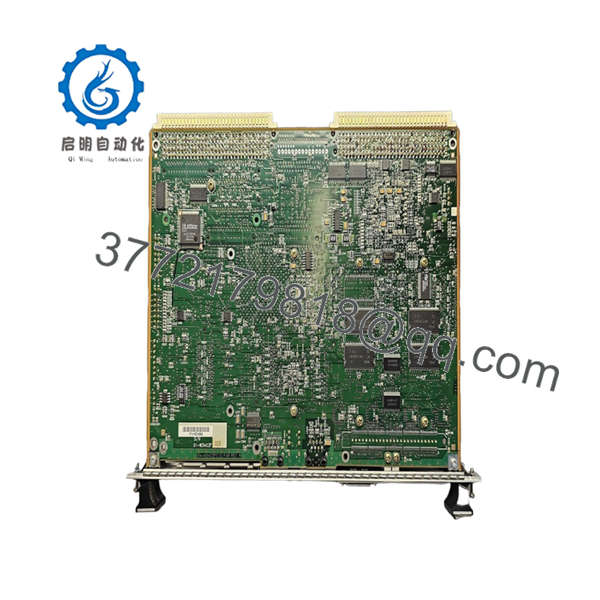
The Motorola MCOS 84-W8403F01D is a specialized, intelligent high-density networking and controller infrastructure board designed for legacy VMEbus industrial processing racks. Functioning as a backbone module often mapped inside the MVME2100 series footprint, this hardware bridges local 10/100 Ethernet links and up to eight serial data streams via a standard P2 transition connector configuration. Its multi-mezzanine interface, which incorporates both standard PMC and high-density PC-MIP slots, allows process control loops, automated manufacturing platforms, and power generation monitoring setups to route highly deterministic fieldbus data directly to an integrated 32-bit PowerPC architecture engine.
Securing the 84-W8403F01D carrier as a verified New Surplus piece of inventory is a distinct strategic advantage relative to the Total Cost of Ownership (TCO). Because this high-density network module has reached strict end-of-life status, operations that depend on used or hastily repaired parts expose themselves to extensive lead time variability and imminent data corruption from degraded surface-mount communication components. Maintaining an original, zero-hour surplus replacement module on-site operates as a secure insurance policy for the plant. It completely bypasses the risks of physical bus errors and protects your facility from production losses during a core network switch breakdown.

- MCOS 84-W8403F01D
- MCOS 84-W8403F01D
5. Installation & Configuration Guide
Stage 1: Pre-Installation (Prep & Safety)
- De-energize the main power breakers supplying the targeted VME card cage, utilizing lock-out/tag-out (LOTO) protocols.
- Put on an anti-static wrist strap connected directly to a verified equipment grounding point to prevent ESD damage to the sensitive PMC and PC-MIP trace paths.
- Remove the original card and photograph the physical locations of any installed PC-MIP mezzanine sub-modules or custom front panel wiring.
- Record all onboard DIP switch settings and micro-jumper shorting bar placements that dictate base memory mapping and address lines.
Stage 2: Removal
- Unthread the mounting screws on both the top and bottom sections of the module’s faceplate.
- Unlatch the upper and lower injector handles outward in a unified motion to unseat the deep multi-pin connectors from the P1/P2 VME backplane matrix.
- Slide the card out along the card guide tracks vertically, avoiding contact with adjacent processor modules, and transfer it into an ESD-safe protective shielding bag.
Stage 3: Installation (Clone & Seat)
- Set the DIP switch blocks and onboard jumper pins on the new surplus 84-W8403F01D so they mirror your old module configurations exactly.
- Carefully install your existing operational PMC or PC-MIP mezzanine sub-components onto the matching socket layouts of the new carrier card, confirming the locking pins click into place.
- Slide the board straight into the designated rack rails, pushing evenly until the board makes physical connection with the backplane sockets.
- Close the injector levers completely to clamp the module into place, and hand-tighten the upper and lower retaining hardware screws.
Stage 4: Power-On & Testing
- Restore the core voltage feeds back onto the VME infrastructure rack.
- Monitor the front-panel status LED arrays immediately following initialization. The system error and failure lights must go out as the processor settles into run-time parameters.
- Connect an external serial link to check the hardware boot sequence, verifying the interface links up correctly with your network switches and transmits data packets over the P2 port array without framing failures.
6. Firmware/Software Versions & Upgrade Notes
The MCOS 84-W8403F01D operates in conjunction with the system’s core onboard Flash memory arrays and local bootstrap configurations. This module relies heavily on matching firmware definitions stored in dual PLCC sockets to translate data between the local PCI bus and the external VME network architecture.
When conducting a hardware replacement, ensure the firmware revision matches the network drivers configured within your core automation platform (such as older VxWorks configurations). Deploying a replacement card with an out-of-date or mismatched firmware revision can result in immediate communication errors, or cause the master host processor to drop connections to the board during initialization. If your system depends on a customized, vendor-locked software driver, you must extract the socketed Flash ROM IC chips from your original card and carefully insert them into the matching sockets on the new surplus replacement module to ensure continuous operations.
7. Frequently Asked Questions (FAQ)
Q: Why is this New Surplus 84-W8403F01D card priced higher than used listings?
A: Refurbished and used versions of this module have typically undergone thousands of hours of high-temperature operations inside industrial enclosures, leaving them prone to immediate failure from trace oxidation and capacitor decay. Our inventory consists entirely of pristine, zero-hour New Surplus stock that has never been put into live service. The investment provides verified operational longevity, preventing downstream production failures that can cost an operation tens of thousands of dollars in emergency downtime.
Q: What is the relationship between this 84-W8403F01D code and the MVME2100 series?
A: The code 84-W8403F01D is the formal printed circuit board assembly (PCBA) manufacturing identifier stamped directly onto the board. It serves as the physical hardware foundation for the Motorola MVME2100/MVME2101 processor module line. It is optimized to work alongside PowerPC processing components and high-density multi-protocol serial communication configurations.
Q: Does this module support live insertion or hot-swapping inside the VME rack?
A: No. The VMEbus architecture governing the 84-W8403F01D card does not support live configuration changes or hot-swapping. Extracting or inserting the board while the chassis power rails are live can generate severe electrical arcs that can instantly destroy the board’s onboard PCI bridge controllers and damage adjacent modules in the rack. Always isolate the power supply before performing maintenance.
Q: Are the PC-MIP and PMC expansion slots included on this board, or are they sold separately?
A: This module features the complete integrated physical socket paths and trace links needed to host up to three PC-MIP sub-modules and one standard PMC card. The specific daughterboards that manage unique fieldbus types or specialized serial layers are external accessories. They can be transferred directly from your original card onto this new surplus base board.
Q: What exact warranty policy applies to this product?
A: We provide an absolute 1-year warranty on this Motorola 84-W8403F01D card. Because this unit is verified New Surplus inventory sourced from secure storage, it contains zero wear on backplane pins and has never been subjected to harsh industrial environments, ensuring a projected active operational lifespan of 10 to 15 years.