 WhatsApp: +86 16626708626
 Email:
  Phone: +86 16626708626
Description
3. Key Technical Specifications
| Parameter | Value |
| Part Number | 01-W3336B01 |
| Hardware Revision | Revision P |
| Form Factor | VMEbus Standard Width (Rear I/O Transition Card) |
| Interface Connections | High-Density Multi-Pin Sub-D Connectors |
| Signal Routing Capacity | Multi-channel synchronous/asynchronous pass-through |
| Backplane Interconnect | Direct flat-ribbon or direct-mate interface options |
| Operating Voltages | Pass-through logic signaling (Passive/Low-power active architecture) |
| Isolation Rating | Standard industrial ground isolation via chassis mounting |
| Operating Temperature | 0 to +55 °C |
| Storage Temperature | −40 to +85 °C |
4. Product Introduction & Supply Chain Strategy
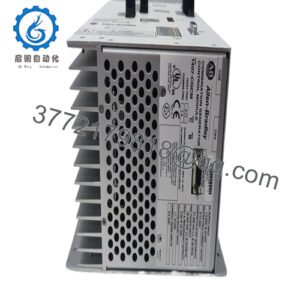
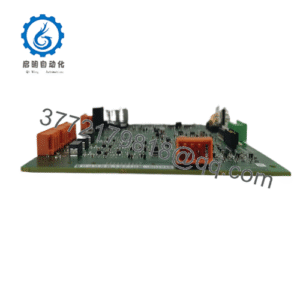
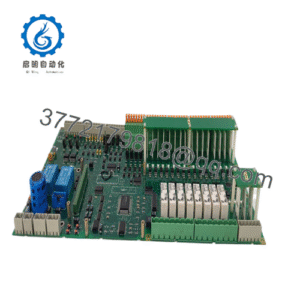
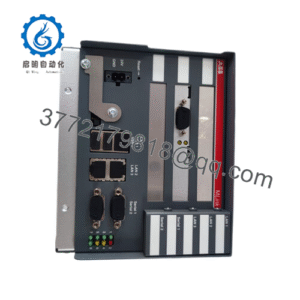
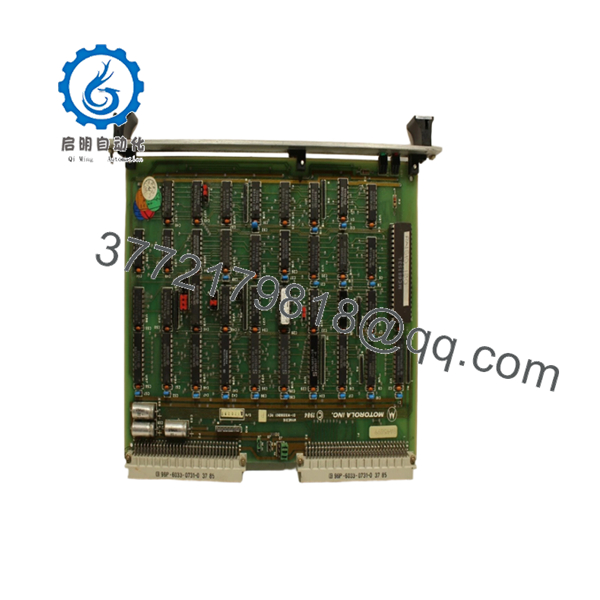
The Motorola MVME316 01-W3336B01 rev.P is a high-density, specialized VMEbus transition module designed to route complex I/O signals from main single-board computers out to peripheral field wiring panels. By redirecting serial communications, parallel signaling, and system diagnostics through dedicated rear-chassis connectors, this card protects sensitive logic boards from mechanical stress and external electrical noise. The “Revision P” designation indicates explicit updates to the circuit paths and physical pin assignments, making it an essential component for high-reliability systems in automated test environments, maritime monitoring networks, and manufacturing facilities.
From an inventory and supply chain standpoint, matching exact part numbers and revision codes like “rev.P” is critical to protecting your buffer stock. If a plant maintenance group attempts to drop an older revision card into a specialized system, the slight changes in internal signal routing can lead to catastrophic short-circuits or communication failures across the entire backplane. Purchasing this card as a New Surplus unit ensures a zero-wear, pristine asset that eliminates the long-term failure rates of refurbished alternatives, drastically reducing your Total Cost of Ownership (TCO).

- MVME316 01-W3336B01 rev.P
5. Installation & Configuration Guide
Stage 1: Pre-Installation (Prep & Safety)
- Turn off all power to the main VME enclosure and apply standard lock-out/tag-out rules.
- Put on an ESD-safe wrist strap and clip it to a bare metal spot on the system rack frame.
- Use a high-resolution camera to photograph the rear cable configurations, checking the orientation of the strain-relief bars and locking screws.
Stage 2: Removal
- Loosen the retention screws on all high-density connection cables connected to the front plate of the MVME316. Carefully remove the cables.
- Unscrew the top and bottom mounting screws that lock the card faceplate into the rear enclosure slot.
- Pull the module slowly straight outward from the card guides, making sure not to snag any internal ribbon cables attached to the internal side of the transition interface. Disconnect any internal cables if necessary.
Stage 3: Installation (Clone & Seat)
- Verify that the hardware jumpers and trace paths on the New Surplus MVME316 match the layout of the replaced card.
- Reconnect any internal interconnect cables to the back of the module inside the chassis housing, verifying correct Pin 1 alignment (usually marked by a red stripe on flat ribbon cables).
- Push the transition module into the card tracks smoothly until the front panel sits flush with the chassis rail. Fasten the faceplate screws securely.
Stage 4: Power-On & Testing
- Reinstall all external signal lines and tighten the connector lock-screws to ensure good ground contact.
- Re-energize the VME cabinet assembly.
- Execute standard loopback tests or signal diagnostics from the main host processor console to verify error-free pass-through across all channels on the new transition board.
6. Firmware/Software Versions & Upgrade Notes
As a transition interface board, the MVME316 01-W3336B01 rev.P does not utilize active, programmable microcode or onboard flash storage. However, its physical architecture is tightly coupled with the driver settings and hardware configurations of the main processing module it supports (such as an MVME147 or MVME167 series board). You must ensure that the hardware revision level (Revision P) matches the target system’s original equipment breakdown drawing. Variations in revision levels can introduce subtle changes in pin-to-signal assignments, causing communication timeouts or missing signal faults within your software architecture.
7. Frequently Asked Questions (FAQ)
- Why is the specific “rev.P” designation so critical for this hardware procurement?
Over the lifecycle of the MVME316 series, Motorola implemented minor engineering revisions to optimize noise immunity and trace routing. Substituting a different revision letter can cause signal mismatches or physical pin assignment conflicts, preventing communication with your field devices even though the core model number looks identical.
- Does this transition module require an independent power feed from the VME backplane?
No, the MVME316 acts primarily as a passive signal distributor and routing bridge. It draws minimal operational voltage via its interface connection solely to handle base signaling requirements, meaning it will not place an unexpected load on your power rails.
- Can we use this transition card with non-Motorola VME processors?
While it adheres to standard 6U mechanical form factors, the pin routing layout is designed to match specific Motorola single-board computer configurations. Using it with third-party processing hardware requires a comprehensive manual audit of the pinout mapping to avoid backplane short-circuits.
- What are the hidden risks of using a refurbished alternative for this module?
Refurbished transition cards often suffer from invisible micro-cracks in the multi-pin connectors and trace degradation caused by repeated thermal stress and field cable vibration. These issues result in intermittent open circuits that are incredibly difficult to troubleshoot. A New Surplus unit provides pristine, unweathered connections.
- What kind of warranty protection do you offer on this item?
Every New Surplus Motorola MVME316 module we ship comes with a complete 1-year functional replacement warranty, ensuring reliable, long-term operation from day one.