WhatsApp: +86 16626708626
 Email:
 Phone: +86 16626708626
Description
Core Product Summary
The NI SCXI-1104C is a 32-channel differential analog input module for the National Instruments SCXI signal-conditioning platform. It conditions medium-voltage signals for measurement by a connected NI data-acquisition device. Its differential input ranges are ±60 VDC, 30 VAC RMS, and ±42 VAC peak.
Each channel includes a divide-by-10 attenuation stage and a three-pole lowpass filter with a fixed 10 kHz cutoff frequency. The module can multiplex its input channels onto a single output that drives one DAQ-device channel. Selection therefore depends on both the voltage characteristics of the connected signals and the acquisition capabilities of the complete SCXI/DAQ system.
Key Technical Specifications
| Parameter | Verified Specification |
|---|---|
| Manufacturer | National Instruments (NI) |
| Model | SCXI-1104C |
| Product type | Medium-voltage analog input signal-conditioning module |
| System family | SCXI |
| Input channels | 32 differential analog inputs |
| Differential DC input range | ±60 VDC |
| Differential AC input range | 30 VAC RMS; ±42 VAC peak |
| Common-mode input range | ±60 VDC relative to chassis ground |
| Channel attenuation | Divide by 10 |
| Filter topology | Three-pole lowpass filter on each channel |
| Filter cutoff frequency | 10 kHz, −3 dB |
| Signal routing | Input channels multiplexed to a single output for a DAQ-device channel |
| Output impedance | 91 Ω |
The input ranges, common-mode limit, filtering, and output impedance apply to the SCXI-1104C as covered by the SCXI-1104/C specifications. The per-channel attenuation and multiplexed output architecture are described in the SCXI module configuration information.
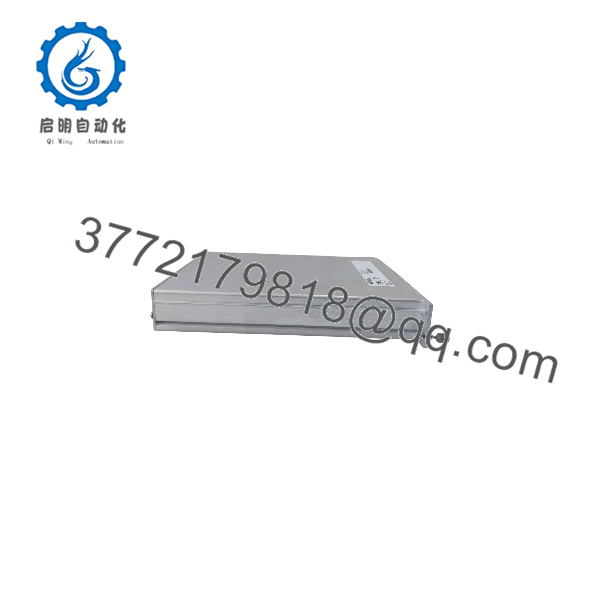
SCXI-1104C
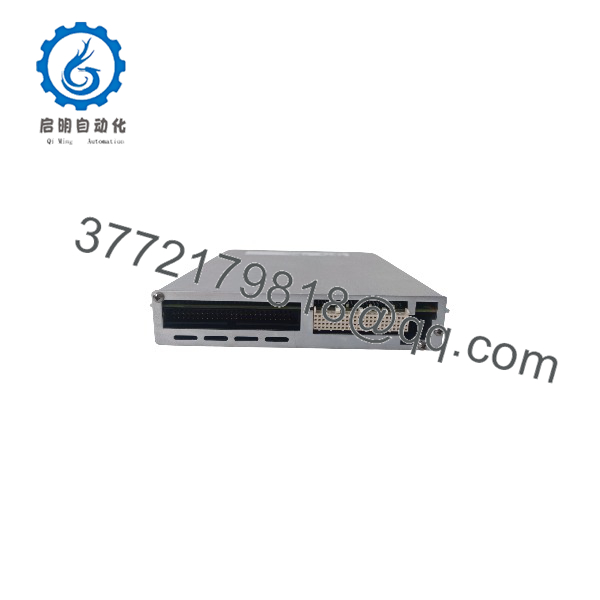
SCXI-1104C
Engineering Selection Highlights
- 32 differential inputs → the module accommodates multiple voltage-measurement points within one SCXI module, with each measurement taken between a positive and negative input.
- ±60 VDC differential range → suitable for DC signals above the direct input range of many measurement interfaces, provided the common-mode limit is also respected.
- 30 VAC RMS and ±42 VAC peak limits → AC signal selection must account for both RMS voltage and waveform peaks.
- Fixed 10 kHz per-channel filtering → the SCXI-1104C supports time-varying medium-voltage measurements; its filter is not a software-selectable bandwidth setting.
- ±60 VDC common-mode range relative to chassis ground → a valid differential voltage alone does not establish that both input terminals are within the permitted measurement range.
- Multiplexed analog output → acquisition timing must be evaluated for the connected DAQ device and channel scan configuration, rather than treating the module as an independent simultaneous-sampling instrument.
System Compatibility & Integration Requirements
| Item / Dependency | Verified Compatibility or Requirement | Practical Note |
|---|---|---|
| Signal-conditioning platform | National Instruments SCXI | The module forms part of an SCXI measurement system. |
| Data-acquisition hardware | Designed for use with NI DAQ devices | The module conditions and routes signals to the acquisition hardware. |
| Analog signal path | Module inputs can be multiplexed to one output feeding one DAQ channel | Account for multiplexing when defining the acquisition sequence. |
| DC input conditions | Differential input within ±60 VDC; common mode within ±60 VDC relative to chassis ground | Check the input difference and terminal-to-ground voltages separately. |
| AC input conditions | 30 VAC RMS and ±42 VAC peak | Check waveform peaks as well as RMS amplitude. |
| Input filtering | Fixed three-pole, 10 kHz lowpass filter per channel | Include the module filter response when evaluating measured signal bandwidth. |
These relationships describe the module’s SCXI/DAQ architecture and its documented input constraints.
Detailed Product Overview
Input range and grounding are separate selection checks
The SCXI-1104C measures voltage differences between paired input terminals. Its differential range specifies the permitted voltage between those terminals: ±60 VDC, 30 VAC RMS, or ±42 VAC peak. The module also specifies a common-mode input range of ±60 VDC relative to chassis ground. These are separate constraints, so the differential reading must not be used as the sole basis for evaluating an input connection.
For AC measurements, the RMS and peak limits must both be considered. The 30 VAC RMS rating does not remove the ±42 VAC peak restriction; waveform shape therefore matters when assessing whether a signal fits the module’s input envelope.
Attenuation and filtering precede acquisition
Each channel incorporates a divide-by-10 attenuator and a three-pole lowpass filter. The attenuation reduces the signal level presented to the downstream measurement path, while the fixed 10 kHz filter establishes the module’s analog bandwidth. The 10 kHz value is a filter cutoff, not a sampling-rate specification.
The module can route its channels through a multiplexed output to one DAQ-device input. Consequently, the measurement system’s scan behavior depends on the DAQ hardware and acquisition configuration as well as the signal-conditioning module. Channel count and filter bandwidth alone do not define the complete system’s sampling performance.
The C suffix identifies a material filtering difference
The SCXI-1104C and SCXI-1104 have different fixed filter cutoffs: 10 kHz for the SCXI-1104C and 2 Hz for the SCXI-1104. The shared input-channel count and voltage range do not make their frequency responses interchangeable. For an existing measurement system, matching the C suffix preserves the documented filtering characteristic of the selected module.
Applications & System Role
The SCXI-1104C sits in the signal-conditioning stage between voltage sources and the NI DAQ device. It attenuates and filters incoming signals before routing the selected channel to the acquisition hardware. This separates the task of accommodating medium-voltage inputs from the task of digitizing the conditioned signal.
Its documented application is the measurement of time-varying medium-voltage signals. A technical-fit scenario is a multichannel voltage-monitoring system that needs differential inputs, a fixed 10 kHz analog filter on each channel, and multiplexed acquisition through the SCXI platform.
FAQ
What is the NI SCXI-1104C?
It is a 32-channel differential medium-voltage input module for the NI SCXI platform, designed to condition signals for NI DAQ devices.
What voltage ranges can it measure?
Its differential input ranges are ±60 VDC, 30 VAC RMS, and ±42 VAC peak. The common-mode input must also remain within ±60 VDC relative to chassis ground.
Does every input channel have a filter?
Yes. Each channel has a three-pole lowpass filter with a fixed 10 kHz cutoff frequency.
Is 10 kHz the module’s sampling rate?
No. The 10 kHz specification is the analog filter’s −3 dB cutoff frequency. Acquisition is performed through the connected DAQ device, with the module able to multiplex its channels onto one output.
What is the difference between SCXI-1104 and SCXI-1104C?
The SCXI-1104 has a fixed 2 Hz filter cutoff, while the SCXI-1104C has a fixed 10 kHz cutoff. The manufacturer’s manual identifies them as otherwise identical.
Does the module digitize the voltage signals independently?
No. It conditions the voltage inputs and routes them to a connected NI DAQ device for acquisition. Its inputs can be multiplexed to a single output feeding one DAQ-device channel.