WhatsApp: +86 16626708626
 Email:
 Phone: +86 16626708626
Description
Core Product Summary
The ProSoft Technology PLX31-EIP-ASCII is an EtherNet/IP to ASCII communication gateway that enables bi-directional data transfer between EtherNet/IP-enabled PACs — including Rockwell Automation ControlLogix and CompactLogix, and several Schneider Electric controllers — and ASCII devices such as weigh scales and barcode readers. The EtherNet/IP driver supports explicit messaging, and the gateway is user-configurable as both a client and a server.
On the EtherNet/IP side it supports 5 Class 3 server connections, 2 connected and 1 unconnected Class 3 client connections, and 1 Class 1 I/O connection with 248/248-byte connection sizes and a 5 ms maximum RPI. Up to 10,000 16-bit registers are available for data exchange. The ASCII side provides a 255-byte transmit buffer with configurable inter-character delay from 0 to 65,535 ms. The unit runs on 24 VDC nominal (10–36 VDC allowed), and ProSoft’s Discovery Service utility allows configuration of the gateway’s IP address without being on the same subnet.
Key Technical Specifications
| Parameter | Value |
|---|---|
| Product type | EtherNet/IP to ASCII communication gateway (PLX31 series) |
| Model | PLX31-EIP-ASCII |
| EtherNet/IP role | User-configurable as client and server; explicit messaging supported |
| Supported PLC types | PLC2, PLC5, SLC, CLX (ControlLogix), CMPLX (CompactLogix), MICROLX (MicroLogix) |
| Supported message types | PCCC and CIP |
| Class 3 server connections | 5 |
| Class 3 client connections | 2 connected, 1 unconnected |
| Class 1 I/O connections | 1; connection size 248/248 bytes |
| Maximum RPI | 5 ms per connection |
| CIP services | 0x4C CIP Data Table Read, 0x4D CIP Data Table Write, CIP Generic |
| Command list | 100 commands per client, each configurable for command type, IP address, register to/from addressing, and word/bit count |
| Command sets | PLC-2/PLC-3/PLC5 basic, PLC5 binary, PLC5 ASCII, SLC500 |
| Data exchange capacity | Up to 10,000 16-bit registers |
| ASCII transmit/receive buffer | 255-byte transmit character length; 0 to 65,535 ms configurable delay between transmitted characters |
| Ethernet port | 10/100 Mbit half-duplex RJ45; 1500 Vrms isolation (IEC 60950:1991, 50–60 Hz, 60 s); broadcast storm resiliency ≤5000 ARP frames/s, ≤5 minutes |
| Serial ports | 1; 2500 Vrms signal isolation per UL 1577 (RF-modulation isolation, Silicon Labs Si844x chip) |
| Configuration storage | SD card slot (SD card optional) for configuration files, usable for disaster recovery |
| Configuration tool | ProSoft Configuration Builder; embedded EDS Add-On Profile |
| Power supply | 24 VDC nominal; 10–36 VDC allowed; Positive, Negative, GND terminals |
| Current load | 300 mA at 24 VDC nominal; 610 mA maximum at 10–36 VDC |
| Operating temperature | −25 °C to 70 °C |
| Storage temperature | −40 °C to 80 °C |
| Shock | IEC 60068-2-27; 15G @ 11 ms, 3-axis (operational); 30G @ 18 ms, 3-axis (non-operational) |
| Vibration | IEC 60068-2-6; 5G @ 10 to 150 Hz |
| Relative humidity | 5% to 95% RH, non-condensing |
| Dimensions (H × W × D) | 5.38 × 1.99 × 4.38 in (13.67 × 5.05 × 11.13 cm) |
| LED indicators | CFG, ERR, PWR, FLT, NS, MS, EtherNet/IP connection status, Ethernet link/activity, serial RX/TX |
| Supplied accessories | 2.5 mm screwdriver, J180 power connector, RJ45–DB9M serial adapter cable, DB9 to screw-terminal adapter |
| Certifications / declarations | UL Certificate of Compliance, CB Safety, ATEX Letter of Conformity, ODVA EtherNet/IP Declaration of Conformity, CE/RoHS Declaration of Conformity, REACH Compliance, Korean KC Registration, EAC (Eurasian Customs Union) conformity |
Detailed Product Overview
The PLX31-EIP-ASCII solves a specific and recurring integration problem: an EtherNet/IP-based control system needs to talk to a serial device that communicates in plain ASCII text — a weigh scale that streams weight strings, a barcode reader that returns decoded labels, and similar instruments that predate industrial Ethernet. Instead of writing custom PAC string-parsing code and consuming controller serial ports, the gateway terminates the ASCII protocol on one side and presents clean register-based data to the PAC on the EtherNet/IP side.
Its dual-role capability is the central architectural feature. Configured as a server, the gateway waits for EtherNet/IP clients (the PAC) to read and write its database via CIP services 0x4C and 0x4D. Configured as a client, it actively initiates exchanges with up to 100 configurable commands per client, each defining command type, target IP address, register addressing, and word/bit count. This lets one gateway both poll remote devices and serve data to multiple controllers — within the limit of 5 Class 3 server connections and 2 connected client connections.
Performance-relevant numbers are explicit. The single Class 1 I/O connection carries 248 bytes in each direction with a fastest RPI of 5 ms, and multiple I/O connections with individually set RPIs allow status and control data to be prioritized separately, optimizing bandwidth. Up to 10,000 16-bit registers buffer the exchanged data, sufficient for large ASCII datasets. On the serial side, the 255-byte transmit buffer with a per-character delay adjustable from 0 to 65,535 ms accommodates devices that need slow, character-paced communication — a common requirement with older instruments that cannot keep up with full-speed bursts.
Commissioning is addressed by several design decisions. The embedded EDS Add-On Profile lets the gateway appear as a recognized device in the controller’s engineering environment, and ProSoft Configuration Builder handles the configuration. The ProSoft Discovery Service utility can find and readdress the gateway from a PC on a different subnet, which avoids the default-IP chicken-and-egg problem at first startup. An SD card slot (card optional) stores configuration files and supports disaster recovery: a replacement unit can be restored quickly from the card. Secure module configuration is available via a module switch in firmware v1.04 and greater.
Hardware is built for industrial mounting. The Ethernet port offers 1500 Vrms isolation and tolerates broadcast storms up to 5000 ARP frames per second for 5 minutes; the serial port is isolated at 2500 Vrms per UL 1577 using RF-modulation isolation. The 10–36 VDC supply range with 300 mA nominal draw fits standard 24 VDC panel supplies, and the unit operates from −25 °C to 70 °C, with specified shock and vibration per IEC 60068-2-27 and -2-6. Ships with the power connector, a screwdriver, and serial adapter cables (RJ45–DB9M and DB9 screw terminal).
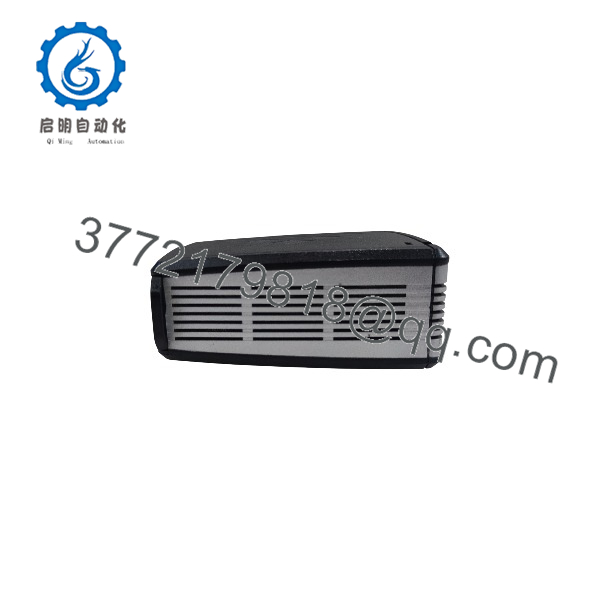
PLX31-EIP-ASCII
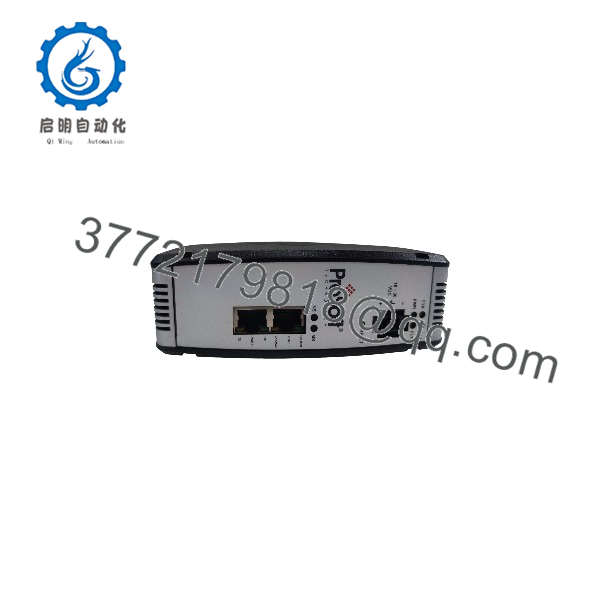
PLX31-EIP-ASCII
Dimensions, Mounting & Connection Notes
- Dimensions: 5.38 × 1.99 × 4.38 in (13.67 × 5.05 × 11.13 cm), H × W × D.
- Power connection: 24 VDC nominal (10–36 VDC allowed) via Positive, Negative, and GND terminals using the supplied J180 power connector; 300 mA at 24 VDC nominal, 610 mA maximum.
- Ethernet connection: 10/100 Mbit half-duplex RJ45 port with 1500 Vrms port isolation; broadcast storm resiliency up to 5000 ARP frames/s for up to 5 minutes.
- Serial connection: One port with 2500 Vrms signal isolation per UL 1577; ships with an RJ45–DB9M serial adapter cable and a DB9-to-screw-terminal adapter for device wiring.
- Indicators: CFG, ERR, PWR, FLT, NS, and MS LEDs plus Ethernet link/activity and serial RX/TX for on-site diagnostics.
- Environmental limits: −25 °C to 70 °C operating, −40 °C to 80 °C storage, 5–95% RH non-condensing; operational shock 15G @ 11 ms and vibration 5G @ 10–150 Hz per IEC 60068.
- Included hardware: 2.5 mm screwdriver, J180 power connector, RJ45–DB9M serial adapter cable, DB9 screw-terminal adapter.
System Compatibility & Integration Requirements
| Item / Dependency | Verified Compatibility or Requirement | Practical Note |
|---|---|---|
| EtherNet/IP PAC compatibility | Rockwell Automation ControlLogix and CompactLogix, plus several Schneider Electric controllers; supported PLC types PLC2, PLC5, SLC, CLX, CMPLX, MICROLX | Verify the controller’s EtherNet/IP explicit messaging capability before selection |
| Message protocol | PCCC and CIP message types | Covers both legacy and modern EtherNet/IP messaging paths |
| Connection budget | 5 Class 3 server connections; client: 2 connected + 1 unconnected; 1 Class 1 I/O connection (248/248 bytes) | Plan PAC connection usage within these limits |
| Command configuration | Up to 100 commands per client, configurable for command type, IP address, register addressing, and word/bit count | Define polling commands in ProSoft Configuration Builder |
| ASCII device interface | 1 serial port; 255-byte transmit buffer; 0–65,535 ms inter-character delay | Match baud/pacing to the instrument’s capability; use the included RJ45–DB9M or DB9 screw-terminal adapter |
| Engineering tool | ProSoft Configuration Builder; embedded EDS Add-On Profile | EDS simplifies controller-side integration |
| Network setup | ProSoft Discovery Service allows changing the gateway’s default IP address without being on the same subnet | Simplifies first-time commissioning |
| Configuration storage | SD card slot, SD card optional, for configuration files and disaster recovery | Order the SD card separately if needed |
| Firmware note | Secure module configuration via module switch requires firmware v1.04 or greater | Check the unit’s firmware version |
| Power | 24 VDC nominal, 10–36 VDC allowed, 300 mA nominal / 610 mA max | Use the supplied J180 power connector |
| Installation environment | −25 °C to 70 °C operating; 5–95% RH non-condensing; IEC 60068 shock/vibration ratings | Suitable for industrial panel mounting |
| Approvals | UL, CB Safety, ATEX letter of conformity, ODVA EtherNet/IP conformity, CE/RoHS, REACH, KC, EAC | Certification documents available from the manufacturer |
FAQ
What is the ProSoft PLX31-EIP-ASCII?
It is an EtherNet/IP to ASCII communication gateway that provides bi-directional data transfer between EtherNet/IP-enabled PACs and ASCII devices such as weigh scales and barcode readers, configurable as both an EtherNet/IP client and server.
Which controllers does it work with?
EtherNet/IP PACs including Rockwell Automation ControlLogix and CompactLogix, plus several Schneider Electric controllers; supported PLC types are PLC2, PLC5, SLC, CLX, CMPLX, and MICROLX, using PCCC and CIP message types.
How many connections does it support?
Five Class 3 server connections, two connected and one unconnected Class 3 client connections, and one Class 1 I/O connection with 248-byte connection sizes and a 5 ms maximum RPI.
How much data can it exchange?
Up to 10,000 16-bit registers, with up to 100 configurable commands per client, each defining command type, IP address, register addressing, and word/bit count.
How does the ASCII side work?
It provides one serial port with a 255-byte transmit buffer and a configurable delay of 0 to 65,535 ms between transmitted characters, supporting devices that need character-paced communication.
What isolation does it provide?
The Ethernet port is isolated at 1500 Vrms and the serial port at 2500 Vrms per UL 1577, using RF-modulation isolation on the serial side.
How is it configured?
With ProSoft Configuration Builder; an embedded EDS Add-On Profile simplifies controller integration, and ProSoft Discovery Service lets you change the gateway’s default IP address without being on the same subnet. Firmware v1.04 and greater adds secure module configuration via a module switch.
What power does it need?
24 VDC nominal, with a 10–36 VDC allowed range; current draw is 300 mA at 24 VDC nominal and 610 mA maximum.
What approvals does it hold?
UL Certificate of Compliance, CB Safety, ATEX Letter of Conformity, ODVA EtherNet/IP Declaration of Conformity, CE/RoHS Declaration of Conformity, REACH compliance, Korean KC Registration, and EAC conformity.