WhatsApp: +86 16626708626
 Email:
  Phone: +86 16626708626
Description
Key Technical Specifications
- Parameter: Model Number: 8070/1-1-HR311
- Parameter: Manufacturer: R. STAHL
- Parameter: Product Series: 8070/1
- Parameter: Product Type: Explosion-protected electromechanical position switch
- Parameter: Actuator Type: Swiveling roller lever, Form A
- Parameter: Contact Configuration: 1 normally closed contact + 1 normally open contact
- Parameter: Contact Action: Snap-action contact with spring mechanism
- Parameter: Rated Operational Current: 10 A
- Parameter: DC Rated Operational Voltage: 250 V DC
- Parameter: AC Operating Voltage, Equal Potential: 500 V AC
- Parameter: AC Operating Voltage, Unequal Potential: 250 V AC
- Parameter: Degree of Protection: IP65
- Parameter: Cable Entry: 1 × M20 × 1.5
- Parameter: Terminal Capacity: 1 × 2.5 mm² or 2 × 1 mm²
- Parameter: Enclosure Material: Glass-fiber-reinforced polyamide
- Parameter: Contact Material: Silver-nickel
- Parameter: Ambient Temperature: −20 to +50 °C
- Parameter: Mechanical Service Life: At least 1,000,000 operating cycles
- Parameter: Approximate Weight: 0.262 kg
- Parameter: Explosion Protection: Ex de hazardous-area position-switch platform; confirm the exact certificate, zone classification, gas group, and site installation requirements before use
The available R. STAHL documentation for the closely related 8070/1-2-HR311 configuration specifies the electrical, environmental, enclosure, cable-entry, and actuator-family data above. The supplied part number is commonly listed without the slash as “80701-1-HR311,” but the OEM-formatted model is 8070/1-1-HR311. Verify the exact contact insert, approval markings, and certificate on the nameplate before installation in a classified area.
Product Introduction
The R. STAHL 8070/1-1-HR311 is an Ex de roller lever position switch for detecting guard, damper, valve, conveyor, actuator, or machine-end position in hazardous industrial areas. Its swiveling roller lever operates a snap-action 1 NO + 1 NC contact arrangement, allowing it to provide a permissive, alarm, status, or interlock signal.
This switch is selected where a standard limit switch cannot meet hazardous-area enclosure requirements. It provides IP65 environmental protection, M20 × 1.5 cable entry, 10 A switching capability, and a mechanical life of at least 1,000,000 operations. Confirm the installed approval marking and zone classification before treating it as a direct field replacement.
Troubleshooting Quick Reference
| Symptom | Possible Cause | Relevance to This Part | Quick Check Method | Recommendation |
|---|---|---|---|---|
| No change of input status when the roller lever moves | Broken conductor, loose terminal, failed PLC/DCS input, faulty switch contact | ✅ High | Isolate the circuit. Measure continuity across the NO and NC terminals while manually moving the roller lever through its full travel. | Replace the switch only if contact state does not change with the wiring disconnected and the actuator fully operated. |
| PLC shows the switch permanently ON | NO contact welded, wiring short to supply, incorrect terminal selection, PLC input fault | ✅ Medium | With the field wires removed and circuit isolated, meter the contact state at the switch terminals. Compare with the wiring diagram. | If the contact remains closed without actuator movement, replace the switch. If it reads correctly, trace the cable and input channel. |
| PLC shows the switch permanently OFF | Broken cable, open NC contact, lever not reaching trip point, incorrect mechanical alignment | ✅ High | Check for mechanical contact between the machine cam and roller. Confirm continuity through the NC circuit at rest. | Realign the cam or actuator first. Replace the switch if the NC contact stays open with no actuator force applied. |
| Input flickers during machine movement | Cam vibration, roller lever bouncing, loose terminals, damaged cable, poor gland sealing | ✅ Medium | Trend the input in the PLC or DCS while slowly cycling the mechanism. Inspect terminal torque, cable gland tightness, and actuator alignment. | Correct mechanical alignment and cable strain first. Do not use software filtering to hide a loose or bouncing field device. |
| Roller lever does not return after actuation | Mechanical obstruction, damaged lever, contamination, incorrect mounting position | ✅ High | Isolate the equipment and manually operate the lever. Confirm it returns freely under spring force. | Replace the switch if the actuator binds or fails to return. Do not lubricate the internal mechanism unless the OEM procedure explicitly permits it. |
| Repeated enclosure corrosion or water ingress | Loose cover, damaged gasket, incorrect cable gland, unused entry not plugged, wrong installation orientation | ✅ High | Inspect the cover, gasket, M20 cable gland, plug, and cable jacket. Look for moisture, corrosion, or white oxidation at terminals. | Replace damaged seals or glands and restore the enclosure to its approved installation condition. Replace the switch if internal moisture is present. |
| Circuit trips or fuse opens when the switch changes state | Wiring error, excessive load, contact fault, external relay or solenoid issue | ✅ Medium | Disconnect the switch load. Measure load current and compare it with the 10 A contact rating. Inspect the load for inrush or coil suppression issues. | Do not use the switch above its rated current. Diagnose the external load before replacing a switch that may only be reacting to an overload. |
| Hazardous-area inspection fails after replacement | Incorrect certificate, wrong cable gland, missing earth connection, unsuitable enclosure entry hardware | ✅ High | Compare the nameplate marking, certificate data, cable gland certification, and installation method against the site hazardous-area dossier. | Stop and verify compliance before energizing. A mechanically compatible switch is not automatically acceptable for the classified location. |
❗ Take a photo before you touch the old switch. Capture the actuator position, cable entry, terminal wiring, earth connection, nameplate, and the cam’s contact point. It is the most common rookie mistake, but it happens constantly: a technician replaces a limit switch, reverses NO and NC wiring, and the interlock logic behaves backward.
❗ Do not wire from memory. Even within the R. STAHL 8070/1 family, contact inserts and terminal arrangements can differ. Check the wiring diagram for the exact installed device and confirm whether the control system expects a normally energized or normally de-energized safety/permissive circuit.
❗ Do not assume all “Ex” labels mean the same approval. Verify the full hazardous-area marking, temperature class, zone or division requirement, cable gland certification, and local regulations before installation. The 8070/1 family is associated with Ex de applications, but the exact installation acceptance depends on the nameplate and project documentation.
If you are stuck, provide technical support with photos of the nameplate, cable entry, terminals, mechanical actuator arrangement, PLC/DCS input status, and insulation/continuity results. Keep these checks in mind and you will save yourself 90% of typical rework time.
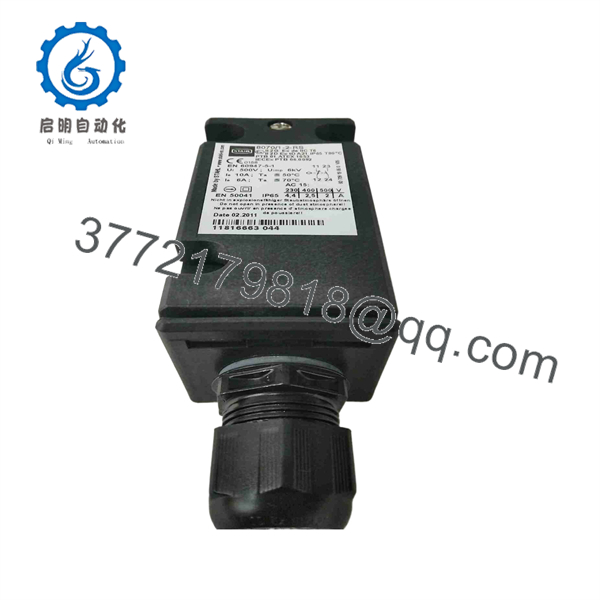
8070/1-1-HR311
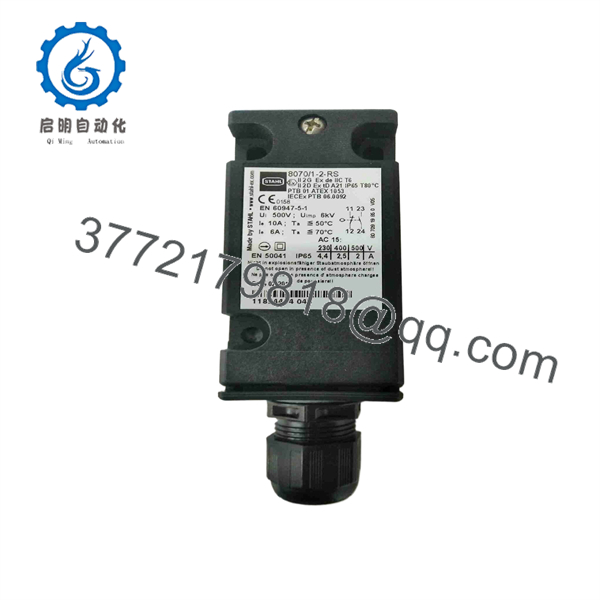
8070/1-1-HR311
Frequently Asked Questions (FAQ)
Is 80701-1-HR311 the same as R. STAHL 8070/1-1-?
Usually, suppliers write the number without the slash, but the OEM model format is commonly shown as 8070/1-1-. Do not rely on formatting alone. Compare the full nameplate, contact configuration, roller-lever type, approval marking, cable-entry arrangement, and product revision before ordering.
What does the suffix indicate?
The suffix identifies the swiveling roller lever actuator arrangement used on this position-switch variant. This actuator is intended to operate from a moving cam, machine component, guard mechanism, damper linkage, or similar mechanical target. Check the lever direction and travel angle against the removed switch before installation.
Does this switch have both normally open and normally closed contacts?
Yes. The 8070/1-1- is listed with one normally open and one normally closed snap-action contact. This allows the same switch to provide both a machine-status signal and an interlock or fault signal, depending on the control-circuit design. Confirm the terminal assignments on the device documentation before wiring.
Can I use this switch in a hazardous area?
Only after verifying the exact nameplate and project requirements. The 8070/1 platform is used for Ex de hazardous-area position-switch applications, but safe installation also depends on the location classification, gas or dust group, temperature class, cable gland, unused-entry plug, grounding, and local inspection requirements. Do not install an uncertified gland or substitute enclosure hardware in a classified area.
Can I hot-swap the R. STAHL 8070/1-1-?
No. This is a hardwired electromechanical limit switch, not a hot-swappable I/O module. Isolate the control circuit, lock out the associated equipment as required, and confirm that the circuit is de-energized before opening the enclosure or disconnecting conductors. On permissive or safety-related loops, bypasses must follow the site’s controlled work procedure.
Is this a direct replacement for a standard non-hazardous limit switch?
Mechanically, it may be similar to a conventional roller lever limit switch, but electrically and legally it is not an automatic substitute. The M20 cable entry, contact rating, actuator travel, mounting geometry, enclosure protection, and hazardous-area approval all need to match the application. A regular industrial limit switch cannot replace an Ex de unit in a classified location.
Is the 8070/1-1- obsolete, and should I keep a spare?
Treat it as a legacy part with limited availability. Plants using this switch in critical shutdown, valve-position, guard, or permissive circuits should retain a verified spare with the correct nameplate approvals and actuator configuration. Waiting until a shutdown event to identify a replacement is how a small field-device failure becomes extended downtime.
Why is a New Surplus switch less expensive than a factory-channel item?
New Surplus inventory generally comes from unused maintenance stock, canceled projects, warehouse overstock, or discontinued-system inventory. It can be a sound option, but require evidence: actual product photos, intact nameplate and approval markings, unopened or clean condition, cable-entry hardware status, traceability where available, and a written warranty. If the unit is refurbished, insist on clear disclosure and functional testing rather than accepting vague condition language.