 WhatsApp: +86 16626708626
 Email:
  Phone: +86 16626708626
Description
Key Technical Specifications
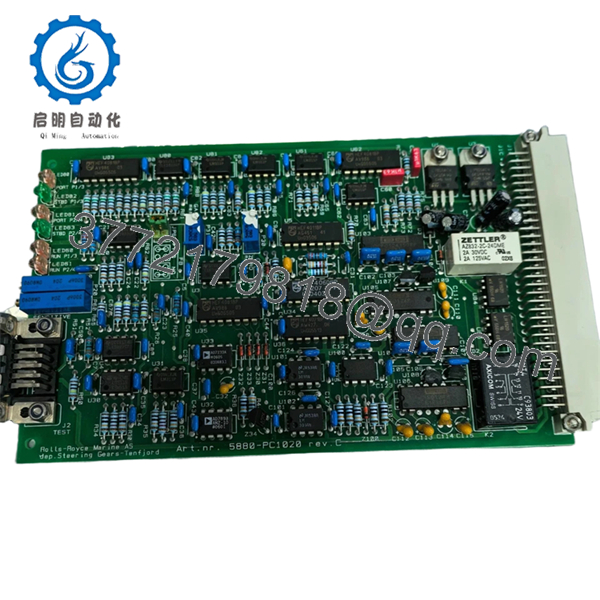
- Part Number: 5880-PC1020
- Revision: C
- Input Voltage: 24 V DC (Standard Marine Logic)
- Application: Sperry Marine VisionMaster FT systems
- Form Factor: Proprietary Plug-in PCB
- Operating Temp: −15 to +55 °C
- Storage Temp: −25 to +70 °C
- Humidity: Up to 95% non-condensing
- Vibration: IEC 60945 Marine Certification standards
Product Introduction
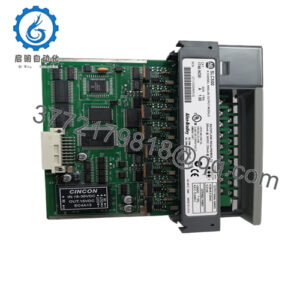
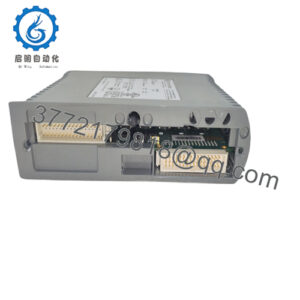
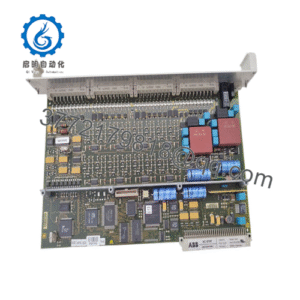
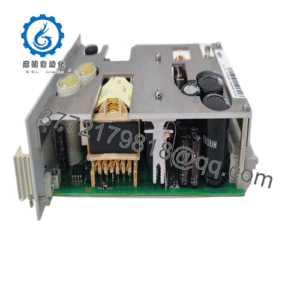
The Rolls-Royce 5880-PC1020 Rev. C is a critical interface and control module utilized primarily within Sperry Marine VisionMaster FT radar and navigation systems. Designed for the rigorous demands of bridge electronics, this module handles high-speed data processing and signal distribution between the main processor and peripheral navigational sensors.
In the field, Rev. C is the preferred hardware standard for maintaining system stability in legacy VisionMaster deployments. It is engineered to withstand the constant vibration and thermal cycling typical of maritime environments, offering a significantly higher MTBF (Mean Time Between Failures) compared to earlier revision A or B boards.

- 5880-PC1020 Rev. C
Installation & Configuration Guide
Stage 1: Pre-Installation Preparation
- ⚠️ Safety First: Power down the entire navigation console. Engage the bridge-level circuit breakers and tag them out to prevent accidental startup during the swap.
- Tools Required: ESD wrist strap (mandatory), fine-tip Philips screwdriver, needle-nose pliers for jumpers.
- Data Backup: Ensure current system configuration and sensor calibration data are backed up to a secondary drive before removing the existing board.
Stage 2: Removing the Old Module
- Verify the ESD strap is grounded to the console frame.
- Identify the 5880-PC1020 module within the rack assembly.
- Carefully disconnect any ribbon cables or localized wiring harnesses. Label each cable immediately to avoid cross-wiring during re-entry.
- Loosen the retaining screws and slide the board out of the guide rails.
- ⚠️ Note: Inspect the backplane connector for any signs of arcing or carbon buildup.
Stage 3: Installing the New Module
- Configuration Clone: Compare the jumper settings on the new Rev. C board with your old unit. Node addresses or termination resistors must match exactly.
- Slide the 5880-PC1020 Rev. C into the guide rails, ensuring the edge connector seats fully into the backplane.
- Tighten retaining screws to finger-tight; do not over-torque.
- Reattach labeled wiring harnesses.
- Self-Checklist: [ ] Jumpers verified, [ ] Connector seated, [ ] Cables secured.
Stage 4: Power-On & Testing
- Restore 24 V power to the console.
- Monitor the onboard status LEDs. A steady heartbeat indicates the processor is live.
- Boot the VisionMaster software and check the “System Status” or “BITE” (Built-In Test Equipment) menu to ensure the 5880-PC1020 is recognized.
- Perform a functional test of the associated radar or sensor data to verify signal integrity.
- ⚠️ Troubleshooting Note: If the system fails to recognize the board, verify that the Rev. C firmware is compatible with your current software version.
Frequently Asked Questions (FAQ)
Can I replace a Rev. B board with this Rev. C module? Generally, yes. Rev. C is designed for backward compatibility. However, Revision C often includes hardware filters for noise that weren’t present in B. Always check your system software version; in rare cases, a firmware patch is required for the OS to acknowledge the updated hardware ID.
Is this part “New Original” or “Refurbished”? This specific unit is New Original (New Surplus). It has never been commissioned in a live environment and remains in its original anti-static packaging. It is not a “pulled” or “repaired” board.
Do I need to recalibrate my radar after installing this board? While the 5880-PC1020 is an interface board, any change in the signal path can introduce minor timing shifts. I strongly recommend verifying your heading alignment and range markers once the board is live.
What happens if I don’t use an ESD strap during installation? You might get lucky, but I wouldn’t bet a $2,000 board on it. Marine electronics are highly susceptible to static discharge, especially in dry, air-conditioned bridge environments. A “zapped” board might work for a week and then fail intermittently at 2 AM in heavy seas.
Why is this model becoming harder to find? Rolls-Royce and Sperry Marine have moved toward newer integrated architectures. The 5880 series is increasingly considered a “legacy” component, meaning factory lead times can be months. We maintain this stock specifically for vessels that cannot afford the downtime of a full system upgrade.