 WhatsApp: +86 16626708626
 Email:
  Phone: +86 16626708626
Description
Key Technical Specifications
- Part Number: AIU-3
- System Application: Aquamaster Propulsion and Aquapilot MC Control Systems
- Input Voltage: 24 V DC
- Weight: Approx. 1.0 kg (2.2 lbs)
- Housing: Industrial NEMA 4 / Marine-grade enclosure
- Operating Temp: −10 to +50 °C (Standard); up to +60 °C Storage
- Communication: Serial Link I/O (SLIO) support, galvanically isolated lines
- Certifications: IEC 60945, DNV/GL Marine Standards
Product Introduction
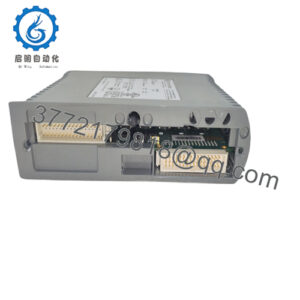
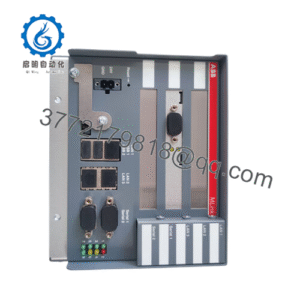
The Rolls-Royce AIU-3 is a specialized interface and control module primarily utilized within the Aquamaster and Aquapilot marine propulsion systems. As a pivotal component of the Rolls-Royce Common Control Platform, this unit facilitates the complex signal exchange between bridge control levers and the vessel’s azimuth thrusters. It is engineered to process thrust direction, speed indication, and steering commands with high precision.
Often integrated into “Unified Bridge” environments, the AIU-3 is built for safety-critical marine operations. Its design focuses on low-latency communication and robust signal isolation, ensuring that propulsion commands are executed reliably even in the high-interference environments typical of a ship’s engine room or bridge console.

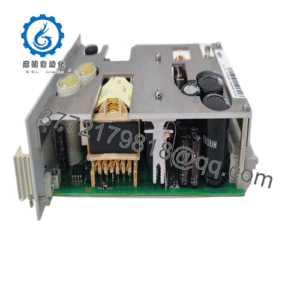
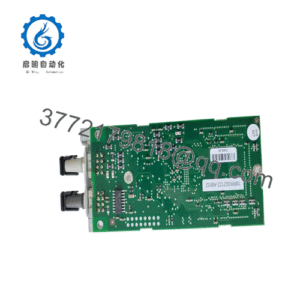
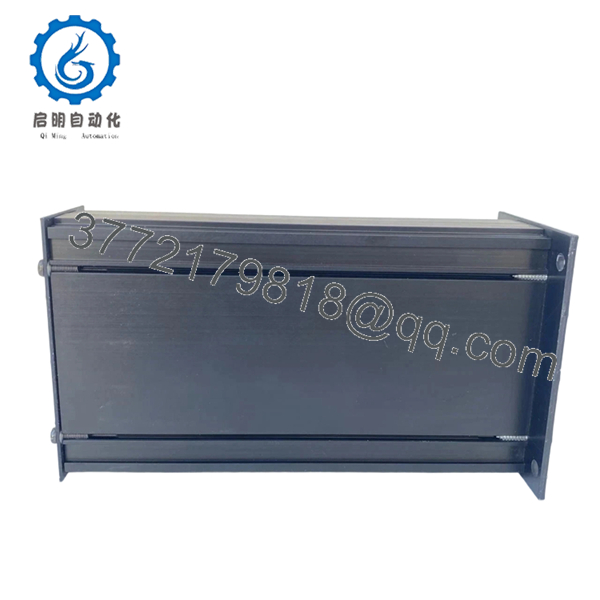
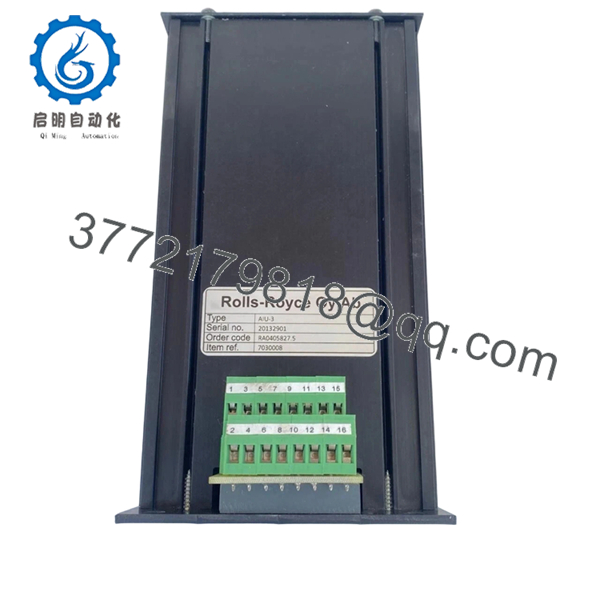
- AIU-3
- AIU-3
Installation & Configuration Guide
Stage 1: Pre-Installation Preparation
- ⚠️ Safety First: Disengage the main engine (prime mover). Ensure the vessel is in a secure mooring or DP-standby state. Notify the Bridge and ETO before isolating the 24V DC control power.
- Tools Required: ESD wrist strap, multimeter, precision screwdriver set (flat and Philips), wire markers.
- Data Backup: Document the current software version and any specific node ID settings. Photograph all existing wiring and DIP switch configurations.
Stage 2: Removing the Old Module
- Ensure the ESD strap is grounded to the control cabinet frame.
- Disconnect the multi-conductor cables from the terminal blocks. Label every wire according to the pin numbers (e.g., Pins 24 and 25 for CPU-card outputs).
- Loosen the mounting flange bolts (standard 3/8″ or M10).
- Remove the unit from the mounting plate, ensuring the serial link cables are not strained.
Stage 3: Installing the New Module
- Configuration Clone: Check the internal DIP switches and jumpers on the new AIU-3. These must match the old unit to ensure the correct “Master/Slave” or “Follow-up” operation modes.
- Mount the AIU-3 into the enclosure or onto the rack.
- Reconnect all wiring. I recommend a strip length of exactly 6.5 mm (1/4”) for the landing wires to ensure a secure, vibration-resistant connection.
- Self-Checklist: [ ] DIP switches verified, [ ] Wiring labels match terminals, [ ] Mounting bolts secured.
Stage 4: Power-On & Testing
- Restore 24V power. Observe the LED status window on the board.
- Zero Setting (Critical): Verify that the Aquapilot indicator on the bridge indicates “zero” (steering straight ahead). Use the mechanical zero-setting pin on the propulsion unit if necessary to sync the feedback sensors with the AIU-3.
- Perform a functional test across the full range of thrust and azimuth angles (0° to 270°/360°).
- ⚠️ Troubleshooting Note: If the “Status” LED remains off, check the supply voltage. If communication fails, verify the galvanically isolated serial lines for continuity.
Frequently Asked Questions (FAQ)
Can the AIU-3 be used for both propulsion and steering? Yes. In the Aquamaster ecosystem, the AIU-3 serves as a versatile interface. Depending on its configuration, it can handle azimuth (steering) feedback, thrust speed commands, or auxiliary accessory signals within the DCS (Distributed Control System).
What is the significance of “Rev. C” vs earlier versions? Later revisions like Rev. C typically include improved CPU cards (such as the AQP-CPU-2D/A) which offer enhanced current output capabilities and better thermal stability. Always check the revision to ensure it meets the minimum hardware requirements of your vessel’s software version.
Is this unit compatible with Kongsberg systems? Yes. Since Kongsberg Maritime acquired Rolls-Royce Commercial Marine, the AIU-3 remains a standard spare for legacy systems. It is fully compatible with the Unified Bridge and common control platforms now managed by Kongsberg.
Will I lose my calibration data during the swap? Most calibration data is stored in the main ACU (Azimuth Control Unit) or the local CPU card. However, the AIU-3 must be zero-synced with the physical thruster position upon installation. If the zero-point isn’t set, your bridge indicators will show an offset.
Why is there a wait time for factory-new units? As these modules are part of a specialized marine platform, they are often produced in limited batches. We offer New Surplus stock to bypass the typical 8-12 week OEM lead time, allowing vessels to return to operational status immediately.