WhatsApp: +86 16626708626
 Email:
 Phone: +86 16626708626
Description
Core Product Summary
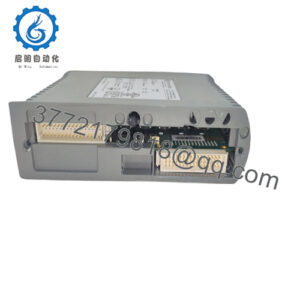
The Rolls-Royce SLIO 01 is a distributed input/output node module designed for the CANman Controller Network used in Rolls-Royce Marine (Ulstein) automation systems. It connects to the local CAN bus (S-Bus) and interfaces field signals with the central control nodes (CCN).
The module supports digital inputs, digital outputs, analog inputs, PWM outputs, pulse outputs and frequency measurement. Its firmware is application-independent, remaining unchanged when the application software running on the CCN nodes is updated. The SLIO 01 is primarily used in marine propulsion control, thruster systems, steering gear interfaces and related shipboard automation.
Key Technical Specifications
| Parameter | Specification |
|---|---|
| Product type | Distributed serial I/O node |
| Model | SLIO 01 |
| System | CANman Controller Network |
| Network | Local CAN bus / S-Bus |
| I/O functions | Digital inputs, digital outputs, analog inputs, PWM outputs, pulse outputs, frequency measurement |
| Firmware | Application-independent |
| Typical supply | 24 V DC (marine standard) |
| Mounting | Cabinet / chassis mount |
| Related module | SLIO 02 (different I/O configuration) |
Engineering Selection Highlights
- Acts as a remote I/O node on the CANman S-Bus, reducing point-to-point wiring.
- Supports a mix of digital and analog signals plus PWM and pulse/frequency functions required for propulsion and thruster control.
- Application-independent firmware simplifies fleet-wide software updates on the central CCN nodes.
- Designed for the harsh marine environment (vibration, temperature and humidity typical of engine rooms and technical spaces).
- Available alongside the SLIO 02 variant, which differs mainly in I/O channel configuration.
- Common spare part for existing Rolls-Royce / Ulstein CANman installations on commercial and offshore vessels.
System Compatibility & Integration Requirements
| Item / Dependency | Verified Compatibility or Requirement | Practical Note |
|---|---|---|
| Control network | CANman Controller Network (S-Bus) | Must be used with compatible CCN nodes |
| Related modules | SLIO 02, CCN control nodes | SLIO 01 and SLIO 02 differ in I/O mix |
| Field devices | Sensors, switches, actuators, joysticks, levers | Wired to the SLIO 01 terminal connections |
| Power supply | 24 V DC marine supply | Follow vessel power distribution practices |
| Software | CANman application running on CCN | SLIO firmware does not require updating when CCN code changes |
| Classification | Marine-grade design for shipboard use | Confirm compliance with applicable class society rules for the installation |
Dimensions, Mounting & Connection Notes
The SLIO 01 is a compact cabinet-mounted module. It is installed in control cabinets or technical spaces and connected to the S-Bus network and to field wiring. Power is supplied from the vessel’s 24 V DC system. Exact mechanical dimensions and terminal layouts are defined in the original Rolls-Royce / Ulstein documentation for the CANman system. Proper termination of the CAN bus and correct addressing of the node are required for reliable communication.
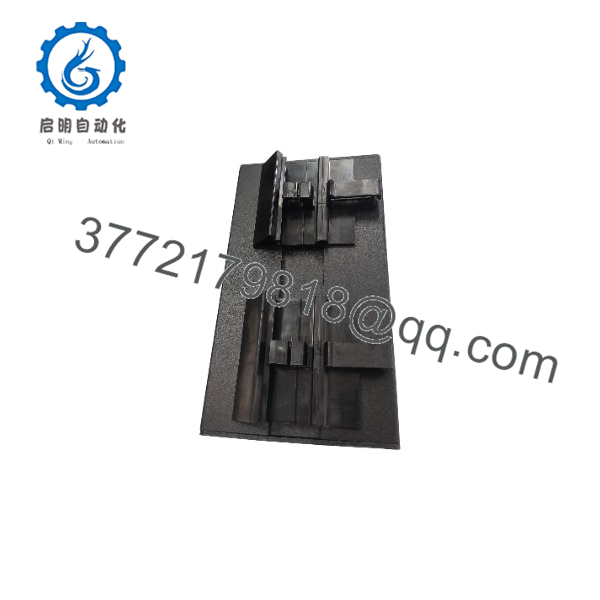
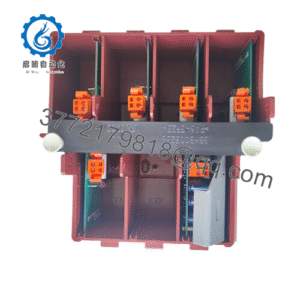
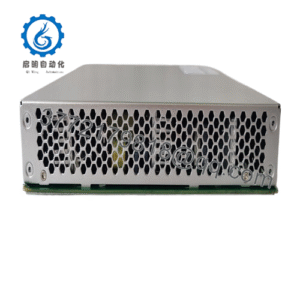
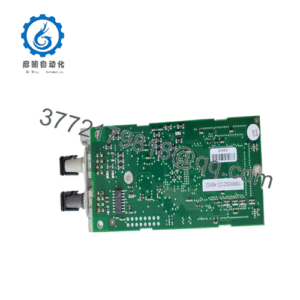
SLIO 01
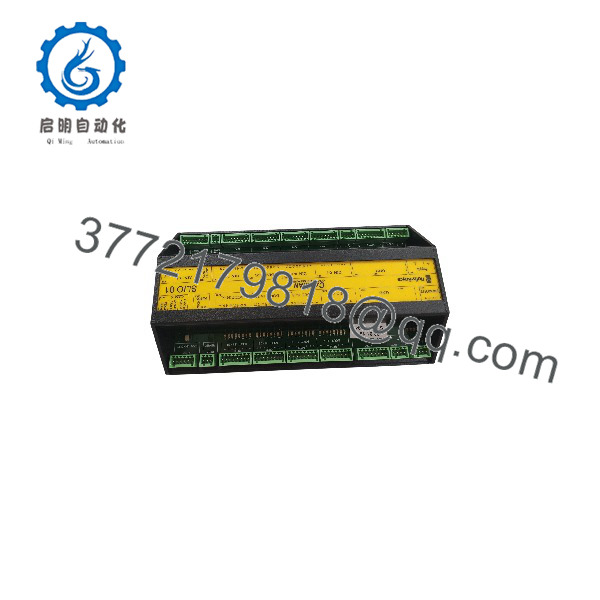
SLIO 01
Detailed Product Overview
The Rolls-Royce SLIO 01 is a serial-link input/output node developed for the CANman Controller Network used in Rolls-Royce Marine (formerly Ulstein) ship automation systems. In the CANman architecture, central control nodes (CCN) execute the application software, while SLIO nodes handle localized I/O.
The SLIO 01 provides a flexible set of channels: digital inputs and outputs, analog inputs (commonly 0–5 V range), PWM outputs, pulse outputs and frequency measurement. These functions support the signal types typically required for propulsion control, thruster command and feedback, and related marine automation tasks.
A key design feature is that the SLIO node firmware is independent of the application code running on the CCN. When the control application is modified or updated, the SLIO software remains the same. This simplifies maintenance and reduces the risk associated with software changes across a fleet.
There are two main SLIO variants: SLIO 01 and SLIO 02. The primary difference lies in the I/O channel configuration; minor software differences also exist. Both connect to the same local CAN bus (S-Bus) and operate under the same network principles.
The module is engineered for the marine environment and is found on commercial vessels, offshore support vessels and other ships equipped with Rolls-Royce / Ulstein CANman-based propulsion and automation systems. Today it is primarily sourced as a spare or replacement part for existing installations.
When replacing an SLIO 01, the correct variant (01 or 02), network addressing, and field wiring must be matched to the original configuration to ensure proper system operation.
Applications & System Role
The SLIO 01 functions as a distributed I/O interface in Rolls-Royce Marine CANman automation systems. Typical applications include:
- Propulsion and thruster control systems
- Steering gear and azimuth thruster interfaces
- Joystick and control-lever signal acquisition
- Engine monitoring and auxiliary system I/O
- Dynamic positioning related signal collection
It collects field signals and transmits them over the S-Bus to the central control nodes, and receives output commands for actuators, reducing the need for extensive individual cabling back to the main controller.
FAQ
What is the Rolls-Royce SLIO 01?
It is a distributed serial I/O node module for the CANman Controller Network used in Rolls-Royce Marine automation systems.
What network does it connect to?
The local CAN bus, also called the S-Bus, within the CANman system.
What types of signals does it handle?
Digital inputs and outputs, analog inputs, PWM outputs, pulse outputs and frequency measurement.
Is the firmware application-specific?
No. The SLIO firmware is application-independent and does not need to be changed when the CCN application software is updated.
What is the difference between SLIO 01 and SLIO 02?
The main difference is the I/O channel configuration; there are also minor software differences.
Where is the SLIO 01 typically used?
In marine propulsion control, thruster systems, steering interfaces and related shipboard automation on vessels equipped with the CANman system.