 WhatsApp: +86 16626708626
 Email:
 Phone: +86 16626708626
Description
Core Product Summary
The SAACKE RSE-P II is an electronic burner control unit from the combustion automation range of SAACKE, the Bremen-based manufacturer of industrial and marine combustion systems. Within SAACKE plants — which span burner families such as DDZ, SKV, TEMINOX, and SSB together with marine and industrial boilers — the RSE-P II functions as a controller-level component for burner sequencing, monitoring, and setpoint handling in the combustion control architecture.
The unit’s nameplate data identifies it electrically: a supply acceptance of 85–264 VAC at 50/60 Hz, a +24 VDC auxiliary output rated to a maximum of 0.1 A, and two analog inputs — AI0 on terminal S1-1 for 0(4)–20 mA signals and AI1 on terminal S1-2, which accepts 0(4)–20 mA, Pt100 temperature sensor, or potentiometer signals. The system language is available in German and English. The analog input configuration indicates the unit’s role in processing measured and setpoint values — such as temperature or position signals — as part of the burner’s control and limiting functions. When procuring a replacement, the exact voltage variant and the terminal configuration should be verified against the installed unit and the plant documentation.
Key Technical Specifications
| Parameter | Value |
|---|---|
| Manufacturer / series | SAACKE combustion automation |
| Product type | Electronic burner control unit (controller) |
| Supply voltage | 85–264 VAC, 50/60 Hz (90–264 VAC designation also used in listings) |
| Auxiliary output | ‘+24 VDC, max. 0.1 A |
| Analog input AI0 | Terminal S1-1, 0(4)–20 mA |
| Analog input AI1 | Terminal S1-2, 0(4)–20 mA, Pt100, or potentiometer |
| System language | German / English |
| Role in plant | Controller-level component in SAACKE burner and boiler systems for combustion control and monitoring |
| Origin | Germany |
Engineering Selection Highlights
- SAACKE platform part, not a generic controller — the RSE-P II belongs to SAACKE’s combustion automation environment and is selected against the specific burner or boiler type in the plant; it is not specified from generic controller criteria alone.
- Wide AC supply acceptance of 85–264 VAC at 50/60 Hz — the same unit tolerates both nominal 115 V and 230 V networks with margin, which matters on marine installations where supply conditions vary; verify the actual wiring against the plant documentation regardless.
- Analog input structure signals the control role — AI0 accepts a 0(4)–20 mA process signal and AI1 accepts either a current signal, a Pt100 temperature input, or a potentiometer, indicating use for measured-value and setpoint processing in the burner’s control and limiting chain.
- Auxiliary 24 VDC output limited to 0.1 A — external devices powered from this output must stay within the 100 mA budget; oversizing external loads on this terminal is a common integration error.
- Language version is part of the unit identity — units are documented with German and English system language; when replacing an installed controller, confirm the operators’ expected language and documentation version.
- Replacement verification points — because SAACKE ships several control and timing elements (for example, separate timing elements in the same plant family), the order designation on the nameplate, the terminal assignments S1-1/S1-2, and the plant wiring diagrams should be checked together before ordering.
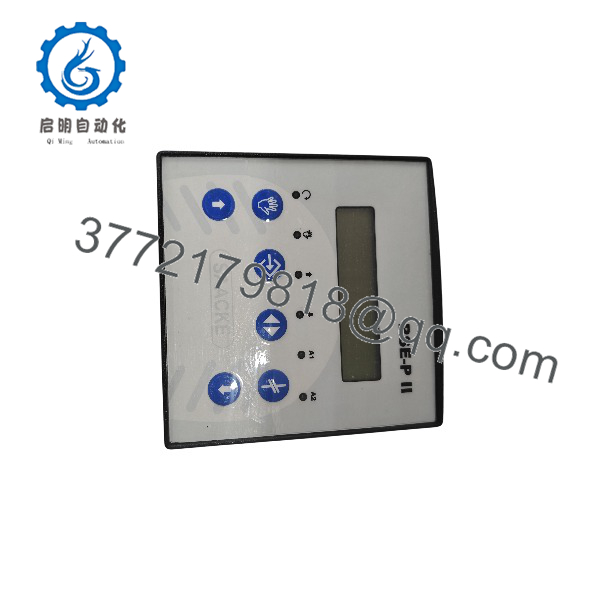
RSE-P II
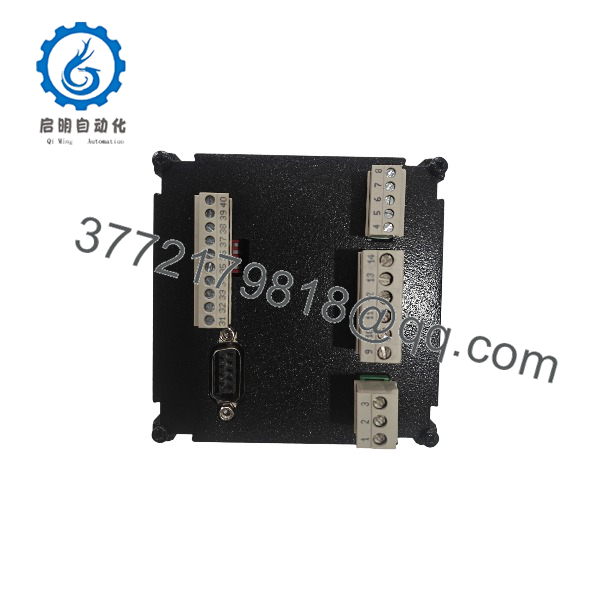
RSE-P II
System Compatibility & Integration Requirements
| Item / Dependency | Verified Compatibility or Requirement | Practical Note |
|---|---|---|
| Plant context | SAACKE combustion plants — burner families include DDZ, DDZG, SKV, TEMINOX, SSB, and associated boiler series | The unit is a component of SAACKE burner/boiler systems; confirm the burner type and plant documentation before replacement |
| Supply | 85–264 VAC, 50/60 Hz | Covers both common low-voltage network levels; verify actual connection per plant wiring diagram |
| Analog input AI0 (S1-1) | 0(4)–20 mA | Source the connected transmitter or setpoint signal accordingly |
| Analog input AI1 (S1-2) | 0(4)–20 mA, Pt100, or potentiometer | Signal type selection must match the sensor wired to this terminal |
| Auxiliary output | ‘+24 VDC, max. 0.1 A | External loads powered from the unit must remain within 100 mA |
| System language | German / English | Confirm the required operator language version |
| Documentation | SAACKE plant and burner documentation | Commissioning, parameterization, and fault handling follow the SAACKE documentation for the specific burner or boiler plant |
Dimensions, Mounting & Connection Notes
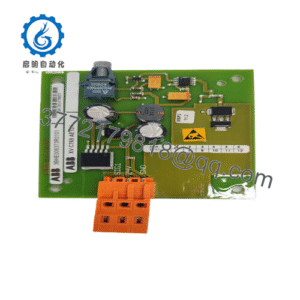
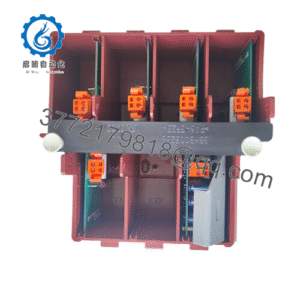
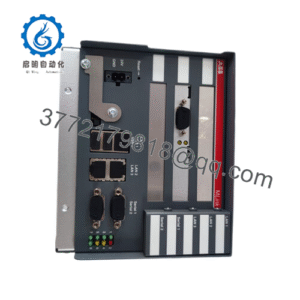
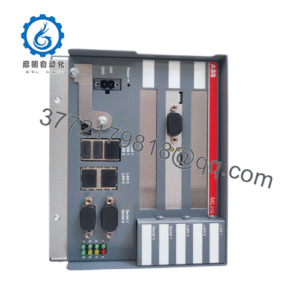
- The RSE-P II is built as a control-unit/PC-board-style assembly for integration into SAACKE burner and boiler control panels; mounting orientation and panel clearances follow the SAACKE plant documentation for the specific installation.
- Electrical connection is made per the SAACKE wiring diagram for the plant, with the analog inputs at terminals S1-1 and S1-2 and the supply connection per the nameplate rating of 85–264 VAC, 50/60 Hz.
- The +24 VDC auxiliary output is limited to a maximum of 0.1 A and must not be used to power loads beyond this rating.
- Before replacement or first installation, verify the nameplate designation, voltage rating, terminal assignments, and language version against the installed unit and the plant documentation; SAACKE plants also use separate timing elements and other control boards, so part identification should not rely on appearance alone.
Detailed Product Overview
The SAACKE RSE-P II belongs to the control and automation layer that SAACKE supplies alongside its combustion hardware. SAACKE’s product range spans complete firing systems — burners in the DDZ, SKV, TEMINOX, and SSB families, hot gas generators, industrial boilers, and marine boiler plants — and each of these plants depends on control-level electronics for sequencing, monitoring, and setpoint processing. The RSE-P II is one of these controller-level units: an electronic burner control board that is identified, ordered, and serviced as part of the SAACKE spare-parts environment rather than as a standalone generic product.
The unit’s electrical identity is well documented on its nameplate. It accepts a supply of 85–264 VAC at 50/60 Hz — a range that spans both 115 V and 230 V class networks with margin, a practical property for marine and export installations where the same hardware faces different supply conditions. A +24 VDC auxiliary output, limited to 0.1 A, is available for external circuits, and its limited budget should be respected when planning panel wiring. Two analog inputs define the unit’s interface to the process: AI0 at terminal S1-1 takes a 0(4)–20 mA signal, and AI1 at terminal S1-2 can take a 0(4)–20 mA signal, a Pt100 temperature sensor, or a potentiometer. This input structure is characteristic of combustion control applications, where the controller must evaluate measured values — such as temperature — alongside command or position signals as part of the burner’s control and limiting chain.
For procurement and service engineering, the practical considerations are identification and configuration matching rather than raw specification comparison. SAACKE plants use several distinct electronic components — the RSE-P II controller as well as separate timing elements and drive boards in the same plants — so a replacement order should be validated against the nameplate designation, the terminal assignments, the voltage rating, and the plant’s wiring documentation together. The system language (German or English) also matters for operators and should be confirmed as part of the order.
Honest limits of this overview: SAACKE’s public documentation for this unit is distributed through plant-specific manuals rather than a standalone public datasheet, so the description above is deliberately restricted to identity, nameplate electrical data, and integration context. Parameters such as response times, safety integrity levels, or approval certificates for this exact unit are not stated here because they could not be verified from available material; those values, where applicable, are defined by the SAACKE documentation for the specific plant in which the controller operates.
Applications & System Role
Within a SAACKE combustion plant, the RSE-P II operates at the controller level of the burner management architecture: it processes analog measured and setpoint values — current signals, temperature via Pt100, or position via potentiometer — as part of the burner’s control, sequencing, and monitoring functions. SAACKE combustion systems serve industrial process firing, hot gas and combustion chamber applications, and marine boiler plants; the specific role of the controller depends on the burner series and plant configuration in which it is installed.
Fit scenarios follow from the unit’s verified characteristics rather than from any claim about specific installations:
- Replacement or service of SAACKE burner and boiler plants whose documentation identifies the RSE-P II as the control unit.
- Combustion control tasks that require analog value processing, where the 0(4)–20 mA and Pt100/potentiometer inputs match the plant’s sensor and setpoint signals.
- Plants operating on 115 V or 230 V AC networks, where the unit’s wide supply acceptance covers both supply levels.
For a precise statement of which burner types or plant generations use this controller, the governing source is the SAACKE documentation for the specific plant; this page does not claim installation coverage beyond what that documentation states.
FAQ
What is the SAACKE RSE-P II?
It is an electronic burner control unit from SAACKE’s combustion automation range, used as a controller-level component in SAACKE burner and boiler plants.
What supply voltage does it accept?
85–264 VAC at 50/60 Hz, which covers both 115 V and 230 V class supply networks with margin.
Which analog inputs does it have?
AI0 at terminal S1-1 accepts 0(4)–20 mA; AI1 at terminal S1-2 accepts 0(4)–20 mA, Pt100, or potentiometer signals.
Does it provide auxiliary power?
Yes, a +24 VDC output limited to a maximum of 0.1 A, which external loads must not exceed.
Which language versions exist?
The system language is available in German and English; the required version should be confirmed when ordering a replacement.
How do I confirm it is the correct part for my plant?
Verify the nameplate designation, voltage rating, terminal assignments (S1-1/S1-2), and language version against the installed unit and the SAACKE plant documentation, since SAACKE plants also use separate timing elements and other control boards.
Does it replace the RSE-P?
Replacement or interchangeability with other SAACKE control units is governed by the SAACKE documentation for the specific plant and should be confirmed against that documentation rather than inferred from the type designation alone.