WhatsApp: +86 16626708626
 Email:
 Phone: +86 16626708626
Description
Key Technical Specifications
- Model: MDB-5E
- Function: Metal detector control — excites the detector coil, processes the received signal, and flags contamination events
- Channels: Single-channel
- Architecture: Microprocessor-based with internal function control
- Phase Adjustment: Manual phase adjustment (tuning out product effect)
- Supply Voltage: 85–264 V AC (wide-range input)
- Detection Classes: Ferrous, non-ferrous (copper, aluminum), and stainless steel contaminants
- Signal Processing: Digital suppression of product effect (moisture/salt false signals)
- Typical Application: In-line and conveyor metal detectors in food, pharmaceutical, and chemical production
- Compatibility: Sartorius / Minebea Intec metal detector platforms using the MDB series control (confirm your detector’s TYP designation before ordering)
- Related Designations: Units appear marked “TYP: MDB-5E 2D” — the 2D suffix denotes the detector head configuration; verify against your nameplate
Verify precise compatibility against your detector’s nameplate and the Sartorius/Minebea Intec documentation before installation — the MDB control family has several variants that are not interchangeable across detector heads.
Product Introduction
The Sartorius MDB-5E is the control unit for Sartorius industrial metal detectors — the box that excites the search coil, processes the return signal, and decides whether that cookie, capsule, or granule stream contains a wire fragment or a bolt. It runs a single detection channel on a wide 85–264 V supply, with manual phase adjustment to tune out product effect: the conductive/magnetic signature of wet, salty, or mineral-heavy products that otherwise triggers false rejects.
Sartorius has discontinued this control, and the installed base is large — food and pharma lines that have run these detectors for 15+ years. That makes the MDB-5E a keep-the-line-running spare: when the control dies, your metal detector is dead, and a dead detector on a food line means production stops or product ships unverified. Ours are tested units — power-up, function control, and signal path verified — ready to drop into an existing housing.
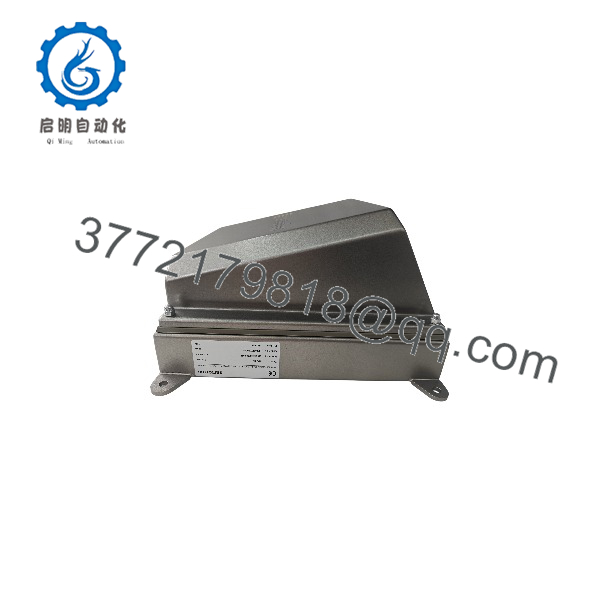
MDB-5E
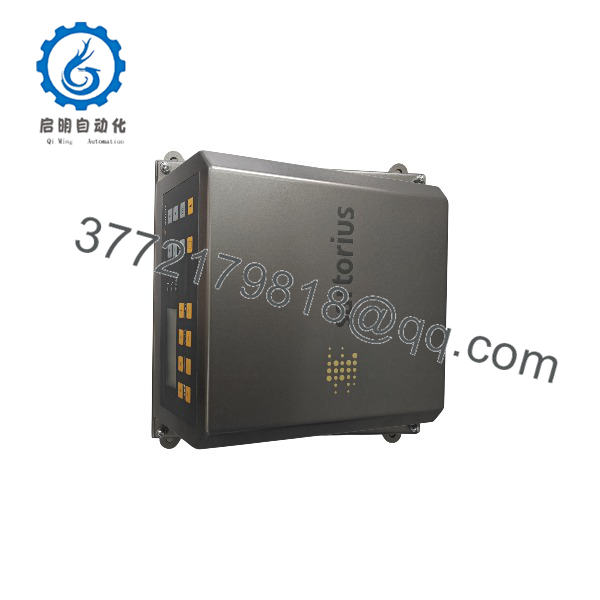
MDB-5E
Troubleshooting Quick Reference
| Symptom | Possible Cause | Relevance to this Part | Quick Check Method | Recommendation |
|---|---|---|---|---|
| Detector rejects constantly, no metal present | Phase adjustment drifted or wrong product setting — product effect | ❌ Low | Re-run the product learn/phase setup per the detector manual with actual product | Retune phase first — 90% of “false reject” calls are setup, not hardware |
| No detection even with test sample | Control failure — excitation or signal path dead | ✅ High | Pass the certified test sample through; check control self-diagnostics and coil continuity | Confirmed miss on test samples = control (or coil) replacement; quarantine product made since the last passed test |
| Detector powers up but alarms on internal function check | Failed internal function control — the control flags itself | ✅ High | Read the fault indication; power-cycle once to confirm it’s latched | Latched internal fault means replacement — don’t run a detector that knows it’s broken |
| Intermittent false rejects on humid days | Product effect shifting with moisture content, or coil connection corrosion | ⚠️ Medium | Inspect coil connector for corrosion; compare reject rate against ambient humidity | Re-tune for worst-case product; clean connections |
| Rejects only large products, passes small | Sensitivity set marginally — worn setup, not failure | ❌ Low | Verify with the certified test card/sample set at the required detection size | Re-establish sensitivity per your HACCP spec and document it |
| Total loss of power, no indicators | Supply wiring or upstream breaker | ❌ Low | Measure 85–264 V at the control’s supply terminals with a multimeter | Fix the supply path before condemning the control |
Honest note — and this one matters more than the others: on a metal detector, the failure mode that hurts isn’t the loud one. It’s the silent one — a control that still runs, still rejects on the test sample sometimes, but has degraded sensitivity. That’s how metal gets into shipped product. Test with certified samples at the start of every shift, log the results, and never accept “close enough.” If you’re stuck, contact our technical support with the fault indication, test-sample results, and photos of the unit’s labels.
Frequently Asked Questions (FAQ)
Q1: Is the MDB-5E still made? How do I keep my line running?
No — Sartorius discontinued this control, and the product line has since moved under Minebea Intec. The support path for existing detectors is refurbished/tested replacement controls and, longer term, a detector upgrade. Our units are refurbished and fully tested: power-up, internal function control check, and signal-path verification, with the test results documented before shipping. If your detector is central to a food-safety or pharma quality program, keeping a tested spare on the shelf is cheaper than one day of a down line — and far cheaper than a recall investigation.
Q2: What does “manual phase adjustment” actually mean for me?
It means you tune the detector to your product by hand, using the phase control to cancel out the product’s own signal. Wet, salty, or mineral-rich products conduct and magnetize slightly — the detector sees that as a signal. Manual phase adjustment lets you rotate the detection phase so the product’s signature cancels and only real metal stands out. It’s more hands-on than modern auto-learn controls, but it’s also more transparent: when it’s tuned right, you can see why. To be honest, it’s a hassle compared to a one-button auto-setup, but once dialed for a stable product, it holds.
Q3: Can I swap the control myself, or does it need calibration?
The swap is mechanically straightforward — a technician with the wiring diagram can do it in an hour. But a metal detector is only as good as its last verified test. After any control replacement: power up, run the internal function check, pass the phase adjustment for your product, then verify detection with your certified test samples (ferrous, non-ferrous, and stainless at your spec sizes), and document everything. On food and pharma lines, that verification record is part of your food-safety/quality system — the swap isn’t “done” until the paperwork says the detector detects.
Q4: My detector was working fine and suddenly rejects everything. Is the control bad?
Usually not. Sudden constant rejects almost always trace to setup or environment: a product change (new recipe, higher moisture), a shifted conveyor belt with embedded metal, a nearby new source of electrical noise (a new VFD, a welder nearby), or a buildup of product debris in the detector aperture. Work the checklist in that order before ordering a control. If the rejects persist with the aperture clean, the same product that ran yesterday, and no new noise sources, then yes — the control or coil is suspect and we can help you isolate which.
Q5: What’s the difference between the MDB series variants?
The MDB family includes single- and multi-channel controls at different generations, matched to specific detector head types — the “2D” you’ll see on nameplates refers to the detector head configuration, not a different control spec. The variants are not freely interchangeable: coil impedance, connector pinouts, and sensitivity scaling differ. Match the full TYP designation on your unit’s nameplate exactly. Send us the nameplate text and photos when requesting a quote and we’ll confirm the right unit — a “similar” control here means a detector that powers up and detects nothing, and you don’t want to discover that during a production run.
Q6: Why a refurbished unit instead of new? Is it reliable?
Because Sartorius doesn’t build them anymore, and the choice isn’t new versus used — it’s tested-used versus nothing. Our refurbishment process: inbound inspection, functional test of the power supply and internal function control, verification of the excitation and signal path on our bench detector fixture, then sealing and protective packaging. Each unit ships with a test report and a 1-year functional warranty. We won’t pretend a refurbished control equals a new one in service life — but with a tested spare installed and your shift-test regime in place, the reliability difference is manageable, and it’s the pragmatic answer for legacy Sartorius detectors.
Q7: What’s the lead time and warranty?
In-stock units ship within 24–48 hours with protective packaging — these controls travel badly in thin boxes, so we pack them like the precision boards they are. Every unit carries a 1-year warranty covering functional failure and ships with our test report. Because the condition and revision of MDB-series stock varies unit by unit, contact us before ordering with your nameplate details — we’ll confirm exactly what we have on the shelf, its condition, and its test status, honestly. For a food-safety-critical component, an accurate answer beats a fast wrong one.