 WhatsApp: +86 16626708626
 Email:
  Phone: +86 16626708626
Description
3. Key Technical Specifications
| Parameter | Value |
|---|---|
| Monitor Type | Dual Thrust Position Monitor |
| Input Channels | 2 channels (axial displacement) |
| Measurement Range | Configurable (e.g., ±1.0 mm or ±40 mils typical) |
| Input Signal | Eddy current proximity probes (FK/VK series) |
| Output Signal | 4–20 mA |
| Alarm Setpoints | Up to 8 (Alert/Danger high/low per channel) |
| Alarm Output | Relay contacts (configurable logic) |
| Accuracy | ±0.5% F.S. at 25°C |
| Alarm Repeatability | ±0.1% F.S. |
| Operating Temperature | 0 to +65°C |
| Mounting | Rack-mounted (VM-5H / VM-5W systems) |
| Compliance | API 670 machinery protection |
4. Product Introduction & Supply Chain Strategy
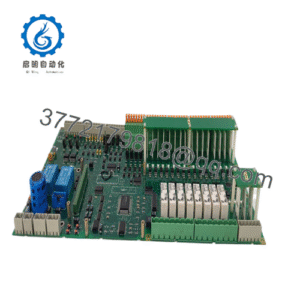
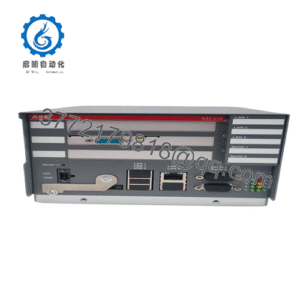
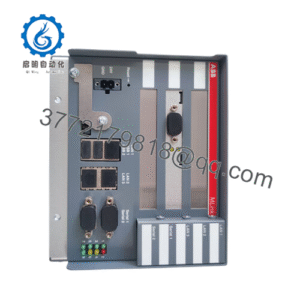
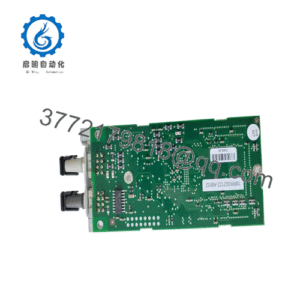
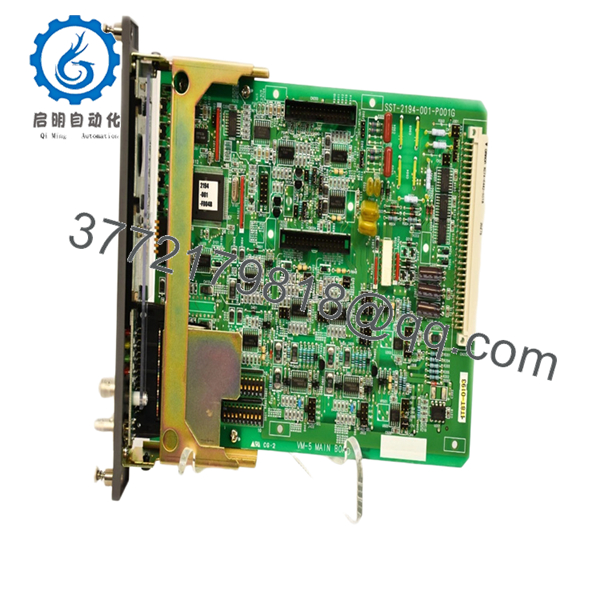
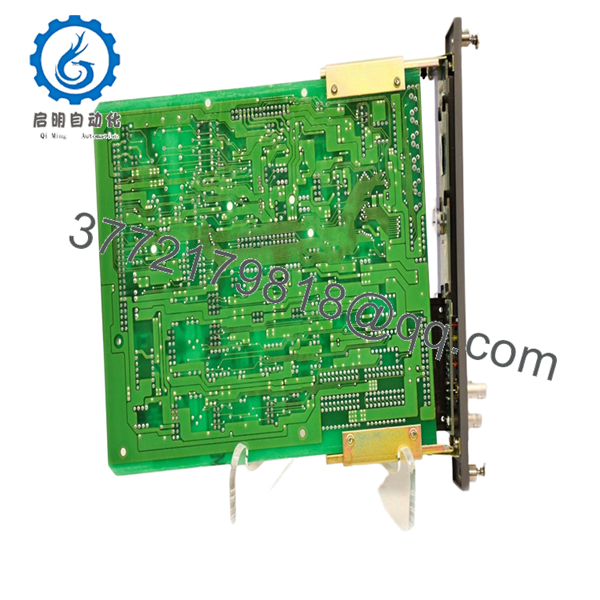
The SHINKAWA VM-5T-51010-000-001-111-1 is a dual thrust position monitor designed for axial displacement protection in turbines, compressors, and critical rotating assets. It continuously measures shaft position via proximity probes and triggers multi-level alarms to prevent thrust bearing failure and rotor damage.
From a supply-chain standpoint, this module is a high-criticality A-class spare. Failure leads directly to turbine trip scenarios. Given VM-5 platform maturity and declining OEM availability, lead time variability is extreme. Securing New Surplus units enables a structured last-time-buy strategy, avoids refurbished reliability risks, and stabilizes long-term Total Cost of Ownership (TCO).
5. Installation & Configuration Guide
Stage 1: Pre-Installation (Prep & Safety)
- Execute Lock-Out/Tag-Out (LOTO) on the monitoring rack.
- Confirm isolation of rack power supply.
- Use ESD protection (grounded wrist strap).
- Capture:
- Existing alarm setpoints
- Wiring configuration
- Module slot position
Stage 2: Removal
- Power down the rack completely.
- Release module locking mechanism.
- Pull module straight out—avoid twisting to protect backplane connectors.
Stage 3: Installation (Clone & Seat)
- Insert VM-5T into identical slot.
- Replicate all configuration:
- Alarm thresholds (Alert/Danger high/low)
- Output scaling (4–20 mA vs voltage)
- Verify probe polarity and shielding continuity.
Stage 4: Power-On & Testing
- Re-energize system and monitor:
- OK status (no fault alarms)
- Stable displacement readings
- Simulate axial movement signal.
- Confirm:
- Alarm relay activation sequence
- Output signal matches DCS scaling

- VM-5T-51010-000-001-111-1
- VM-5T-51010-000-001-111-1
6. Firmware/Software Versions & Upgrade Notes
- VM-5T is hardware-configured; firmware is tied to module revision.
- Compatibility considerations:
- Must align with rack logic (VM-5H3, VM-5Z power supply).
- Alarm voting logic (AND/OR) must match system design.
- Critical risk:
- Changing module revision without validating alarm logic can cause false trips or missed shutdown conditions.
- Best practice:
- Maintain firmware and configuration parity across redundant trains.
- Avoid upgrading during emergency replacement—stability over feature gain.
7. Frequently Asked Questions (FAQ)
Q1: Are these VM-5T modules genuinely new?
Yes. These are New Surplus units—unused OEM-manufactured modules with zero field exposure, original components, and full QC verification.
Q2: Why avoid refurbished VM-5T modules?
Thrust monitoring is a protection function. Refurbished units may have drift in analog circuits, leading to incorrect axial readings. A false-negative condition can result in catastrophic bearing damage.
Q3: Is VM-5T still actively manufactured?
It is part of a mature VM-5 platform with limited OEM production. Availability depends on surplus channels. This requires proactive lifecycle tracking and last-time-buy execution.
Q4: Can I hot-swap this module?
No. Removing under power risks signal spikes and unintended turbine trips. Always perform controlled shutdown.
Q5: What stocking level is recommended?
- Single turbine: Min 1 unit (buffer stock)
- Multi-unit plant: Max 2 units with cross-site sharing strategy
Q6: Does the module retain configuration after removal?
Settings are not automatically transferred. Always document alarm thresholds and scaling before replacement.
Q7: What QC and warranty are included?
Each unit undergoes:
- Serial number traceability verification
- Functional test with simulated probe signals
- Alarm logic validation
- Electrical insulation testing
Warranty: 12months.