WhatsApp: +86 16626708626
 Email:
  Phone: +86 16626708626
Description
Key Technical Specifications
- Model: F267
- Manufacturer Part Number: 4000636
- Brand: Simco / Simco-Ion
- Product Type: Static eliminator power supply unit
- Primary Function: Provides high-voltage AC excitation for compatible static-neutralizing bars and electrodes
- Input Voltage: 230 V AC nominal
- Input Frequency: 50/60 Hz
- Input Current: 0.12 A nominal
- Input Power: Approximately 28 VA, based on 230 V AC × 0.12 A input rating
- High-Voltage Output: 7.5 kV AC nominal
- Output Application: Simco static-control equipment only
- Safety Classification: High-voltage energized equipment; trained personnel only
- Mounting Application: Machine frame, enclosure, or static-control assembly, subject to OEM clearance requirements
- Field Connection: Dedicated high-voltage output cable/connector for compatible Simco ionizing equipment
- Grounding Requirement: Protective earth connection required before energization
- Service Status: Legacy / limited availability through surplus and refurbished channels
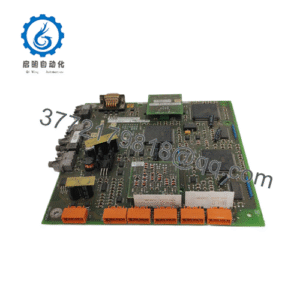
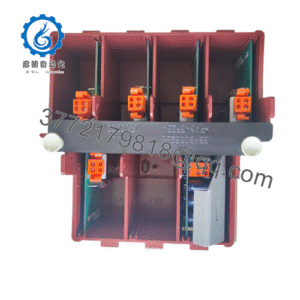
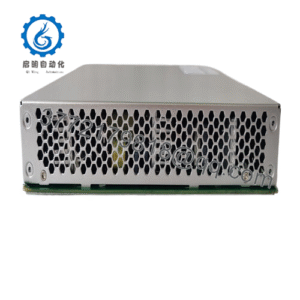
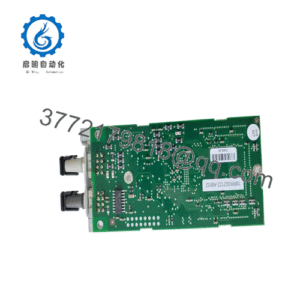
The Simco-Ion F267, part number 4000636, is a 230 V AC static-eliminator power supply with a 7.5 kV AC output. It is not a general-purpose 230 V AC-to-DC control power supply. It is designed to energize compatible static-control equipment and must be installed with the correct high-voltage cable, ionizing bar or electrode, protective earth connection, and machine interlock arrangement.
Product Introduction
The Simco-Ion F267 4000636 is a high-voltage power unit for industrial static-control systems. It accepts 230 V AC, 50/60 Hz input and supplies 7.5 kV AC to a compatible static-neutralizing bar, electrode, or ionizing assembly used on converting, printing, packaging, plastics, textile, and material-handling machinery.
The F267 is selected as an exact replacement where an existing machine uses the same Simco static-control architecture and high-voltage connection. Its job is simple: energize the ionizer so it can neutralize electrostatic charge. Verify the original part number, input voltage, output cable style, ionizer model, cable length, grounding method, and enclosure clearances before installation.
Troubleshooting Quick Reference
| Symptom | Possible Cause | Relevance to This Part | Quick Check Method | Recommendation |
|---|---|---|---|---|
| No static neutralization at the web or product surface | No 230 V AC input, disconnected HV cable, failed ionizing bar, contaminated emitter points, defective F267 unit | ❌ Low until supply and ionizer are inspected | Verify machine static-control enable circuit; measure 230 V AC at F267 input terminals using a CAT-rated meter; inspect the high-voltage cable and ionizing bar with power locked out | Restore input power and inspect the ionizer before replacing the |
| No input indicator or no apparent operation | Tripped breaker, blown fuse, open interlock, loose mains terminal, missing neutral, failed unit | ❌ Usually external | Measure 230 V AC line-to-neutral and line-to-protective-earth at the input; check upstream fuse, disconnect, and safety interlock | Correct the incoming power path before declaring the unit defective |
| Static problem gets worse after replacing the power unit | Wrong ionizer polarity arrangement, poor grounding, wrong bar location, excessive bar-to-web distance, machine speed changed | ❌ Usually installation-related | Check the original installation drawing; verify earth bonding, bar placement, distance to material, and web path | Do not alter high-voltage wiring from memory. Restore the OEM installation geometry and grounding |
| Audible arcing, snapping, or ozone odor | Damaged high-voltage cable, cracked ionizing bar, contaminated emitter points, insufficient electrical clearance, moisture ingress | ✅ High safety concern | De-energize and lock out immediately; inspect cable insulation, connector boots, bar housing, emitter points, and nearby grounded metal | Do not operate until the source of arcing is corrected. Replace damaged cable, bar, or power unit as required |
| High-voltage cable feels loose or has visible damage | Cable strain, broken connector, insulation cracking, heat damage, unauthorized splice | ❌ Usually cable-related | Lock out power; inspect the complete cable run for cuts, flattened sections, exposed conductor, non-OEM splices, and loose connectors | Replace the high-voltage cable assembly. Do not tape or field-splice a 7.5 kV output cable |
| Static elimination works intermittently | Loose AC input terminal, damaged HV connector, contamination, humidity changes, failing internal transformer, machine vibration | ✅ Medium | With power removed, retorque approved terminals, inspect cable routing, clean ionizer points, and monitor when the fault occurs | If faults persist with known-good cable and clean ionizer equipment, replace or bench-test the |
| Circuit breaker trips when is energized | Input wiring short, failed internal transformer, damaged HV cable, ionizer short to ground, moisture contamination | ✅ Medium | Disconnect the HV output only under OEM-approved procedure, then test input behavior; inspect cable and ionizer insulation with appropriate high-voltage test equipment | Do not increase breaker size. Isolate and identify whether the fault follows the power unit, cable, or ionizer |
| Material still attracts dust despite correct power | Dirty emitter pins, ionizer too far from material, poor machine grounding, static generated downstream, bar coverage inadequate | ❌ Low | Clean emitter points using the OEM-approved method; verify bar distance and position; measure static field with an electrostatic field meter if available | Correct the static-control application first. A new power unit cannot compensate for poor bar placement or grounding |
| Shock sensation near ionizing equipment | Missing protective earth, damaged insulation, leakage path, poor enclosure bonding, improper installation | ✅ Critical | Stop operation, isolate power, verify earth continuity from chassis to machine PE using an approved low-resistance tester | Do not re-energize until a qualified technician corrects grounding and insulation faults |
| Replacement unit does not connect to existing ionizer | Wrong version, incompatible high-voltage connector, wrong cable length, different static-bar family | ✅ Medium | Compare original and replacement labels, output connector shape, cable assembly, and connected ionizer model | Use an exact 4000636 replacement or obtain a written compatibility confirmation from Simco-Ion |
| Unit overheats or fails after extended operation | High ambient temperature, blocked ventilation, incorrect mounting, internal aging, overloaded or incorrect ionizer load | ✅ Medium | Inspect mounting clearances and enclosure temperature; compare connected ionizer/cable setup to OEM requirements | Correct cooling and load issues. Replace the power unit if it continues overheating in a correct installation |
| PLC or machine static alarm remains active | Sensor interlock fault, relay contact issue, static-monitor configuration, power-enable signal absent | ❌ Usually control wiring | Trace the enable and alarm circuit separately from the high-voltage output; verify the machine’s static-control permissive | Do not replace the before proving the machine enable and alarm wiring |
❗ 7.5 kV warning: This equipment produces high voltage. Do not measure the output with a standard multimeter, ordinary oscilloscope probe, or improvised test lead. A typical handheld meter is not rated to contact or measure a 7.5 kV AC static-eliminator output.
❗ Lockout warning: Disconnect and lock out the 230 V AC input before touching the ionizing bar, high-voltage output cable, output connector, or enclosure. Verify absence of voltage, wait for any stored energy to dissipate as specified by the OEM, and follow the machine’s electrical-safety procedure.
❗ Grounding warning: The power unit chassis, ionizing equipment, machine frame, and nearby conductive structures require proper protective-earth bonding. I have seen a static-control problem blamed on a “weak” power supply when the real issue was a powder-coated mounting bracket that had isolated the ionizer assembly from earth.
If troubleshooting remains inconclusive, contact technical support with clear photos of the label, input wiring, high-voltage cable and connector, connected ionizer model, machine-grounding points, upstream protective device, and static-control layout. Keep these checks in mind and you will save yourself most of the usual rework time.
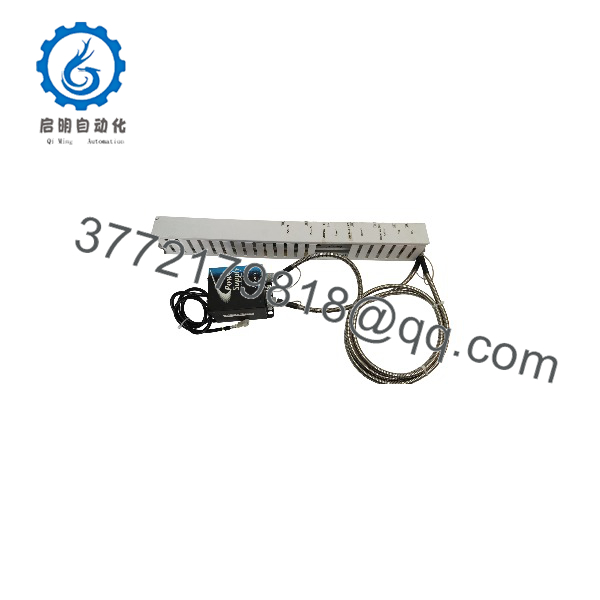
F267 4000636
Frequently Asked Questions
What is the Simco-Ion 4000636?
The , Simco-Ion part number 4000636, is a high-voltage static-eliminator power supply. It accepts 230 V AC input and produces approximately 7.5 kV AC for compatible Simco static-neutralizing equipment. It is used to energize ionizing bars or electrodes that reduce electrostatic charge on material moving through industrial machinery.
Is the a standard 24 V DC industrial power supply?
No. Do not connect PLCs, sensors, relays, HMI panels, or 24 V DC loads to it. The is a specialized high-voltage AC source for static-control equipment. Its 7.5 kV AC output can cause serious injury, equipment damage, or arcing if applied to the wrong device or wiring.
What input power does the 4000636 require?
The documented input is 230 V AC at 50/60 Hz. A secondary source identifies an input current of 0.12 A. Confirm the exact nameplate on the supplied unit before wiring because industrial machines may use different static-control supply variants for other regional voltages.
Can I use a 120 V AC supply with this ?
No. The 4000636 version is identified for 230 V AC input. Applying 120 V AC may prevent correct operation or result in insufficient high-voltage output. Do not use a step-up transformer as an informal workaround unless Simco-Ion confirms the complete installation, grounding, protective device, and power quality requirements.
Can I replace the with another Simco power unit?
Only if Simco-Ion or a qualified static-control specialist confirms compatibility. Match the exact part number, input voltage, output voltage, output connector, ionizing bar or electrode model, permitted cable length, enclosure rating, mounting arrangement, and any safety interlocks.
A power unit that physically fits may still deliver the wrong voltage or use an incompatible output connection. High-voltage static equipment is not a place for approximate substitutions.
Why does the ionizing bar not remove static even though the has input power?
The usual causes are a disconnected or damaged high-voltage cable, dirty or worn emitter points, poor grounding, incorrect bar placement, excessive distance to the material, a disabled machine interlock, or static generation occurring downstream from the installed bar. Check these conditions before replacing the power unit.
A practical test is to verify 230 V AC input, inspect the cable and emitters with power isolated, confirm earth continuity, and use a properly rated electrostatic field meter to compare charge levels before and after the bar. Never use your hand as a high-voltage test instrument.
Is the obsolete, and should I keep a spare?
The 4000636 is a legacy static-control power unit and commonly appears through surplus, used, and refurbished inventory channels. For a production line where static control affects print quality, film handling, dust attraction, web breaks, or packaging throughput, keep a verified spare power unit and a compatible high-voltage cable assembly.
Store the spare dry, clean, protected from vibration, and clearly labeled with its intended ionizer model and machine location. Do not install it without confirming that it is the 230 V AC, 7.5 kV AC version.
How should a New Surplus 4000636 be tested before shipment?
Start with traceability and visual inspection: confirm the and 4000636 labels, input-voltage marking, high-voltage-output rating, housing condition, mains terminals, protective-earth point, output cable condition, connector integrity, and absence of cracks, corrosion, discoloration, burn marks, or unauthorized repairs.
For functional testing, install the unit in an insulated, guarded test fixture with a compatible approved Simco ionizer and correct protective-earth bonding. Apply regulated 230 V AC through suitable overcurrent protection and verify normal operation using only manufacturer-approved high-voltage test equipment and procedures. Inspect the output cable and ionizer for corona, arcing, unusual noise, overheating, or insulation breakdown during a sustained run.
Record the test voltage, input current, connected ionizer model, cable length, grounding continuity result, test duration, and inspection result. Package the unit with output cable protection, moisture barrier, and shock-resistant outer packaging. Test photos and video should be available upon request. The published identification for the 4000636 is 230 V AC input, 50/60 Hz operation, and 7.5 kV AC static-eliminator output.