WhatsApp: +86 16626708626
 Email:
  Phone: +86 16626708626
Description
Key Technical Specifications
| Parameter | Value |
|---|---|
| Manufacturer | Telkoor Power Supplies |
| Common Model Reference | AC-3U-250 |
| Product Designation | CPCI-AC-3U-250 |
| Product Family | 3002 CompactPCI power supply family |
| Product Type | 3U AC-input CompactPCI power supply |
| Continuous Output Power | 250 W |
| Input Voltage Range | 85–264 V AC |
| Input Frequency | 47–63 Hz |
| Power-Factor Correction | Active PFC / unity PFC stated by manufacturer |
| Backplane Standard | PICMG 2.11 |
| Backplane Connector | Standard 47-pin CompactPCI connector |
| Primary Output Rails | +5 V DC, +3.3 V DC, +12 V DC, −12 V DC |
| Published Output Configuration | +5 V DC at 20 A; +3.3 V DC at 30 A; +12 V DC at 3 A; −12 V DC at 0.5 A |
| Efficiency | Better than 81% at high-line input |
| Form Factor | 3U high, 8 HP wide |
| Approximate Depth | 220 mm |
| Operating Temperature | −5 to +55 °C without derating stated by Telkoor |
| Cooling Requirement | Verify chassis airflow; comparable 250 W cPCI units specify 15 CFM for full rated power |
| Hot-Swap Function | Supported |
| Redundancy | N+1 operation with active current sharing on 3.3 V and 5 V rails |
| Minimum Load Requirement | No minimum load requirement |
| Control and Monitoring | Enable, inhibit, power-good signals, and onboard EEPROM hardware configuration |
| Safety / EMC | UL, CSA, CE, and CCC marking stated; external line filter may be required for stated FCC Part 15 Class B and EN 55022 Class B compliance |
Telkoor identifies the CPCI-AC-3U-250 as a 250 W continuous CompactPCI power supply compliant with PICMG 2.11, using a standard 47-pin connector. The manufacturer also specifies wide-range 85–264 V AC input, hot-swap capability, N+1 redundancy, active current sharing on the 3.3 V and 5 V outputs, no minimum-load requirement, and a −5 to +55 °C operating range without derating.
Product Introduction
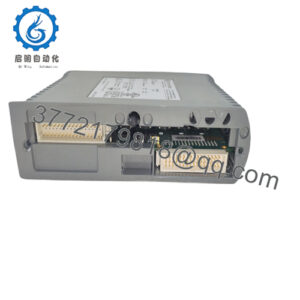
The Telkoor AC-3U-250, also referenced as CPCI-AC-3U-250, is a 3U CompactPCI AC-input power supply for industrial computers, communications platforms, embedded-control racks, and legacy cPCI chassis. It converts universal AC line input into regulated +5 V DC, +3.3 V DC, +12 V DC, and −12 V DC rails through a PICMG 2.11-compatible 47-pin backplane connection.
The unit supports hot-swap replacement and N+1 redundant power architectures, making it suitable for systems where a failed supply must be exchanged without taking down the full cPCI rack. Confirm the exact output-current label, chassis depth, airflow path, connector keying, and load share arrangement before purchase; 250 W class cPCI supplies can share a form factor while using different rail allocations or mechanical details.
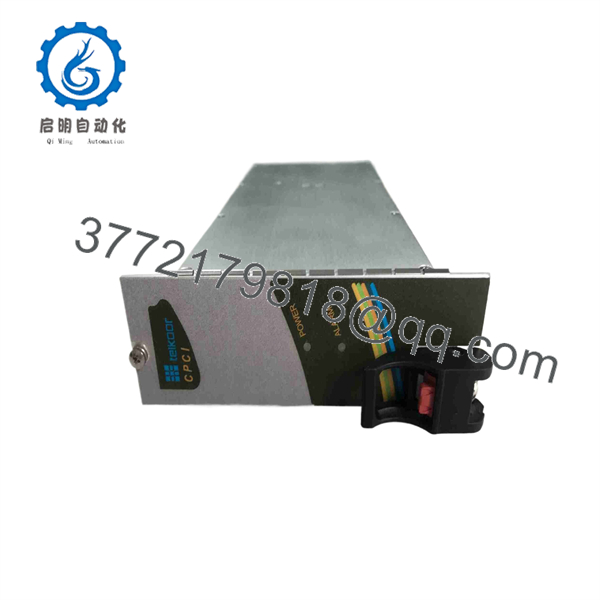
AC-3U-250
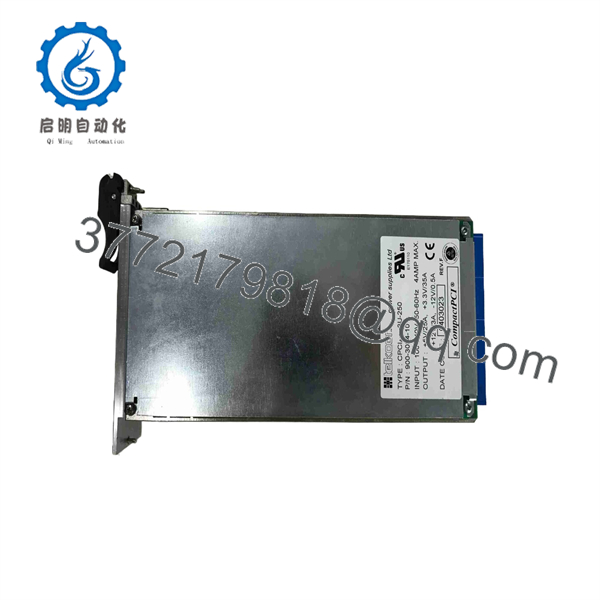
AC-3U-250
Troubleshooting Quick Reference
| Symptom | Possible Cause | Relevance to this Part | Quick Check Method | Recommendation |
|---|---|---|---|---|
| No front-panel LEDs | No AC input, open breaker, failed line fuse, defective PSU | ⚠️ Medium | Measure line voltage at the source and PSU input: 85–264 V AC expected; verify breaker, cord, connector, and fuse condition | Confirm incoming AC and protective devices before replacing the AC-3U-250 |
| AC input is present but all DC rails are absent | Internal PSU fault, inhibit input active, backplane connector issue | ✅ High | With approved energized-work procedures, measure output rails at the cPCI backplane; check inhibit and enable signals against the chassis schematic | If input is correct and the inhibit signal is not asserted, replace the PSU after verifying connector engagement |
| System boots, then resets when PCI cards initialize | 5 V or 3.3 V overload, weak supply, excessive inrush demand, bad current sharing | ⚠️ Medium | Measure +5 V and +3.3 V at the farthest loaded backplane position during startup; review total card load against rail ratings | Calculate actual rail demand and leave a 20% power margin. Do not replace the PSU until the rack load is verified |
| One voltage rail is low or missing | Internal rail failure, backplane short, overloaded plug-in board | ✅ High | Remove nonessential boards one at a time under an approved shutdown procedure; measure +5 V, +3.3 V, +12 V, and −12 V at the backplane | Isolate a downstream short before condemning the power supply. A shorted board can pull a healthy rail down |
| Supply shuts down after several minutes | Overtemperature protection, blocked airflow, fan-tray failure, overload | ⚠️ Medium | Check inlet and exhaust paths; measure cabinet temperature; confirm chassis airflow and inspect adjacent power modules | Restore airflow before replacement. The published temperature range assumes correct cooling conditions |
| Redundant supply alarm appears | Failed current sharing, mismatched PSU revision, one supply not seated, unequal load distribution | ⚠️ Medium | Verify both PSUs are fully seated; inspect share and power-good signals; compare front-panel indicators and output voltages | Use matched models and compatible revisions in N+1 systems. Do not mix unrelated 3U cPCI power supplies |
| Replacement unit will not power the rack | Wrong output configuration, incompatible connector keying, incorrect chassis wiring, failed backplane | ❌ Low | Compare the removed unit’s full label, drawing number, connector layout, rail-current ratings, and mechanical dimensions to the replacement | Do not force the module into the slot. Verify exact AC-3U-250 variant and rear connector arrangement |
| Power-good signal is absent but rails appear normal | Power-good timing issue, excessive ripple, poor backplane contact, overloaded rail | ⚠️ Medium | Measure rails under load and inspect the PGOOD line with a meter or oscilloscope; reseat the supply and inspect connector pins | Check the backplane and load first. Replace the PSU if PGOOD remains faulty with stable rail voltages and correct load |
| PSU trips when a specific board is installed | Failed plug-in card, localized short, excessive board current draw | ❌ Low | Install boards incrementally and monitor which card causes the trip; inspect the suspect board for shorted DC/DC converters or burned components | Repair or replace the failing board. Do not repeatedly restart the PSU into a hard short |
| Visible heat discoloration, odor, or damaged connector pins | Loose backplane connection, high-resistance contact, overload, internal component failure | ✅ High | De-energize and inspect connector pins, extraction handles, backplane sockets, and adjacent wiring for discoloration or deformation | Replace damaged components and inspect the backplane carefully. A new PSU alone will not repair heat-damaged contacts |
❗ Backplane warning: Do not assume every 3U CompactPCI supply has the same rail allocation. The standard 47-pin PICMG 2.11 connector does not guarantee identical output-current limits, signal definitions, remote-sense wiring, or mechanical keying across every manufacturer and revision.
❗ Redundancy warning: N+1 systems require compatible supplies and correct current-sharing connections. Installing an unmatched supply may allow the rack to start but can create unequal loading, nuisance alarms, or premature PSU failure.
❗ Power-load warning: A supply rated at 250 W does not mean every rail can deliver 250 W independently. Calculate the +5 V, +3.3 V, +12 V, and −12 V demand separately. The published configuration includes 20 A on +5 V, 30 A on +3.3 V, 3 A on +12 V, and 0.5 A on −12 V; verify the exact label on the offered unit before installation.
If the issue remains unresolved, provide technical support with photos of the full nameplate, front panel LEDs, rear connector, cPCI backplane, load cards, and measured output rails. Include input voltage, rail readings under load, ambient cabinet temperature, and the exact rack/chassis model.
Frequently Asked Questions
What is the Telkoor AC-3U-250 used for?
The AC-3U-250 is a 3U CompactPCI power supply used to power cPCI backplanes in embedded computers, industrial controllers, telecom systems, communications equipment, and other legacy modular platforms. It provides regulated DC rails from an 85–264 V AC input and connects through a PICMG 2.11 standard 47-pin CompactPCI power connector.
Is AC-3U-250 the same as CPCI-AC-3U-250?
In industrial spare-parts listings, AC-3U-250 commonly refers to the Telkoor CPCI-AC-3U-250 product family. Still, check the full label, drawing number, suffix, input type, output rail ratings, connector orientation, and chassis fit before calling it a direct replacement. Industrial power supplies often have customer-specific variations that are not visible in the shortened model reference.
Can I hot-swap the AC-3U-250?
The Telkoor product information lists hot-swap capability. That does not mean every installation is safe to service live. Your chassis must support hot-swap operation, the backplane must be designed for it, and your site procedure must permit energized replacement. Confirm the redundant architecture, active current-share condition, and load status before pulling the module.
Can this power supply operate in an N+1 redundant system?
Yes. Telkoor states that the CPCI-AC-3U-250 supports N+1 full redundancy and active current sharing on the +3.3 V and +5 V outputs. For dependable operation, use compatible units, confirm both supplies are fully seated, verify their output voltages and power-good signals, and make sure the rack load remains within the capacity of the remaining PSU after one unit fails.
What output voltages does the AC-3U-250 provide?
This product family provides +5 V DC, +3.3 V DC, +12 V DC, and −12 V DC output rails. A published 250 W CompactPCI configuration lists +5 V at 20 A, +3.3 V at 30 A, +12 V at 3 A, and −12 V at 0.5 A. Treat these as a verification baseline, not a substitute for the exact unit label, because individual variants can differ.
Will it work if my rack has a very light load?
The manufacturer states that this series has no minimum loading requirement. That is useful in lightly populated cPCI racks and during staged commissioning, when only a CPU card or a small number of I/O cards may be installed. Still, validate the chassis backplane and board-level requirements; a PSU working at no load does not confirm that each output rail remains stable during a real startup load.
Why is a new surplus AC-3U-250 less expensive than a new current-production unit?
New surplus inventory is unused stock held after a project, system redesign, distributor overstock event, or product lifecycle change. It can be less expensive because it is not ordered through the current factory supply chain. That lower price does not remove the need to verify storage condition, packaging, date code, full manufacturer label, test results, warranty, and return terms.
What condition should I request for a critical spare?
For a plant-critical spare, request either New Original / New Surplus with clear photos of the original manufacturer label and packaging, or Refurbished (tested) with a documented test report. A proper refurbished test should include AC input operation, all output rails under load, power-good verification, overcurrent protection behavior, temperature observation, and inspection of the 47-pin connector for heat damage or bent contacts.