WhatsApp: +86 16626708626
 Email:
  Phone: +86 16626708626
Description
Key Technical Specifications
| Parameter | TRICONEX 3201 |
|---|---|
| Manufacturer | Triconex / Invensys |
| Model | 3201 |
| System | Trident |
| Product Type | Communication Module |
| Nominal Input Voltage | 24 VDC |
| Specified Operating Range | 19.2–30 VDC |
| Logic Power | 8 W maximum without MAUs |
| Serial Ports | 3 |
| Serial Interface | Optically isolated RS-232/RS-485 |
| Ethernet Ports | 2 |
| RS-232 Maximum Cable Length | 15 m / 50 ft |
| RS-485 Maximum Cable Length | 1.2 km / 4,000 ft |
| Serial Rates | 1,200 to 57,600 bps |
| Serial Connector | DB-9 DTE |
| Communication | Modbus Master/Slave, TriStation, TSAA, TCP/IP-related services, Triconex Peer-to-Peer |
| Dimensions | Approx. 220 × 169 × 44 mm |
| Application | Trident controller communications |
The published Trident installation documentation specifies three optically isolated RS-232/485 ports, 15 m maximum RS-232 cable length, 1.2 km maximum RS-485 cable length, and selectable serial rates from 1,200 through 57,600 bps.
Communication Architecture
The 3201 supports communication between the Trident controller and:
- DCS platforms
- Host computers
- Engineering workstations
- Modbus devices
- Networked HMI/SCADA applications
- Other Trident controllers
- Tricon systems
- Network printers
The Ethernet side supports functions including TriStation/TCP-IP communication, time synchronization, Triconex Peer-to-Peer communication, and network-based supervisory applications.
Power Requirements
The module uses 24 VDC nominal input power with a specified operating range of 19.2–30 VDC. The documented maximum logic power is 8 W without media adapter units (MAUs). A 10 Mb AUI MAU can add up to 6 W, while a 100 Mb MII MAU can add up to 3.75 W.
This matters when replacing a 3201 in an existing Trident cabinet because the installed communication configuration—not just the module itself—determines the power and thermal load.
Product Introduction
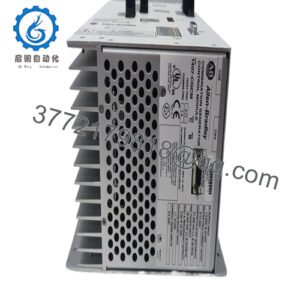
The TRICONEX 3201 is the communication interface used by the Trident safety controller to exchange data with external control, supervisory, engineering, and network systems. Unlike Trident I/O modules, the 3201 does not provide conventional field input or output channels. Its role is to provide serial and Ethernet connectivity around the Trident control architecture.
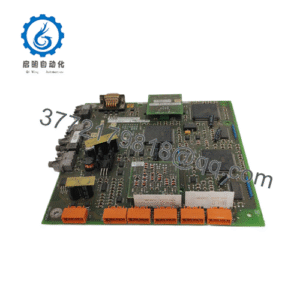
The module provides three isolated RS-232/RS-485 serial ports and two Ethernet ports. Serial ports can support Modbus Master or Slave operation, while the Ethernet interfaces support Trident-specific and network communication services. A Trident installation can use one or two communication modules depending on the required communication configuration and redundancy strategy.
Important: Do not describe the 3201 itself as a TMR processor. The Trident system uses a TMR architecture, but the documentation classifies the 3201 as a non-TMR communication module.
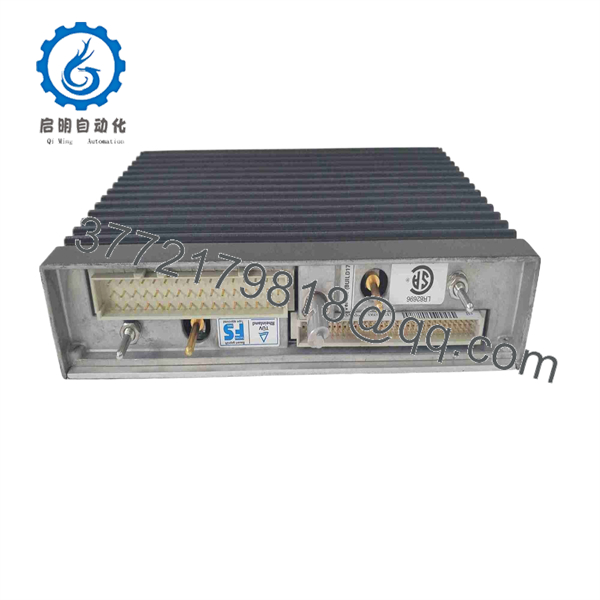
3201
Installation & Configuration Guide
Stage 1 — Verify the Existing Trident Configuration
Estimated time: 15–30 minutes
- Confirm the module nameplate reads 3201.
- Verify that the host system is a Trident installation.
- Identify the associated 2201 communication baseplate.
- Determine whether the system uses one or two communication modules.
- Record every active serial and Ethernet connection.
- Document Modbus addresses, baud rates, parity, and other communication settings.
Warning: Do not substitute a 3201 with a Trident I/O module such as a 3301 or 3351. These modules perform different functions.
Stage 2 — Back Up Communication Configuration
Estimated time: 20–45 minutes
- Back up the applicable TriStation project.
- Record communication-module configuration.
- Document Modbus Master/Slave assignments.
- Record serial-port parameters.
- Document Ethernet addresses and network connections.
- Record communication dependencies in the DCS, SCADA, and HMI systems.
For a safety-system installation, follow the site’s approved change-management and maintenance procedure before altering the communication hardware.
Stage 3 — Replace the Module
Estimated time: 20–45 minutes
- Place the controlled process in the maintenance state specified by the site procedure.
- Follow the site’s electrical safety and LOTO requirements.
- Identify and label connected communication cables.
- Disconnect the affected interfaces according to the approved maintenance procedure.
- Remove the existing 3201.
- Inspect the baseplate and connectors for contamination, corrosion, or mechanical damage.
- Install the replacement module in the correct Trident communication position.
- Reconnect the serial and Ethernet interfaces.
- Verify connector seating before energizing the system.
Warning: Do not change network topology or communication parameters during a simple hardware replacement unless the maintenance procedure specifically requires it.
Stage 4 — Commission and Test
Estimated time: 30–90 minutes
- Restore power according to the approved sequence.
- Check the 3201 front-panel status indicators.
- Verify serial-port activity.
- Verify Ethernet link status.
- Confirm Modbus communication.
- Verify DCS/SCADA data exchange.
- Test communication with required engineering systems.
- Check Trident-to-Trident or Trident-to-Tricon communication if used.
- Confirm time synchronization where applicable.
- Review system diagnostics before returning the process to normal operation.
A successful replacement should restore the required communications without introducing unexpected changes to the safety application.
Frequently Asked Questions
What is the TRICONEX 3201?
The 3201 is the Trident Communication Module. It provides communication interfaces between the Trident controller and external systems. It is not the Trident main processor and is not a conventional digital or analog I/O module.
How many serial ports does the 3201 have?
The documented configuration provides three optically isolated RS-232/RS-485 serial ports. They use DB-9 DTE connections located on the communication baseplate.
Does the 3201 support Modbus?
Yes. The Trident documentation specifies Modbus Master or Modbus Slave operation on the serial communication ports.
Does the 3201 have Ethernet?
Yes. The Trident communication architecture provides two Ethernet network ports on the 3201. The documented Ethernet functions include TCP/IP-related communication, TriStation/TSAA services, Peer-to-Peer communication, and time synchronization.
Is the 3201 a TMR module?
No. This distinction is important. Trident is a TMR safety architecture, but the 3201 communication module itself is identified as non-TMR. Redundant communication configurations can use multiple communication modules; this should not be confused with 3-channel safety voting inside the communication module.
Is the 3201 interchangeable with the 2201?
No. The 3201 is the active Communication Module, whereas the 2201 is the Communication Baseplate. They are separate components and should not be treated as equivalent spare parts.
What should I verify when purchasing a replacement 3201?
For a legacy Trident spare, verify:
- Exact model: 3201
- Hardware/Series revision
- Physical condition
- Connector and baseplate compatibility
- Serial-port operation
- Ethernet-port operation
- Modbus communication
- Front-panel diagnostics
- Previous application/environment
- New original, new surplus, or refurbished condition
- Supplier test report and warranty
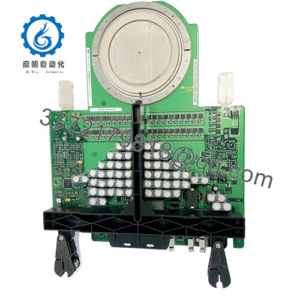
Because third-party listings sometimes publish incorrect specifications for Triconex catalog numbers, procurement should rely on the physical nameplate and Trident technical documentation rather than generic marketplace descriptions. For example, several online listings incorrectly classify 3201 as a digital I/O module, while the Trident planning documentation clearly identifies it as the Communication Module.