 WhatsApp: +86 16626708626
 Email:
  Phone: +86 16626708626
Description
Key Technical Specifications
| Parameter | Specification |
| Module Designation | TBC-1 (Total Bus Control / Bus Termination Card) |
| Part Number / Cross-Ref | 861506 / Kone Code 08615055D |
| System Compatibility | Valmet Damatic xD Distributed Control System |
| Termination Type | Active characteristic impedance matching |
| Bus Interface Support | High-speed synchronous token-passing data bus |
| Operating Supply Voltage | 5 VDC (\pm 5%) derived directly from backplane |
| Diagnostic Indicators | Integrated line power and bus status LEDs |
| Galvanic Isolation | Up to 500 V effective line isolation |
| Form Factor | Standard plug-in Eurocard format |
| Ambient Temperature Range | 0 to +55 °C (32 to 131 °F) functional limits |
Product Introduction & Supply Chain Strategy
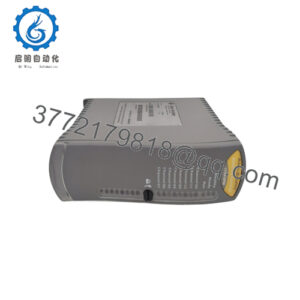
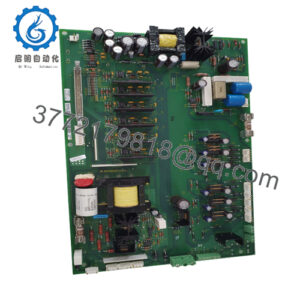
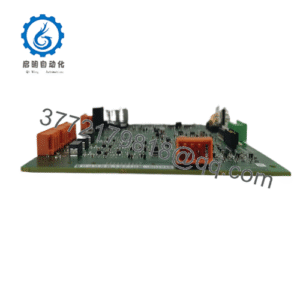
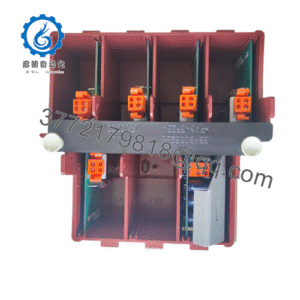
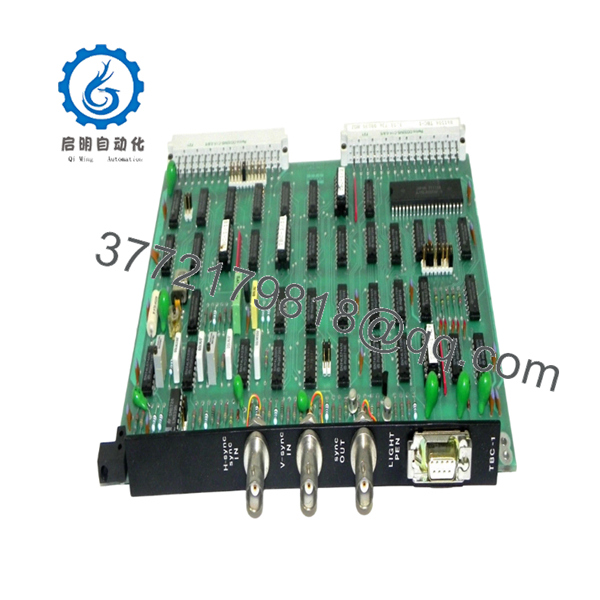
The Valmet 861506 TBC-1 is an active Bus Termination Card designed specifically for the legacy Damatic xD distributed control system (DCS). Its main function is to eliminate signal reflections and line echoes by matching the characteristic impedance of the system’s communication backplane bus. Without proper active termination from the TBC-1, high-frequency data pulses within the control rack can distort, causing communication drops, unexplainable frame errors, or immediate node drops. This card is vital for maintaining steady data flow across paper machines, recovery boilers, and chemical plant nodes.
Because this hardware generation is no longer actively supported by Valmet, finding a reliable replacement presents a severe supply chain challenge. Sourcing this module as New Surplus is a calculated risk-mitigation move. It directly bypasses the degraded resistors and fatigued decoupling capacitors common to refurbished or used parts. Keeping a fresh, verified 861506 TBC-1 in your on-site warehouse provides insurance against intermittent network errors. This strategy reduces the Total Cost of Ownership (TCO) by avoiding the immense production losses caused by an unexpected plant-wide DCS communication crash.

- 861506 TBC-1
Installation & Configuration Guide
Stage 1: Pre-Installation (Prep & Safety)
- Isolate power from the targeted sub-rack partition following standard plant lock-out/tag-out (LOTO) rules.
- Put on a grounded anti-static wrist strap and attach its clip to an unpainted, clean metal section of the system cabinet frame.
- Review the system topology map to confirm whether this specific slot serves as the primary or secondary terminal node for the bus segment.
Stage 2: Removal
- Loosen any front panel thumb screws or securing hardware holding the legacy board in place.
- Grip the card ejector handles firmly, applying equal pressure to pivot them outward and release the board from the rear connector.
- Pull the module smoothly along the guide rails to prevent scraping surface components against adjacent cards.
Stage 3: Installation (Clone & Seat)
- Verify that the onboard jumper configurations or resistor network sockets on the new 861506 TBC-1 precisely match the legacy card’s setup.
- Position the card inside the designated guide tracks, keeping it perpendicular to the backplane plane.
- Push the card deep into the slot until the connectors interface cleanly, then press the ejector handles down to fully seat the board. Tighten all faceplate mounting screws.
Stage 4: Power-On & Testing
- Re-energize the sub-rack control bus supply and monitor the front panel indicator lights.
- Verify that the power rail LED stays lit and steady, without any flickering that could signal a component short.
- Check the DCS engineering console diagnostics to confirm that network error rates drop to zero and that all connected I/O nodes report clean communication handshakes across the terminated bus.
Firmware/Software Versions & Upgrade Notes
The 861506 TBC-1 operates as a physical and hardware-timed termination layer, meaning it does not use a typical firmware operating system.
- Hardware Revision Matching: Check the printed circuit board artwork numbers and revision stamp (e.g., suffixed letters or numbers) to confirm compatibility with your specific backplane model.
- Impedance Warnings: Changing the hardware revision or using a non-matching terminator model within the same bus loop can alter the line impedance. This imbalance can degrade signal quality on long cable runs.
- Network Stability: Keep network hardware modifications separate from system software upgrades. Replacing hardware while making changes to the DCS software database makes it difficult to diagnose communication issues if the bus becomes unstable.
Frequently Asked Questions (FAQ)
What makes this Valmet 861506 TBC-1 card “New Surplus”?
This 861506 TBC-1 card is classified as New Surplus because it comes from an unused, overstocked spare parts inventory. It has never been deployed in an active control panel, has zero runtime hours, and has undergone no component-level repairs or trace modifications. The board is kept in specialized anti-static packaging and is opened only for final quality control checking.
Can a used or refurbished termination board cause network issues?
Yes. Used or refurbished termination boards often suffer from degraded passive components caused by years of continuous thermal exposure inside tight cabinets. When terminating resistors drift away from their specified values or filtering capacitors leak, they fail to suppress signal reflections. This breakdown leads to intermittent communication faults that are notoriously difficult to troubleshoot.
Does this product include a warranty after purchase?
Yes. We support this module with an exhaustive 2-year functional replacement warranty that replaces any expired OEM terms. Each card undergoes comprehensive visual verification, trace evaluation, and static continuity testing to confirm it meets original factory standards before leaving our facility.
Can I pull or insert this termination card while the bus is active?
No. Never hot-swap the 861506 TBC-1 while the control network is active. Removing a bus terminator while data is moving can cause an immediate impedance drop across the entire segment. This drop generates severe signal reflections that can crash the communication links for all adjacent I/O modules, potentially tripping the entire plant process.
Why is this part listed with a Kone cross-reference code?
During the development era of the Damatic xD system, Valmet’s automation division operated in close partnership with Kone Automation (often branded as Kone Valmet Automation). The code 08615055D is the identical warehouse part number used within certain legacy maintenance databases, confirming this module is a direct drop-in match for those systems.