 WhatsApp: +86 16626708626
 Email:
 Phone: +86 16626708626
Description
Core Product Summary
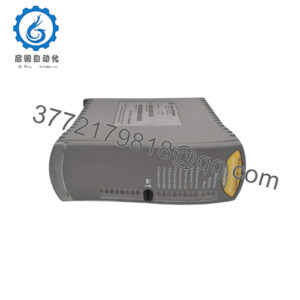
The VIBRO-METER VM600 CPUM (Meggitt Vibro-Meter product line, order numbers of the 200-595 series) is the modular CPU card that acts as the rack controller and communications gateway for VM600 rack-based machinery protection systems (MPS) and condition monitoring systems (CMS). Installed in the front of a VM600 ABE04x system rack, it manages rack configuration, distributes configuration data to the protection cards, displays monitored values and alarm limits on its front-panel LCD, and provides the Ethernet and serial interfaces through which the rack communicates with supervisory software and plant networks.
The card is a double-width module occupying two rack slots, and is used either alone or as a pair with the IOCN input/output card installed in the rear of the rack behind it. The CPUM carrier board carries a PC/104-standard industrial CPU module — supporting two Ethernet and two serial connections — plus an optional serial communications module for additional serial ports. It communicates with MPC4 and AMC8 protection cards over the rack’s VME bus, supports Modbus TCP/PROFINET over Ethernet and Modbus RTU over serial, and connects to a PC running the VM600 MPSx software for configuration, event logs, and monitoring.
Key Technical Specifications
| Parameter | Value |
|---|---|
| Product type | Modular CPU card; rack controller and communications interface |
| System family | VIBRO-METER (Meggitt) VM600 MPS / CMS platform |
| Order number series | 200-595 series (full order code defines the delivered configuration) |
| Rack compatibility | All VM600 ABE04x system racks |
| Format | Double-width card occupying two VM600 rack slots; installed at the front of the rack (slots 0 and 1) |
| Backplane connection | Two connectors per card, direct to the rack backplane |
| Card architecture | Carrier board with two PC/104-type slots: CPU module plus optional serial communications module |
| Processor | PC/104-standard industrial CPU module, AMD Geode LX800 at 500 MHz, with 256 MB DRAM |
| Operating system | QNX |
| Ethernet | Two 10/100 Mbps Ethernet connections (10/100BASE-TX) |
| Serial | Two serial connections; up to three with the optional serial communications module |
| Fieldbus protocols | Modbus TCP or PROFINET (Ethernet); Modbus RTU (serial) |
| Front panel | LCD display, SLOT and OUT keys for signal selection, alarm reset (AR) button, status indicator LEDs |
| Configuration | “One-shot” configuration of protection cards via Ethernet or RS-232 connection to a PC running VM600 MPSx software (MPS1 or MPS2) |
| Bus communication with protection cards | VME bus (MPC4 and AMC8 cards) |
| Online maintenance | Supports live insertion and removal of protection cards with automatic configuration (hot-swapping) |
| Event logging | VM600 system events and measurement events available via the MPSx software |
Engineering Selection Highlights
- Rack controller role — the CPUM is the single point from which all VM600 rack configuration, display, and communications interfacing is performed in a networked rack; a rack without a functioning CPUM loses its controller and gateway functions.
- Mandatory IOCN pairing where extended I/O is needed — the CPUM can be used alone or paired with the IOCN input/output card, which must be installed in the rear of the rack in the slot directly behind the CPUM; the pairing requirement is fixed by the system architecture, not optional placement.
- Double-width slot footprint — the card consumes two rack slots (positions 0 and 1), which must be accounted for in rack layout and when sizing protection capacity.
- Full order code defines the configuration — CPUM cards are ordered under 200-595-series codes whose digit groups identify the specific CPU, communications, and software configuration; replacements should be matched by complete code rather than by the CPUM name alone.
- Dual Ethernet and dual serial with optional third serial port — all CPUM cards carry a CPU module supporting two Ethernet and two serial connections, allowing Ethernet-redundant or serial-redundant operation; the optional serial communications module adds further serial capacity for applications needing more fieldbus ports.
- Fieldbus integration scope — primary Ethernet serves MPSx communication plus Modbus TCP or PROFINET; primary serial serves direct MPSx connection; secondary serial serves Modbus RTU. This split defines what each port may be used for when integrating the rack with a DCS or SCADA system.
- Hot-swapping support for protection cards — the CPUM manages automated configuration distribution, so MPC4/AMC8 protection cards can be inserted and removed live with automatic configuration, reducing downtime during maintenance.
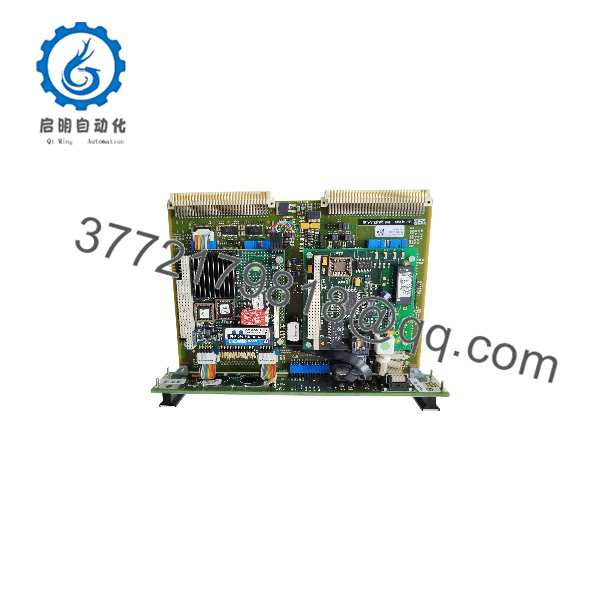
VM600 CPUM
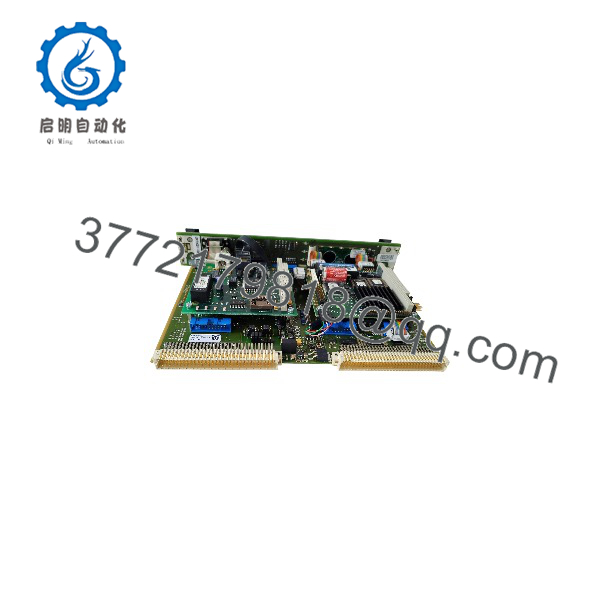
VM600 CPUM
System Compatibility & Integration Requirements
| Item / Dependency | Verified Compatibility or Requirement | Practical Note |
|---|---|---|
| Rack | VM600 ABE04x system racks (all variants) | The CPUM/IOCN pair is compatible across the ABE04x rack range. |
| Installation position | CPUM at the front of the rack in slots 0 and 1 | The card is a double-width module occupying two slot positions. |
| Companion card | IOCN input/output card at the rear of the rack, in the slot directly behind the CPUM (slot 0) | CPUM may be used alone or as a CPUM/IOCN pair depending on the application’s I/O requirements. |
| Protection cards | MPC4 and AMC8 machinery protection cards | The CPUM communicates with these cards over the rack’s VME bus and distributes their configuration. |
| Configuration software | VM600 MPSx software packages (MPS1, MPS2) on a PC, via Ethernet or RS-232 | Used for one-shot configuration, monitoring, and retrieval of system and measurement event logs. |
| Fieldbus protocols | Modbus TCP, PROFINET (Ethernet); Modbus RTU (serial) | Primary Ethernet handles MPSx networking plus Modbus TCP/PROFINET; primary serial handles direct MPSx connection; secondary serial handles Modbus RTU. |
| Operating platform | QNX real-time operating system on the PC/104 CPU module | Configuration data and event logs are managed through the MPSx software layer above it. |
| Online maintenance | Live insertion/removal of protection cards supported | Automatic configuration of replacement cards is handled by the CPUM’s one-shot configuration management. |
Dimensions, Mounting & Connection Notes
- The CPUM is a double-width card occupying two VM600 rack slot positions; it is installed at the front of the rack in slots 0 and 1.
- Each card connects directly to the rack’s backplane using two connectors.
- The IOCN companion card is a single-width card installed at the rear of the rack in the slot directly behind the CPUM (slot 0).
- The card carrier provides two PC/104-type slots: one for the CPU module (fitted to all CPUM cards) and one for the optional serial communications module.
- The front panel provides the LCD display, SLOT and OUT keys for selecting displayed signals, an alarm reset (AR) button, and status indicator LEDs; the AR button provides a rack-wide alarm reset equivalent to resetting alarms card by card via discrete inputs or MPSx software commands.
- Communications connections available on the card: two Ethernet ports and two serial connections, with a third serial connection possible when the optional serial communications module is fitted.
Detailed Product Overview
The VM600 platform from Vibro-Meter (Meggitt) is a rack-based machinery protection and condition monitoring system, and the CPUM is its rack controller. Understanding the card means understanding three design decisions: its position in the rack, its PC/104-based modular architecture, and its role as the communications gateway.
Physically, the CPUM is a double-width card that occupies two rack slots at the front of a VM600 ABE04x rack, in positions 0 and 1. Where the application requires the extended input/output capability of the IOCN card, that single-width card is installed at the rear of the rack in the slot directly behind the CPUM. This front/rear pairing is a fixed architectural relationship: the cards connect to the backplane through two connectors each and work as a controller/gateway pair for the rack. A practical implication for layout planning is that the CPUM/IOCN arrangement consumes defined slot positions, so rack expansion calculations should account for the double-width footprint.
Internally, the CPUM follows a carrier-plus-module design. The carrier board hosts two PC/104-type slots: every card ships with an industrial CPU module — based on the PC/104 standard, using an AMD Geode LX800 processor running at 500 MHz with 256 MB of DRAM under the QNX operating system — and an optional serial communications module can be added for a third serial port. All CPU modules support two Ethernet connections and two serial connections, which is what makes both the Ethernet-redundant and serial-redundant versions of the card possible on the same hardware platform.
The communications design is deliberately structured rather than generic. The primary Ethernet port serves communication with the VM600 MPSx software over a network and carries Modbus TCP or PROFINET communications. The primary serial port serves a direct connection to a PC running MPSx. The secondary serial port serves Modbus RTU. This division means integrators can plan fieldbus usage port by port instead of discovering conflicts at commissioning, and communications redundancy is available by running multiple fieldbuses simultaneously.
The card’s controller function centers on “one-shot” configuration management. Configuration prepared in the MPSx software is distributed automatically to the protection cards in the rack — MPC4 and AMC8 cards, with which the CPUM communicates over the VME bus — and the same mechanism supports live insertion and removal of protection cards with automatic configuration. In operational terms, a protection card can be swapped in a running rack and configured without a manual, card-by-card setup pass, which is a meaningful maintenance efficiency on machinery that cannot be stopped casually.
Local interaction is handled entirely from the front panel. The LCD displays information for the CPUM itself and for the protection cards in the rack; the SLOT and OUT keys select which signal to view, including its alarm limits; and the alarm reset button clears alarms rack-wide, equivalent to resetting them individually per card via discrete signal interface inputs or MPSx software commands. Status LEDs provide at-a-glance condition indication.
For procurement, the practical guidance is that “VM600 CPUM” is a card family ordered under full 200-595-series order codes whose digit groups encode the delivered CPU, communications, and software configuration. When replacing a card or specifying a spare, matching the complete order code ensures the same configuration; matching only the CPUM name does not. The card is compatible with all VM600 ABE04x system racks, and the same family covers both machinery protection (MPS) and condition monitoring (CMS) deployments, with the exact role determined by the rack’s card population.
Applications & System Role
In a VM600 installation, the CPUM occupies the controller layer of the rack: it is the system controller and data communications gateway between the protection cards that acquire machinery signals and the external world of supervisory software, DCS/SCADA integration, and fieldbus networks. It does not itself acquire field sensor signals — those arrive through MPC4, AMC8, and related measurement cards in the same rack — but it manages their configuration, aggregates their event and measurement data, and provides the local operator interface.
The card’s LCD and keys give maintenance and operations staff local visibility of monitored outputs and alarm limits from the protection cards without a connected PC, while the Ethernet and RS-232 paths to the VM600 MPSx software provide full configuration, monitoring, and event-log retrieval. Its Modbus TCP, PROFINET, and Modbus RTU interfaces are the integration points through which the machinery protection rack’s data reaches plant-level automation systems.
Because the VM600 platform is a rack-based machinery protection and condition monitoring system for rotating equipment, the CPUM is the component to specify when building or expanding a rack, and the component whose failure removes rack-wide control and communications — a consideration for spares strategy on critical monitoring installations.
FAQ
What is the VIBRO-METER VM600 CPUM?
It is the modular CPU card that serves as the rack controller and communications interface for VM600 rack-based machinery protection (MPS) and condition monitoring (CMS) systems from the Meggitt Vibro-Meter product line.
What does the CPUM do in a VM600 rack?
It manages rack configuration, distributes configuration data to the protection cards, provides the front-panel display and alarm reset, logs system and measurement events, and connects the rack to supervisory software and plant fieldbus networks.
Which rack does it fit?
The CPUM is compatible with all VM600 ABE04x system racks, installed as a double-width card at the front of the rack in slots 0 and 1.
Does the CPUM require an IOCN card?
It can be used alone or paired with the IOCN input/output card, depending on the application’s I/O requirements; when used, the IOCN must be installed at the rear of the rack in the slot directly behind the CPUM.
What processor and software platform does it use?
The card carries a PC/104-standard industrial CPU module with an AMD Geode LX800 processor at 500 MHz and 256 MB of DRAM, running the QNX operating system.
What communications does it support?
Two Ethernet connections (used for VM600 MPSx communication plus Modbus TCP or PROFINET) and two serial connections (primary for direct MPSx connection, secondary for Modbus RTU), with an optional serial communications module providing an additional serial port.
How is the rack configured?
Configuration is performed with the VM600 MPSx software (MPS1 or MPS2) on a PC connected via Ethernet or RS-232; the CPUM then distributes the configuration to protection cards automatically, and system and measurement event logs are retrieved through the same software.
Can protection cards be replaced while the rack is running?
Yes — the CPUM supports live insertion and removal of MPC4 and AMC8 protection cards with automatic reconfiguration.