WhatsApp: +86 16626708626
 Email:
  Phone: +86 16626708626
Description
Key Technical Specifications
- Manufacturer: Weidmüller
- Part Number: 8307292002
- Known Product Identification: ZSF A 1.5 PE CAN Bridge
- Product Type: CAN bridge connector / protective-earth terminal bridge
- Primary Use: Electrical connection and distribution within a terminal-block or CAN-interface assembly
- Listed Nominal Application Voltage: 24 V
- Conductor Cross-Section Class: 1.5 mm²
- Protective-Earth Function: Yes, when marked PE
- Installation Format: DIN-rail terminal-block system or compatible control-panel connection assembly
- Terminal Function: Provides structured connection, bridge distribution, and protective-earth continuity for the applicable assembly
- Associated Brand References: Weidmüller ZSF A 1.5 PE; Moeller CAN-BRIDGE references may appear in resale listings
- Identification Caution: Listings also reference ZSF A 1.5 R; do not treat PE and R variants as automatically interchangeable
- Field Wiring Requirement: Confirm conductor size, ferrule requirements, torque, protective-earth continuity, and approved terminal layout
- Replacement Rule: Match 8307292002 plus the complete terminal marking, including ZSF A 1.5 PE or other suffix printed on the installed item
The available listings most consistently identify 8307292002 as a Weidmüller ZSF A 1.5 PE CAN bridge connection component, associated with a 24 V application and 1.5 mm² conductor class. Some reseller pages broadly call it a CAN bridge module or a 76 A terminal block, but those claims are not supported by a retrieved Weidmüller OEM datasheet and must be verified before use.
Product Introduction
The Weidmüller 8307292002 is identified in market records as a ZSF A 1.5 PE CAN bridge connection component for industrial terminal and control-panel assemblies. It provides a defined connection point associated with CAN bridge hardware and protective-earth terminal functions in a 24 V control environment.
This component must be matched by its complete terminal designation, not only the 8307292002 number. Verify whether the installed item is marked ZSF A 1.5 PE or ZSF A 1.5 R, then confirm the terminal-block family, rail position, conductor cross-section, bridge orientation, and protective-earth requirement before ordering.
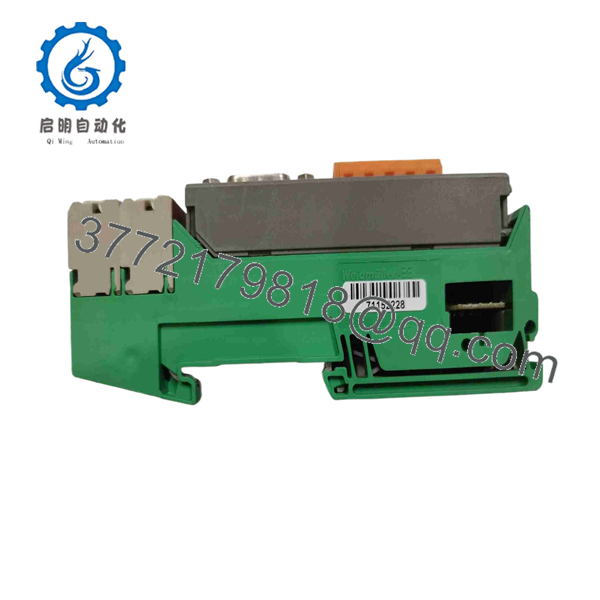
8307292002
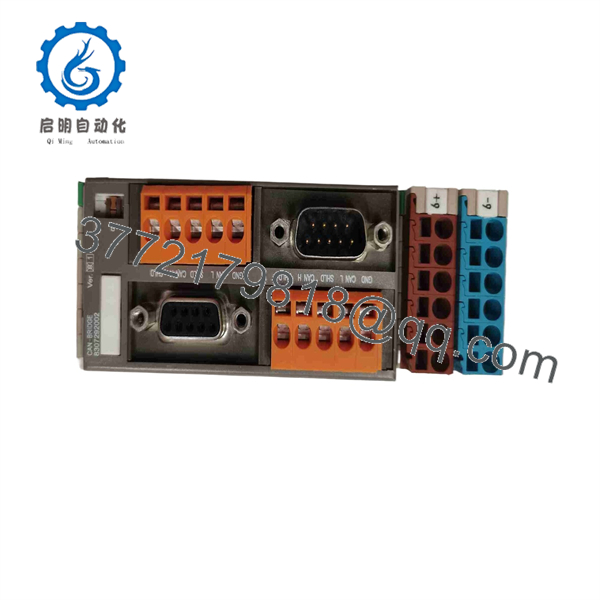
8307292002
Troubleshooting Quick Reference
| Symptom | Possible Cause | Relevance to This Part | Quick Check Method | Recommendation |
|---|---|---|---|---|
| CAN-connected equipment is offline | Broken CAN conductor, loose bridge connection, missing 24 V control supply, failed network device, termination problem | ⚠️ Medium | Check controller diagnostics, then inspect CAN wiring, bridge placement, supply voltage, and cable connector seating using the approved schematic | Verify wiring and network topology before replacing the bridge component |
| Protective-earth continuity test fails | Loose PE conductor, wrong terminal variant, damaged terminal clamp, corroded rail contact, incorrect rail installation | ✅ High | Isolate the equipment, then test continuity from the PE terminal to the defined cabinet earth point using a calibrated low-resistance continuity tester | Correct the PE connection immediately; replace damaged terminal hardware |
| 24 V control circuit is dead downstream | Loose conductor, open fuse, wrong bridge placement, damaged terminal contact, incorrect wiring | ⚠️ Medium | Measure 24 V DC at the upstream terminal and downstream connection point; inspect bridge location against the wiring drawing | Correct wiring, fuse, or bridge placement before replacing the component |
| Intermittent communication or control fault | Loose terminal screw, inadequate torque, stranded wire without ferrule, damaged conductor, vibration | ⚠️ Medium | Inspect terminal clamping, conductor insertion depth, ferrules, and cable strain relief during an approved outage | Reterminate and torque according to the terminal specification |
| Fault begins after panel modifications | PE and signal terminals mixed, wrong bridge installed, conductor landed on wrong point, termination disturbed | ✅ High | Compare the panel against the approved terminal plan and pre-work photographs | Restore the documented terminal layout before energizing |
| One I/O point fails but other network nodes are healthy | Local sensor, local I/O module, field fuse, field wiring, controller logic issue | ❌ Usually Low | Check the affected I/O module, field supply, sensor status, and controller point diagnostics | Do not replace the CAN bridge terminal for a single local I/O fault |
| Terminal overheats or insulation discolors | Loose connection, undersized conductor, damaged ferrule, excessive current, poor contact surface | ✅ High | Inspect for discoloration; measure voltage drop and connection temperature only using an approved energized-work procedure | De-energize, replace damaged parts, and correct conductor sizing or termination |
| Bridge does not fit the existing assembly | Wrong ZSF suffix, incorrect pitch, wrong terminal family, wrong mounting orientation | ✅ High | Compare the old part’s complete marking, dimensions, rail position, and bridge geometry with the offered unit | Do not force-fit; source the exact matching terminal component |
Field warning: Do not assume that “CAN bridge” means this device actively converts CAN protocols or provides network intelligence. The available product references identify a connection component, not a verified protocol gateway. Treat it as terminal and bridge hardware unless the exact OEM documentation for the installed assembly states otherwise.
❗ PE and non-PE variants are not interchangeable: The designation PE indicates a protective-earth function. A listing also identifies a ZSF A 1.5 R variant. Do not replace a PE terminal bridge with a similarly sized non-PE or differently marked terminal. That mistake can remove protective-earth continuity or alter the intended panel wiring arrangement.
❗ Protective earth is not a signal common: Do not use a PE terminal as a casual 0 V DC or CAN shield substitute. Follow the panel drawing. Protective earth, functional earth, signal reference, cable shield, and 0 V DC may be bonded differently depending on the machine design.
❗ Photograph the terminal strip first: Take a clear photo of the entire terminal rail before removal. Capture every wire number, jumper, bridge, end stop, marker, PE connection, and adjacent terminal. It is the most common rookie mistake, but it happens constantly. Take a picture before you touch anything. Seriously.
❗ Use the correct conductor preparation: Confirm the acceptable conductor type, cross-section, stripping length, ferrule style, and terminal-tightening method for the actual Weidmüller terminal family. A loose fine-stranded conductor can heat up, create intermittent network faults, and eventually damage the terminal.
❗ Do not invent current ratings: One third-party listing claims a 76 A rating and 4 AWG maximum conductor size, but that does not align cleanly with the ZSF A 1.5 designation or the accessible product references. Do not size conductors, fuses, or protective devices using that generic claim.
❗ ESD and cabinet work discipline: The terminal itself is passive hardware, but panel work often occurs beside sensitive control electronics. Use the approved lockout/tagout procedure, verify absence of hazardous voltage, maintain wire identification, and protect nearby PLC or CAN hardware from accidental shorts.
Keep these checks in mind and you will save yourself 90% of typical rework time. If the problem remains unclear, provide technical support with photos of the complete terminal rail, the exact installed marking, wire labels, bridge location, continuity-test results, and the relevant panel schematic.
Frequently Asked Questions
What is Weidmüller 8307292002?
Weidmüller 8307292002 is identified in resale records as a ZSF A 1.5 PE CAN bridge connection component. It is associated with 24 V industrial control-panel wiring, a 1.5 mm² terminal class, and a protective-earth function indicated by the PE designation.
Is 8307292002 an active CAN protocol gateway?
Do not assume it is. The available records call it a CAN bridge or CAN bridge connector, but no retrieved Weidmüller OEM datasheet confirms protocol conversion, bit-rate conversion, CANopen routing, or any active gateway function. Verify the installed system documentation before treating it as network electronics.
What does ZSF A 1.5 PE mean?
The available product identification indicates a Weidmüller ZSF A terminal component in the 1.5 mm² conductor class, with PE identifying a protective-earth variant. The exact internal bridge geometry, terminal pitch, connection technology, and approved conductor range require verification from the original product label and applicable Weidmüller documentation.
Can I replace ZSF A 1.5 PE with ZSF A 1.5 R?
No, not without verified documentation. Resale listings distinguish the PE and R markings. The PE version has a protective-earth role, while an R-marked component may use a different electrical or mechanical function. Match the exact marking printed on the installed component.
Does the 8307292002 require a 24 V DC supply?
The available listing identifies a 24 V application range, but this component may be a passive terminal or bridge rather than a powered electronic device. Do not apply a supply simply because a listing references 24 V. Use the approved panel schematic to determine whether the relevant terminals distribute 24 V DC, protective earth, CAN conductors, or another circuit.
Can I hot-swap this terminal bridge?
No. De-energize the affected panel section, follow the approved lockout/tagout procedure, verify absence of hazardous voltage, and preserve any process-control bypass requirements before removing wiring or bridge components. Pulling a terminal bridge under load can create an arc, drop a 24 V control circuit, interrupt a network segment, or remove protective-earth continuity.
Is Weidmüller 8307292002 obsolete?
Treat it as legacy connection hardware with availability dependent on surplus and independent supplier inventory. Public listings show both used and New Surplus descriptions, but no current Weidmüller OEM availability record was retrieved. Confirm actual stock, complete marking, condition, included accessories, and warranty before issuing a purchase order.
Why might a New Surplus terminal component cost less than factory stock?
New Surplus parts can come from unused panel-builder inventory, cancelled projects, warehouse liquidation, or decommissioned machine spares. They may be unused but lack original manufacturer packaging. Ask for high-resolution label photos, inspection of spring or screw-clamp components, confirmation of included bridge hardware, storage-condition information, and return terms.
What quality checks should a supplier perform?
For Weidmüller 8307292002 terminal or bridge hardware, request practical inspection evidence:
- Verify the exact 8307292002 number and complete ZSF A 1.5 PE marking
- Photograph the front, rear, rail-mounting surface, bridge contacts, PE contact area, and included accessories
- Inspect for cracked insulation, discoloration, corrosion, distorted metal contacts, damaged clamp mechanisms, and missing hardware
- Confirm the bridge geometry and terminal pitch against the original unit
- Check mechanical retention on the compatible DIN rail or terminal assembly
- Perform protective-earth continuity testing where the PE function applies
- Verify contact continuity across the intended bridge path according to the approved wiring arrangement
- Package to prevent bent contacts, cracked insulation, and lost accessories
- Provide actual-unit photographs, QC sign-off, stock condition, and written warranty terms
A terminal component should not be described as “tested” unless the supplier explains exactly what was checked: physical fit, contact continuity, PE continuity where applicable, and condition of the connection hardware.