WhatsApp: +86 16626708626
 Email:
  Phone: +86 16626708626
Description
Key Technical Specifications
| Parameter | Value |
|---|---|
| Manufacturer | Yaskawa Electric |
| Series | Sigma-5 SGMSV |
| Model | SGMSV-30ADA21 |
| Motor Type | Rotary AC Servo Motor |
| Rated Output | 3.0 kW |
| Supply Voltage | 200 VAC |
| Rated Speed | 3,000 r/min |
| Rated Torque | 9.80 Nm |
| Instantaneous Peak Torque | 29.4 Nm |
| Rated Current | 17.9 A RMS |
| Instantaneous Maximum Current | 56 A RMS |
| Encoder | 20-bit incremental encoder |
| Shaft Configuration | Straight shaft, without key |
| Cooling | Self-cooled configuration |
| Mounting | Flange type |
| Rated Operating Time | Continuous |
| Excitation | Permanent magnet |
| Insulation Resistance | 500 VDC, 10 MΩ or greater |
| Insulation Withstand Voltage | 1,500 VAC for 1 minute |
| Ambient Operating Temperature | 0 to 40°C |
| Ambient Humidity | 20 to 80% RH, non-condensing |
| Protection | Verify the exact motor nameplate/datasheet revision before installation |
| Compatible Drive Family | Yaskawa Sigma-5 SERVOPACK family; exact drive selection must be verified |
| Product Status | Legacy/obsolete status should be confirmed against the intended market |
Yaskawa’s official documentation identifies SGMSV-30ADA21 specifically as a 200 V, 3.0 kW SGMSV servo motor with a 20-bit incremental encoder and straight shaft without key.
For the SGMSV-30A motor class, Yaskawa lists 9.80 Nm rated torque, 29.4 Nm instantaneous peak torque, 17.9 A RMS rated current, and 56 A RMS instantaneous maximum current.
Product Introduction
The Yaskawa SGMSV-30ADA21 is a 3.0 kW Sigma-5 rotary AC servo motor designed for industrial motion-control applications. The model uses a 200 VAC motor supply and a 20-bit incremental encoder. Yaskawa’s model-specific drawing identifies the standard configuration as a straight shaft without a key.
Its 9.80 Nm rated torque and 29.4 Nm instantaneous peak torque make the SGMSV-30ADA21 suitable for machine-tool axes, material handling, packaging equipment, production machinery, and other applications requiring controlled rotary motion. Pair the motor with the correctly sized Sigma-5 SERVOPACK and verify encoder, motor, and drive compatibility before commissioning.
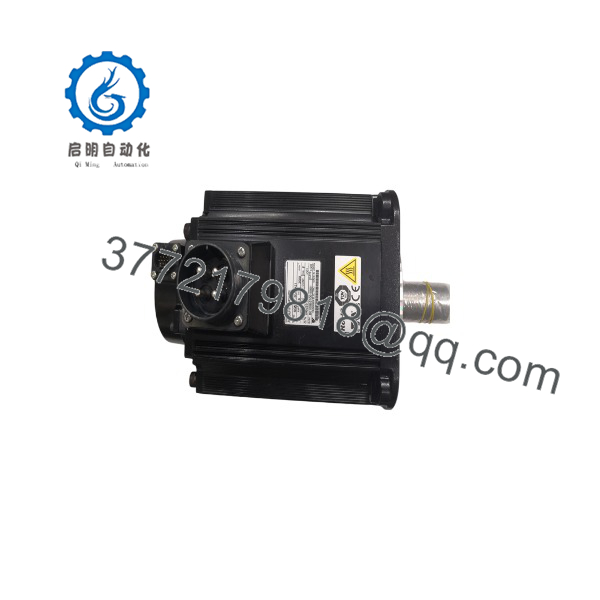
SGMSV-30ADA21
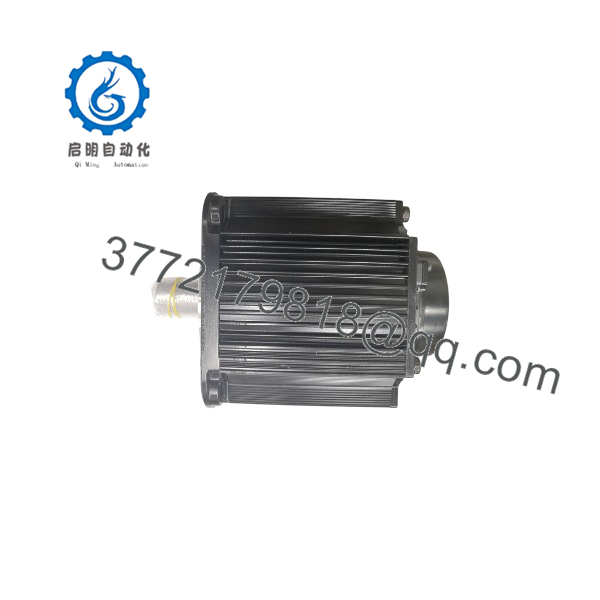
SGMSV-30ADA21
Installation & Configuration Guide
Stage 1: Pre-Installation Preparation — Approximately 5–10 Minutes
⚠️ Safety First: Stop the machine in a defined safe state before replacing the servo motor. Isolate the servo amplifier and associated power sources according to the site’s lockout/tagout procedure. Do not rely solely on the servo drive’s display to indicate that hazardous voltage has disappeared.
- Lock out and tag out the servo system.
- Allow the drive DC bus to discharge according to the SERVOPACK manufacturer’s specified waiting period.
- Verify the absence of hazardous voltage with an appropriately rated multimeter.
- Wear a grounded ESD wrist strap when handling the encoder connector or control electronics.
- Photograph the existing motor nameplate, motor power connector, encoder connector, brake wiring if present, and cable routing.
- Record the existing SERVOPACK model and firmware/configuration information.
- Confirm that the replacement is exactly SGMSV-30ADA21, not a similar SGMSV-30A variant.
Tools Required
- ESD wrist strap
- Properly rated multimeter
- Torque-appropriate hand tools
- Screwdrivers appropriate for the machine mounting hardware
- Cable labels
- Smartphone or camera
- Appropriate mechanical lifting/support equipment where required
Compatibility Check
Before removing the old motor, compare:
- Motor model and suffix
- Rated output
- Motor voltage
- Encoder type
- Shaft configuration
- Mounting dimensions
- Cable and connector arrangement
- SERVOPACK model
- Motor power and encoder cable part numbers
Do not substitute a similarly rated SGMSV motor solely because the output is also 3.0 kW. The complete model suffix determines important electrical and mechanical characteristics.
Stage 2: Removing the Old Motor — Approximately 5–10 Minutes
- Confirm that the machine is mechanically secured.
- Photograph the motor installation before disconnecting anything.
- Label the motor power and encoder cables.
- Disconnect the servo amplifier cables without pulling on the connector wires.
- Remove any mechanical coupling, belt, pulley, or gearbox connection according to the machine manufacturer’s procedure.
- Support the motor before removing the final mounting bolts.
- Remove the motor from the flange without striking the shaft or encoder housing.
- Inspect the coupling, shaft interface, mounting flange, and motor cables.
⚠️ Keep the old motor available until the replacement has passed commissioning. Its nameplate and mechanical configuration are valuable references if a mismatch is discovered.
Stage 3: Installing the SGMSV-30ADA21 — Approximately 5–10 Minutes
- Verify the replacement nameplate reads .
- Compare the flange, shaft, connector orientation, and overall mounting dimensions with the removed motor.
- Confirm that the machine coupling is compatible with the specified shaft configuration.
- Install the motor squarely against the mounting surface.
- Tighten mounting hardware using the machine/OEM torque specification.
- Reconnect the motor power cable.
- Reconnect the encoder cable.
- Secure cables so that they cannot contact moving components, sharp edges, or excessive heat sources.
- Reinstall the mechanical coupling and verify alignment.
- Rotate the mechanical system manually where permitted to confirm there is no abnormal binding.
Critical Configuration Point
The is specified with a straight shaft without a key in Yaskawa’s model-specific documentation. Do not assume that a keyed coupling is appropriate simply because another SGMSV variant uses a keyed shaft.
Mechanical Checklist
- Correct model
- Correct flange mounting
- Shaft configuration verified
- Coupling correctly installed
- Mounting bolts tightened to OEM specification
- Power connector fully seated
- Encoder connector fully seated
- Cables secured
- No mechanical interference
Stage 4: Power-On & Commissioning — Approximately 10–15 Minutes
- Before energizing, inspect the power and encoder connections one final time.
- Confirm the servo amplifier is the correct Yaskawa unit for the motor.
- Verify that the amplifier’s motor parameters correspond to the .
- Energize the control system according to the machine commissioning procedure.
- Check the SERVOPACK display and alarm history.
- Confirm encoder feedback is being received.
- Verify the motor identification and configured motor capacity.
- Execute the manufacturer’s recommended servo tuning or motor setup procedure.
- Command a low-speed jog with the machine in a controlled test condition.
- Check rotation direction.
- Monitor motor current, position error, vibration, and abnormal noise.
- Perform a controlled dry run before returning the machine to production.
⚠️ Do not immediately run the axis at production speed after replacing the motor. A motor replacement can expose incorrect direction, encoder configuration, mechanical alignment, gain settings, or load-related problems.
Common Commissioning Problems
Alarm immediately after power-up:
Check motor/encoder cable connections, amplifier configuration, encoder compatibility, and stored motor parameters.
Encoder feedback error:
Inspect the encoder connector and cable first. Do not repeatedly reset the drive without identifying the cause.
Motor rotates in the wrong direction:
Stop the machine and verify the servo configuration and command polarity. Do not simply swap motor power leads unless the applicable Yaskawa documentation specifically permits that procedure.
Excessive vibration:
Check mechanical coupling alignment, load inertia, servo tuning, mounting rigidity, and encoder feedback.
Overcurrent during acceleration:
Check mechanical binding, load inertia, acceleration settings, motor parameters, and amplifier sizing.
Frequently Asked Questions (FAQ)
Can the be hot-swapped?
Do not treat this motor as a hot-swappable component. The motor itself is connected to a servo amplifier through power and encoder wiring, and replacement should be performed with the system safely isolated. Follow the applicable Yaskawa SERVOPACK and machine OEM procedures.
What does specify?
The model identifies a 3.0 kW SGMSV Sigma-5 servo motor for 200 V operation with a 20-bit incremental encoder. Yaskawa’s model-specific drawing also identifies a straight shaft without a key and no optional features.
What is the rated torque of ?
The SGMSV-30A class is rated at 9.80 Nm, with an instantaneous peak torque of 29.4 Nm. Yaskawa lists 17.9 A RMS rated current and 56 A RMS instantaneous maximum current for the 200 V version.
Is obsolete?
There are strong indications that this is a legacy Sigma-5 component. Yaskawa’s published lifecycle information lists the among Σ-V models subject to production discontinuation and identifies the SGDV-200A11A as the associated servo-pack replacement in that lifecycle table. However, do not interpret a drive replacement as a direct motor replacement. Confirm the complete motor/drive combination and application requirements before migration.
Can I replace another SGMSV-30A with ?
Not automatically. The 3.0 kW rating alone is insufficient. Compare voltage, encoder type, shaft configuration, mounting dimensions, options, feedback wiring, and SERVOPACK compatibility. The “D” and other suffix positions matter in Yaskawa’s SGMSV nomenclature; Yaskawa documentation distinguishes 200 V and 400 V versions and incremental versus absolute encoder configurations.
Will I lose the servo tuning or machine program when replacing the motor?
Replacing the physical motor does not inherently erase the controller program, but the servo amplifier contains motor-related parameters and tuning data that must be verified. Before replacement, record the existing amplifier parameters and machine configuration. After installation, confirm motor identification and tuning before returning the axis to production.
Why should I verify the exact physical unit before purchasing?
Legacy servo motors can appear identical while differing in encoder, shaft, brake, oil-seal, voltage, or other options. For , the model-specific Yaskawa drawing identifies the 200 V, 3.0 kW, 20-bit incremental-encoder configuration with a straight shaft without key. Ask the supplier to confirm the nameplate and actual condition before purchase.