WhatsApp: +86 16626708626
 Email:
 Phone: +86 16626708626
Description
Core Product Summary
The Yokogawa UD1B-060N-1KC is a servo driver from the DYNASERV DrvMII series, the drive electronics that power Yokogawa’s DYNASERV direct drive (DD) servo actuators. Within the DYNASERV naming scheme, the UD driver family is matched to the DM1B motor series — outer-rotor direct drive motors with built-in optical encoders and output torques in the 15 to 75 N·m class — and the 060N capacity code in the driver designation identifies the matched motor size within that series.
The driver regulates the motor’s torque, speed, and position, and connects to the host controller through contact I/O wiring and an encoder cable, with servo tuning, parameter management, homing, and index-motion operations handled through Yokogawa’s PC utility software. In the field, the UD1B-060N is a frequently requested spare part for machinery built on the DYNASERV direct drive platform, typically ordered in full configurations such as UD1B-060N-1KC-2SA-2/PHC/CE. Motor and driver must be a matched pair of the same model designation, which makes correct combination checking the central selection task.
Key Technical Specifications
| Parameter | Value |
|---|---|
| Product type | Servo driver (direct drive actuator drive electronics) |
| Manufacturer | Yokogawa Electric Corporation |
| Series | DYNASERV DrvMII (UD/UR driver series) |
| Order code | UD1B-060N-1KC |
| Matched motor family | DYNASERV DM1B series direct drive servo actuators |
| Motor type driven | Outer-rotor direct drive servo motor with built-in optical encoder |
| Motor torque class (DM1B series) | 15 to 75 N·m |
| Motor frame (DM1B series) | 160 mm outside diameter, 25 mm shaft hole |
| Position feedback | Optical encoder in the motor, wired to the driver via encoder cable |
| Control interface | Contact I/O plus PC utility software for setup and tuning |
| Memory backup | Battery-backed driver memory with backup/restore function |
| Common full configurations | e.g. UD1B-060N-1KC-2SA-2/PHC/CE |
Engineering Selection Highlights
- Driver and motor must be a matched pair — Yokogawa’s own operating instructions require the motor and driver to be of the same model designation; an UD1B-060N-1KC belongs with the corresponding DM1B-series motor of the same capacity code, and the rating nameplates must be checked before wiring.
- Direct drive architecture — DYNASERV motors are outer-rotor direct drive actuators with no gear reduction, so the driver must be tuned for the actual load inertia; the PC utility’s servo tuning and oscilloscope functions are part of commissioning, not optional extras.
- Encoder feedback dependency — the DM1B motor’s optical encoder connects to the driver through a dedicated encoder cable; correct cable type and routing are prerequisites for operation.
- Contact I/O integration — enable, alarm, and status signals are exchanged through contact I/O wiring, so the host controller’s interface design must match the driver’s I/O scheme.
- Memory battery maintenance — driver parameters are held by a battery-backed memory; battery replacement and memory backup/restore procedures are part of the maintenance routine for older installations.
- Installation conditions matter — the driver requires the specified mounting orientation, unobstructed ventilation, and clearances, plus protective earth grounding, per the DYNASERV operating instructions.
- Full option code check — in service the part usually carries extended suffixes (for example -2SA-2/PHC/CE); when replacing a unit, match the complete code on the nameplate, not just the UD1B-060N-1KC base.
System Compatibility & Integration Requirements
| Item / Dependency | Verified Compatibility or Requirement | Practical Note |
|---|---|---|
| Motor pairing | DM1B-series DYNASERV direct drive motor of the same model designation | Motor and driver must match; check rating nameplates |
| Encoder connection | Dedicated encoder cable between motor and driver | Required for position feedback |
| Host controller interface | Contact I/O wiring (plus optional operation display pendant and PC utility) | Signals for enable, alarms, and status |
| Setup and tuning | Yokogawa PC utility running on a Windows PC | Used for servo tuning, parameters, homing, index and table operations |
| Power wiring | AC power supply, motor, and ground cabling per manual wiring diagrams | Protective earth grounding required |
| Installation environment | Specified orientation, ventilation clearances, dust-controlled cabinet | The motor is not dust-, drip-, or oil-proof |
| Memory backup | Driver memory battery with backup/restore procedures | Part of scheduled maintenance |
Dimensions, Mounting & Connection Notes
The DYNASERV system documentation sets several concrete installation requirements. Both the motor and driver parts must be installed in their specified orientations, with the driver’s air vent kept unobstructed and the specified open space maintained around the unit. The driver must be grounded through its protective earth terminal, and power must be off when connecting cables, setting internal jumpers, or removing panels, since high-voltage parts sit inside the enclosure.
Motor-side installation carries its own constraints from the same documentation: a clearance of at least 1 mm between the load and the motor’s upper surface; load screws shorter than the motor’s effective thread depth; alignment of motor and load centerlines to within 10 µm to avoid bearing damage; and a minimum cable bending radius of 50 mm without repeated flexing. Because the motor surface is magnetized, magnetic-sensitive items must be kept away. For applications that oscillate at small angles (50° or less), the manual requires a run-in rotation of 90° or more, performed roughly every 10,000 small-angle oscillations, to maintain bearing lubrication.
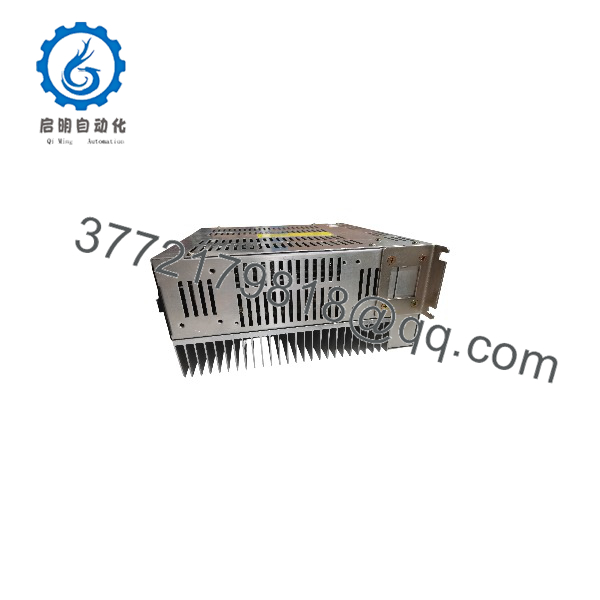
UD1B-060N-1KC
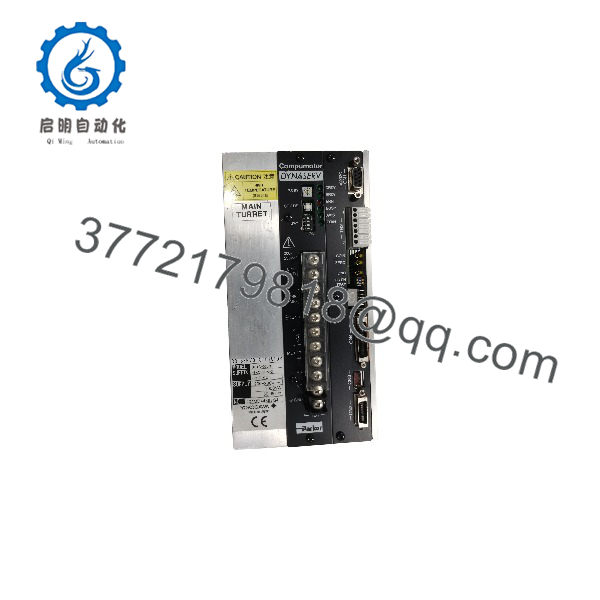
UD1B-060N-1KC
Detailed Product Overview
The UD1B-060N-1KC belongs to the DrvMII driver generation of Yokogawa’s DYNASERV direct drive servo system, documented in the Yokogawa technical manual that covers the DM/DR series motors together with the UD/UR series drivers. The system pairing is the essential concept: every DYNASERV axis consists of a direct drive motor and its dedicated driver, and Yokogawa’s instructions are explicit that the two parts must be of the same model designation — the UD1B family drives the DM1B motor series, and the 060 capacity code ties the driver to its matched motor size within that series.
What makes direct drive systems different from conventional servo installations is the absence of a transmission. The DYNASERV motor is an outer-rotor actuator: the load mounts directly to the rotor, and the torque the motor produces is delivered to the load without gear reduction. The DM1B motor class offers output torques from 15 to 75 N·m in a 160 mm-diameter aluminum chassis with an integrated optical encoder. This architecture places significant demands on the driver. With the load inertia coupled directly to the rotor, torque ripple, tuning quality, and feedback resolution all translate immediately into motion quality — there is no gearbox to mask them. The DrvMII driver therefore works as a closed-loop current, velocity, and position controller whose tuning is performed through the PC utility, using its servo tuning and oscilloscope functions with the actual load attached.
Integration follows a defined pattern. The driver receives AC power and motor power cabling, connects to the motor’s encoder through its dedicated cable, exchanges commands and status with the host controller through contact I/O, and supports optional accessories — an operation display pendant for local monitoring and parameter changes, and the PC utility for full setup work including homing, index moves, table-reference operation, and jog. Parameter data is retained by a battery-backed memory with backup and restore functions, an important detail for legacy installations: parameters rescued from an old unit can be restored into a replacement, which shortens commissioning after a driver swap.
Two practical cautions come straight from the operating documentation. First, verification: before powering a motor-and-driver combination, the MODEL designations on both rating nameplates must be checked to confirm they form a valid pair. Second, environment: the motor is neither dust-, drip-, nor oil-proof, and the driver depends on its ventilation path — DYNASERV axes belong in clean, controlled cabinets, and installations involving frequent small-angle oscillation need the periodic run-in rotation the manual prescribes to preserve bearing lubrication.
As a spare part, the UD1B-060N-1KC is typically encountered with extended option suffixes — a common full designation is UD1B-060N-1KC-2SA-2/PHC/CE. Because option suffixes encode interface and equipment-set variations, buyers should order against the complete nameplate designation, verify the motor pairing, and plan for parameter restoration rather than expecting a new driver to match a previously tuned axis out of the box.
Applications & System Role
In the machine architecture, the UD1B-060N-1KC is the power and control stage of a direct drive axis: it converts the host controller’s motion commands into precisely regulated motor current for the DYNASERV DM1B outer-rotor motor, closing the position loop through the motor’s optical encoder. Because DYNASERV motors deliver high torque directly at the rotor — with no gearbox, belt, or ball screw between motor and load — the driver effectively defines the accuracy of the entire rotary axis. Yokogawa’s documentation positions DYNASERV for FA device applications, naming industrial robotics and indexing as the characteristic uses: rotary tables, indexing stations, and joint-type mechanisms where the DD motor’s stiffness and positioning precision can be used without a mechanical transmission. For maintenance teams, the driver is the serviceable electronic half of the axis pair — when a DYNASERV axis faults, the driver is the component that can be replaced, retuned, and restored while the motor remains mounted in the machine.
FAQ
What is the Yokogawa UD1B-060N-1KC?
It is a DYNASERV DrvMII servo driver — the drive electronics unit that powers and controls a Yokogawa DM1B-series DYNASERV direct drive servo actuator.
Which motor does the UD1B-060N-1KC drive?
It belongs to the UD1B driver family matched to the DM1B motor series, with the 060 capacity code identifying the matched motor size; motor and driver must carry the same model designation as a valid pair.
What is a DYNASERV direct drive actuator?
An outer-rotor servo motor that delivers its torque directly to the load without gear reduction, with a built-in optical encoder for position feedback; the DM1B class covers torques of 15 to 75 N·m.
What software is needed to set up the driver?
Yokogawa’s PC utility, which runs on a Windows PC and handles servo tuning, parameter management, homing, index moves, table-reference operation, and jog operation.
How are parameters preserved when replacing the driver?
Driver parameters are held in battery-backed memory, and the documentation provides backup and restore procedures for moving memory contents between units.
What installation conditions apply?
The driver needs its specified orientation, unobstructed ventilation with the stated clearances, and protective earth grounding; the motor side requires load clearance, thread-depth limits, centerline alignment within 10 µm, and a minimum 50 mm cable bending radius.
What does a complete unit designation look like?
In service the driver usually carries option suffixes beyond the base code — for example UD1B-060N-1KC-2SA-2/PHC/CE — and replacements should be matched against the full nameplate designation.
Which applications is the DYNASERV system built for?
Yokogawa documents DYNASERV for FA device applications, naming industrial robotics and indexing as typical uses where high torque and high precision rotary motion are needed.