WhatsApp: +86 16626708626
 Email:
  Phone: +86 16626708626
Description
Key Technical Specifications
| Parameter | ZYGO 4104C |
|---|---|
| Manufacturer | ZYGO Corporation |
| Model | 4104C / 4104(C) |
| Product Family | ZMI™ |
| Product Type | Displacement measurement electronics |
| Measurement Principle | Laser displacement interferometry |
| Measurement Axes | 4 |
| Board Type | 6U VME64x |
| Position Resolution | 0.15 nm |
| Minimum Optical Power | 0.07 µW |
| Maximum Velocity | ±2.55 m/s |
| Accuracy at Maximum Velocity (σ) | 0.2 nm |
| Cyclic Error Compensation | Yes |
| Compatible Lasers | 7702, 7714, 7724 |
| Measurement System | ZMI displacement measuring interferometer |
| Typical Application | Nanopositioning and precision motion metrology |
These values are from ZYGO’s current measurement-electronics specifications. ZYGO notes that the listed specifications are for double-pass interferometers.
Measurement Architecture
The 4104C is not a conventional analog input, PLC, or DCS measurement module. It is the measurement electronics portion of a laser displacement interferometer system.
The optical measurement chain generally consists of:
ZMI Laser → Interferometer → Optical Signal → 4104C Measurement Board → Position Measurement / Motion-Control System
ZYGO states that the 2400, 4000, and 4100-series boards provide sub-nanometer resolution and can be installed modularly in VME chassis systems, with system-level scalability up to 64 measurement axes.
4104C in an Actual ZYGO Application
ZYGO documented a nanopositioning application using a 7702 laser head, differential interferometer (DPMI), and 4104C measurement board. In that configuration, the measurement system was used for closed-loop characterization of a PI N-331 nanopositioner, with motion controlled and measured in 0.5 nm increments.
ZYGO also specifically states that the 4104C used in this application could reduce nonlinear cyclic errors into the measurement noise floor.
Product Introduction
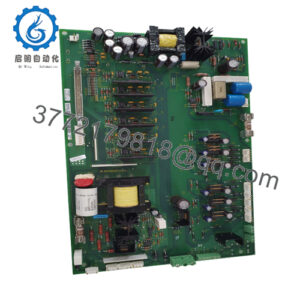
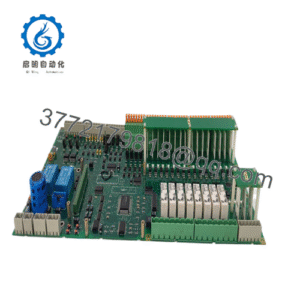
The ZYGO 4104C is a four-axis measurement electronics board for ZYGO ZMI displacement-measuring interferometer systems. Installed in a 6U VME64x environment, it processes optical interferometer signals to provide high-resolution displacement measurements for precision motion and position metrology. Its specified position resolution is 0.15 nm, with a maximum velocity of ±2.55 m/s.
The board is particularly relevant where conventional encoders do not provide sufficient measurement resolution. Typical applications include nanopositioning stages, semiconductor manufacturing equipment, precision machine tools, optical metrology, and research instrumentation.
The cyclic-error compensation capability is an important feature for interferometric measurement. ZYGO identifies cyclic-error correction as a method for reducing nonlinear errors inherent in displacement-measuring interferometer systems.
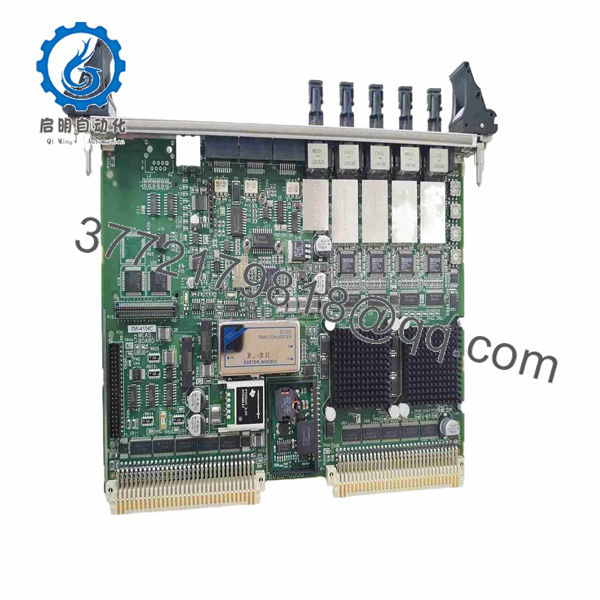
4104C
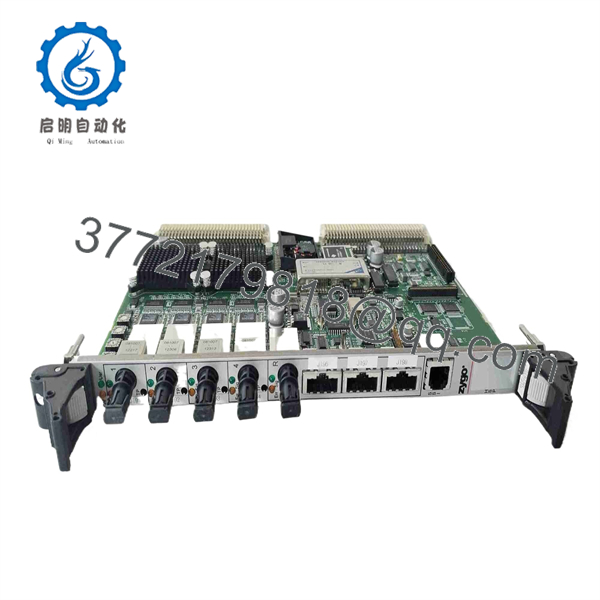
4104C
Installation & Configuration Guide
Stage 1 — Verify the Board
Estimated time: 10–20 minutes
- Confirm the board marking indicates 4104C or 4104(C).
- Record the complete serial number.
- Photograph the identification label before installation.
- Record the hardware revision and any additional ZYGO part number.
- Verify that the host system uses a compatible 6U VME64x chassis.
- Confirm the required number of measurement axes.
- Identify the installed ZMI laser.
Warning: Do not treat every ZMI 4100-series board as an interchangeable replacement. Verify the exact hardware revision and system configuration.
Stage 2 — Verify the Optical Measurement Chain
Estimated time: 20–30 minutes
- Identify the ZMI laser head or laser module.
- Verify compatibility with the 4104C.
- Identify the interferometer type.
- Confirm the optical path.
- Inspect optical connectors and fibers.
- Verify the expected number of measurement axes.
- Confirm the existing system configuration before removing the original board.
- Back up applicable configuration data.
ZYGO lists the 7702, 7714, and 7724 as compatible laser sources for the 4104(C) configuration.
Stage 3 — Install the VME Board
Estimated time: 15–30 minutes
- Shut down the measurement system.
- Disconnect the VME chassis from its power source.
- Apply appropriate ESD protection.
- Remove the existing measurement board.
- Inspect the VME backplane connector.
- Check the replacement board for bent pins, contamination, or mechanical damage.
- Insert the 4104C into the designated VME slot.
- Secure the board.
- Reconnect required system interfaces.
- Verify that no optical or electrical cables have been incorrectly routed.
Warning: Precision interferometer electronics should be handled using appropriate ESD controls. Avoid unnecessary handling of optical connectors and reference components.
Stage 4 — Commission and Validate
Estimated time: 30–90 minutes
- Restore system power.
- Confirm successful board initialization.
- Verify communication with the host measurement system.
- Confirm all four required measurement axes.
- Verify optical signal acquisition.
- Check the minimum usable optical signal level.
- Establish the measurement reference.
- Verify displacement direction.
- Verify velocity output where applicable.
- Confirm cyclic-error compensation configuration.
- Measure a known reference or calibrated motion stage.
- Record the resulting measurement data.
For production metrology, successful power-up is not sufficient acceptance criteria. The board should be evaluated using a known reference and the application’s required measurement uncertainty.
Frequently Asked Questions
What is the ZYGO 4104C?
The ZYGO 4104C is a four-axis ZMI displacement-measurement electronics board used with ZYGO laser interferometer systems. ZYGO’s current documentation identifies the 4104(C) as a 6U VME64x board.
How many measurement axes does the 4104C support?
The 4104(C) supports 4 measurement axes per board.
What is the resolution of the 4104C?
ZYGO specifies 0.15 nm position resolution for the 4104(C).
Actual system performance depends on the complete interferometer configuration, optical signal quality, environmental conditions, laser source, interferometer geometry, and calibration.
What is the maximum velocity?
ZYGO specifies a maximum velocity of ±2.55 m/s for the 4104(C) configuration. The published accuracy at maximum velocity is 0.2 nm σ.
What laser sources are compatible?
ZYGO lists 7702, 7714, and 7724 as compatible laser sources for the 4104(C).
The exact laser/interferometer combination should still be checked against the system’s configuration.
What is the minimum optical power?
ZYGO specifies a minimum optical power of 0.07 µW for the 4104(C) configuration. The published table notes that the specifications apply to double-pass interferometers.
Does the 4104C support cyclic-error compensation?
Yes. ZYGO lists cyclic error compensation for the 4104(C), and its technical material describes the ability to reduce nonlinear cyclic errors in DMI measurements.
What chassis does the 4104C use?
ZYGO identifies the 4104(C) as a 6U VME64x measurement board.
This should be verified against the physical board and existing chassis before replacement because mechanical compatibility alone does not guarantee system compatibility.
Is 4104C the same as ZMI-4104C?
4104C is the model designation used by ZYGO for the 4100-series measurement board. Secondary-market listings may use the expression ZMI-4104C, but procurement should be based on the actual board marking, serial number, hardware revision, and ZYGO documentation rather than an aftermarket description.
What should I verify before purchasing a replacement 4104C?
For a precision-metrology spare, request and verify:
- Exact marking: 4104C / 4104(C)
- Complete serial number
- Hardware revision
- ZYGO part number, if present
- 6U VME64x compatibility
- Four-axis requirement
- Compatible ZMI laser
- Interferometer model and geometry
- Optical interfaces
- Cyclic-error compensation capability
- Functional test report
- Calibration status
- Measurement accuracy test results
- New original, surplus, refurbished, or used condition
For this type of equipment, “powers on and passes basic test” is not equivalent to calibrated metrology performance. A recent measurement report or calibration record is strongly preferable when the board is intended for a production measurement system.