 WhatsApp: +86 16626708626
 Email:
  Phone: +86 16626708626
Description
3. Key Technical Specifications
| Parameter | Value |
| Part Number | DS200TCDAH1B |
| Control System | Speedtronic Mark V (TMR or Simplex) |
| I/O Capacity | 80 Digital inputs / 24 Digital outputs (Standard configuration) |
| Processor Type | 16-bit high-speed microcontroller |
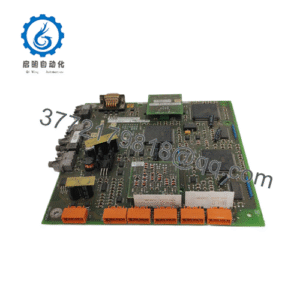
| Interfaces | 2-pin power, multiple ribbon headers (JQ, JR, JS), Fiber optic ports |
| Redundancy Support | Compatible with Triple Modular Redundant (TMR) architectures |
| Revision Level | H1B (Backward compatible with H1A) |
| Indicator Lights | On-board LEDs for Run, Status, and Fault conditions |
| Dimensions | 11.25 in x 8.50 in (Standard Mark V card size) |
4. Product Introduction & Supply Chain Strategy
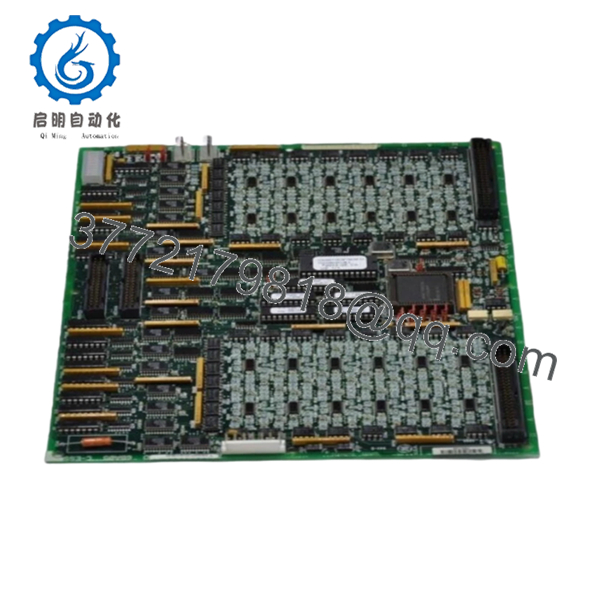
The DS200TCDAH1B is a pivotal Digital I/O Processor board within the GE Speedtronic Mark V control system. It acts as the primary intelligence layer for digital signal handling, converting raw field inputs into logic data that the controller uses to manage turbine sequences. Its critical role in the “voting” logic of TMR systems means that a failure on this board can degrade system redundancy, potentially leading to a “voting mismatch” and a subsequent turbine trip.
From a supply-chain standpoint, the DS200TCDAH1B is a high-value legacy asset. As GE has transitioned support toward newer platforms, finding unused “New Surplus” TCDA boards is increasingly difficult. Opting for New Surplus over refurbished units is a calculated risk-mitigation strategy; it eliminates the threat of dried-out electrolytic capacitors and logic drift that often plague used boards. Maintaining a 1-unit buffer stock on-site ensures you can recover from an I/O processor failure in minutes rather than waiting days for an emergency shipment.
5. Installation & Configuration Guide
- Stage 1: Pre-Installation (Prep & Safety): Perform a controlled shutdown of the turbine. Initiate Lock-out/Tag-out on the control cabinet power. Wear a grounded ESD wrist strap and ensure you have a backup of the current EEPROM settings or “I/O Config” files.
- Stage 2: Removal: Carefully label and disconnect all ribbon cables and fiber optic leads. Loosen the nylon standoffs or screws holding the board. Gently lift the DS200TCDAH1B from the rack, taking care not to scrape the backplane.
- Stage 3: Installation (Clone & Seat): If your original board contains socketed EEPROMs, you may need to transfer them to the new board to preserve site-specific logic. Ensure all DIP switches on the New Surplus H1B unit match the original card’s positions. Secure the board and reconnect all cables.
- Stage 4: Power-On & Testing: Re-energize the rack. Monitor the “Run” LED to ensure it transitions to a solid state. Use the Mark V processor or HMI to check for diagnostic alarms and verify that digital inputs (e.g., limit switches) are registering correctly in the logic.
6. Firmware/Software Versions & Upgrade Notes
- EEPROM Transfer: The TCDA board often requires the site-specific firmware chips (usually located in sockets U1 and U2) to be transferred from the old board.
- Compatibility: The H1B revision includes minor hardware refinements over the H1A but is functionally identical in most Mark V applications.
- Replacement Warning: Never swap the TCDA board while the control core is powered. Doing so can cause a “Communication Loss” error that may require a hard reset of the entire , , or core to clear.

- DS200TCDAH1B
7. Frequently Asked Questions (FAQ)
Does this board come with firmware pre-installed?
Standard New Surplus boards come with factory-default base logic. However, since Mark V systems are highly customized, you must typically move your existing “U” chips (EEPROMs) to the new board or download your specific configuration via the control software.
Why is “New Surplus” better than a refurbished DS200TCDAH1B?
Refurbished boards are often “repaired” only at the point of failure. New Surplus boards have zero operational hours on all components, including the high-speed logic gates and capacitors, providing the maximum possible Mean Time Between Failures (MTBF).
Is this board compatible with both TMR and Simplex Mark V systems?
Yes. The DS200TCDAH1B is designed to work in both redundant (TMR) and non-redundant (Simplex) configurations, though the cabling requirements will differ.
What should I do if the “Fault” LED is lit after installation?
This usually indicates a DIP switch mismatch or a failure to recognize the EEPROM chips. Verify that all jumpers and switches are mirrored from your original board and that the EEPROMs are seated in the correct orientation.
How long can I store this board as a spare?
In its original ESD packaging and a climate-controlled environment, this board has a shelf life of over 10 years. We recommend a visual inspection every few years to ensure no environmental degradation has occurred.