 WhatsApp: +86 16626708626
 Email:
  Phone: +86 16626708626
Description
3. Key Technical Specifications
- Bus Interface: VMEbus (ANSI/VITA compliant, 6U form factor)
- Memory Size: Up to 128 MB SDRAM reflective memory
- Network Type: Fiber-optic ring topology
- Data Transfer Rate: 2.12 Gbps
- Node Capacity: Up to 256 nodes per network
- Latency: Typically <5 µs node-to-node
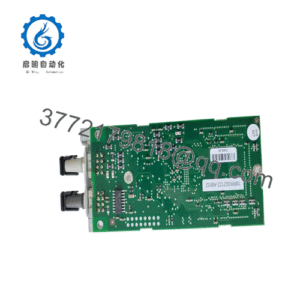
- Fiber Interface: Multimode fiber (SC connector)
- Error Checking: CRC with automatic retransmission
- Interrupt Capability: Programmable on memory update events
- Operating Temperature: 0 to 55 °C
- Power Consumption: Approx. 8–12 W
- Indicators: Front-panel LED status (RUN/ERR/ACTIVITY)
4. Product Introduction & Supply Chain Strategy
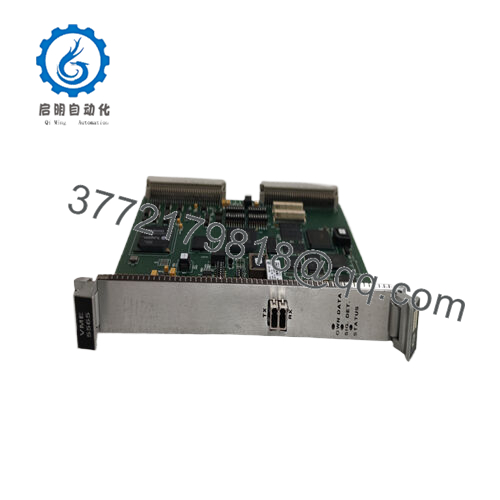
The GE VMIVME-5530S is a VMEbus reflective memory module designed for deterministic data exchange across distributed control nodes. It mirrors memory in real time over a fiber-optic ring, making it standard in power generation, simulation systems, and high-speed test environments where synchronization must remain within microseconds.
This product is a Brand New Surplus unit. It is not used, not pulled from a decommissioned plant, and not refurbished. For installed 5530 networks, securing New Surplus units reduces Total Cost of Ownership (TCO) by eliminating the failure uncertainty tied to aging optical and memory components. Given increasing lead time variability and declining OEM production, a defined buffer stock and last-time-buy strategy is essential to avoid system-wide downtime.

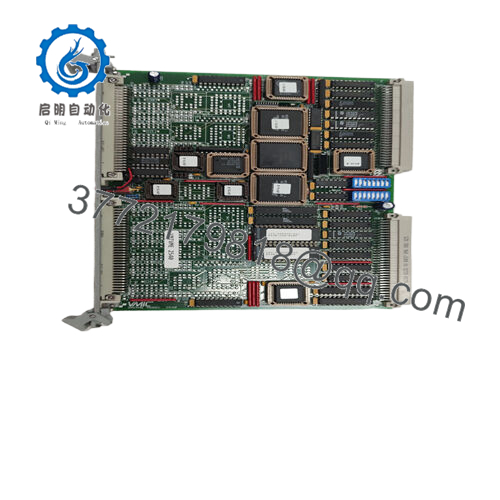
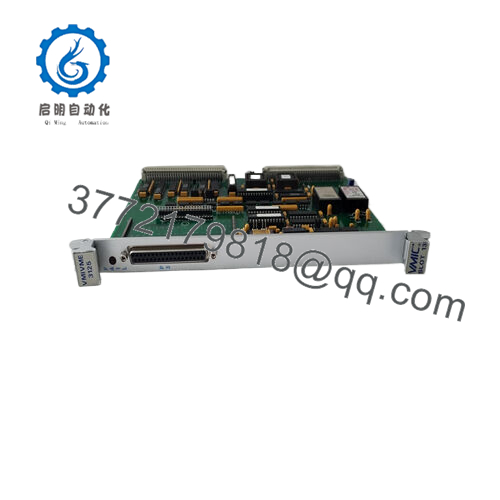
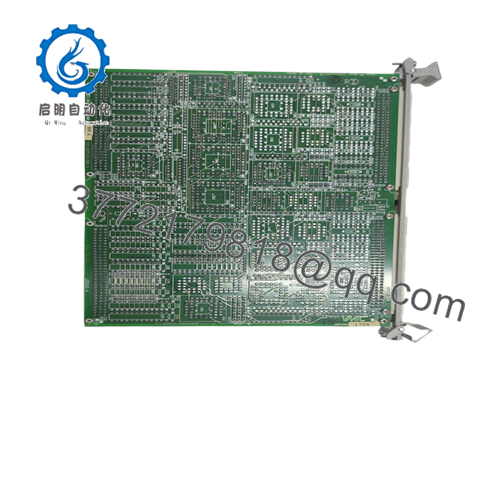
- VMIVME-5530S
5. Installation & Configuration Guide
Stage 1: Pre-Installation (Prep & Safety)
- Apply lock-out/tag-out to the VME rack.
- Wear a grounded ESD wrist strap.
- Document existing configuration: node ID settings, fiber routing (IN/OUT), and slot position.
Stage 2: Removal
- Power down the VME chassis completely.
- Disconnect fiber cables carefully; avoid bending or contamination.
- Release ejector handles and remove the module evenly to protect backplane connectors.
Stage 3: Installation (Clone & Seat)
- Replicate DIP switch or jumper settings exactly (node address, interrupts).
- Insert the VMIVME-5530S firmly into the correct VME slot.
- Reconnect fiber cables, ensuring proper ring continuity.
Stage 4: Power-On & Testing
- Restore power and verify stable system voltages.
- Check LED indicators: RUN (normal), ERR (fault condition).
- Validate memory synchronization across all nodes and confirm interrupt signaling.
6. Firmware/Software Versions & Upgrade Notes
- Recommended Firmware: Align with existing network (commonly V2.x or V3.x depending on system architecture).
- Compatibility Risk: Mixed firmware versions across reflective memory nodes can cause latency inconsistencies or data misalignment.
- Driver Dependency: Ensure the VME CPU and OS drivers support the 5530 series firmware revision.
- Upgrade Guidance: Avoid firmware upgrades during replacement unless required. Changes may require full network validation and timing re-certification.
7. Frequently Asked Questions (FAQ)
Q1: Are these VMIVME-5530S modules truly new?
Yes. These are New Surplus units with zero prior usage. Original OEM build, no rework, and no connector wear.
Q2: Why avoid refurbished reflective memory modules?
Reflective memory depends on consistent timing and optical signal integrity. Refurbished units often have degraded transceivers or memory, increasing the risk of network-wide faults. A single failure can stop the entire ring.
Q3: Is the VMIVME-5530S obsolete?
It is part of a legacy platform with limited ongoing production. A last-time-buy strategy and defined buffer stock are strongly recommended.
Q4: Can this module be hot-swapped?
No. Standard VME systems require full shutdown before inserting or removing modules.
Q5: What happens if node configuration is incorrect?
Incorrect node IDs or fiber routing will break communication across the ring. Always replicate settings exactly from the original module.
Q6: What stocking strategy is recommended?
Maintain 1–2 units per critical reflective memory network as buffer stock. For multi-site operations, apply cross-site sharing and vendor consolidation to reduce carrying cost while ensuring availability.
Q7: What warranty and QC process are included?
Each unit includes a 12month warranty, serial traceability, and full QC validation including communication testing, memory synchronization checks, and electrical verification.