WhatsApp: +86 16626708626
 Email:
 Phone: +86 16626708626
Description
Core Product Summary (Brand / Model / Key Attributes)
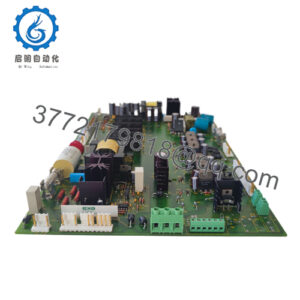
The National Instruments sbRIO-9607 is a high-performance embedded single-board controller designed for high-volume OEM applications requiring robust real-time processing, reconfigurable hardware flexibility, and extensive input/output capabilities. Powered by a 667 MHz dual-core ARM Cortex-A9 processor integrated within a Xilinx Zynq-7000 (XC7Z020) System-on-Chip (SoC), this controller pairs deterministic execution via NI Linux Real-Time with user-reconfigurable FPGA architecture.
The board features 512 MB of nonvolatile storage and 512 MB of DRAM memory. For connectivity and expansion, it incorporates 96 high-speed 3.3V digital I/O lines routed through a high-throughput RIO Mezzanine Card (RMC) connector, alongside integrated Gigabit Ethernet ports, serial ports (RS-232/RS-485), a CAN interface, and USB ports. Built for harsh industrial environments, it operates reliably across a wide temperature range from -40 °C to 85 °C.
Key Technical Specifications
| Technical Parameter | Verified Specification |
| Product Type / Function | Embedded Single-Board Controller (SBC) |
| Brand / Manufacturer | National Instruments (NI) |
| Processor Core | Xilinx Zynq-7000 SoC (667 MHz Dual-Core ARM Cortex-A9) |
| FPGA Architecture | Xilinx Zynq-7020 (85,000 Logic Cells, 53,200 LUTs) |
| System Memory (DRAM) | 512 MB |
| Nonvolatile Storage | 512 MB |
| Operating System | NI Linux Real-Time (32-bit) |
| Digital I/O Lines | 96 3.3V Bidirectional Digital I/O Channels (via RMC) |
| Communication Interfaces | 2x Gigabit Ethernet, CAN, RS-232, RS-485, USB 2.0 |
| Power Supply Voltage Range | 9 VDC to 30 VDC |
| Operating Temperature Range | -40 °C to 85 °C |
Detailed Product Overview
The National Instruments sbRIO-9607 serves as an integrated single-board computing platform that combines a real-time processor, an onboard FPGA, and custom I/O routing into a single printed circuit board. It provides engineers and OEM designers with a fully validated middleware and driver foundation, reducing development cycles for sophisticated automated test, monitoring, and industrial control systems.
The Zynq-7020 SoC architecture allows users to offload high-speed control loops, custom timing, and high-throughput signal processing directly onto the hardware fabric of the FPGA, freeing the dual-core ARM processor to manage supervisory tasks, network communications, and file logging via NI Linux Real-Time. The high-density RMC connector enables direct expansion options, supporting breakout modules or custom daughter cards tailored to specific application footprints.
Engineering Selection Highlights
- Dual-Core Processing & FPGA Integration: Combines a 667 MHz ARM Cortex-A9 processor with a Xilinx Zynq-7020 FPGA for deterministic control and real-time processing.
- High-Density Digital I/O: Provides 96 single-ended 3.3V digital lines mapped directly to the FPGA through the RMC interface for custom digital protocols and high-speed timing.
- Industrial Communication Suite: Equipped with dual Ethernet ports, onboard CAN, RS-232, RS-485 serial interfaces, and USB connectivity.
- Wide Thermal Operating Range: Engineered to withstand local ambient temperatures from -40 °C to 85 °C, making it ideal for rugged industrial deployment.
- Standardized Software Framework: Fully supported by LabVIEW and the NI CompactRIO device driver environment for streamlined code deployment.
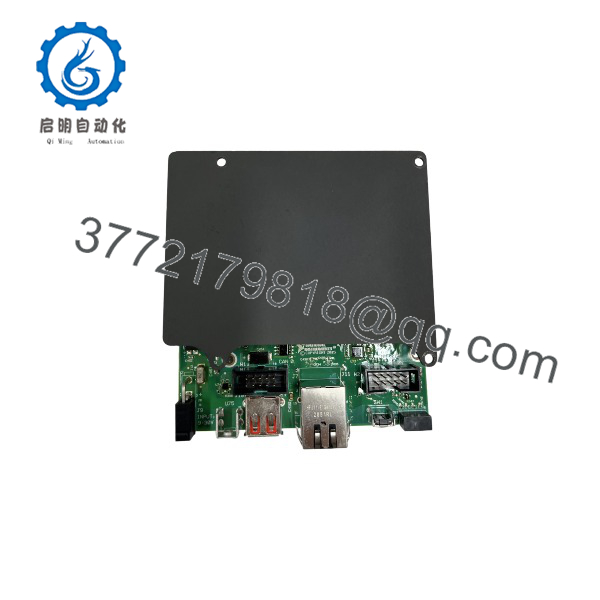
sbRIO-9607
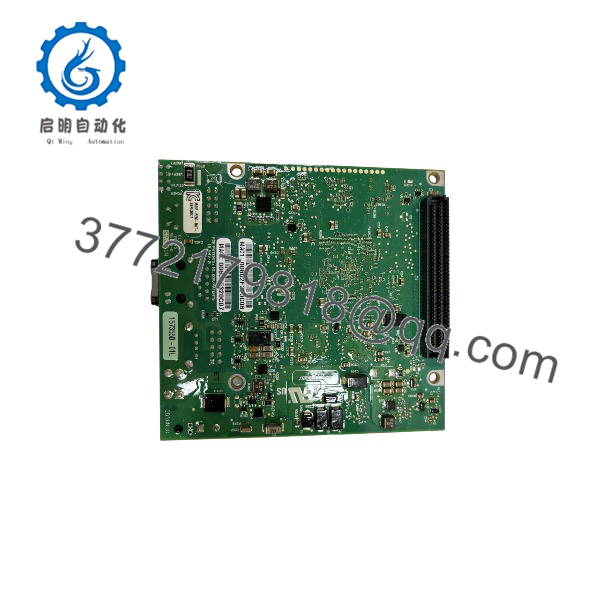
sbRIO-9607
Dimensions, Mounting & Connection Notes
- Form Factor: Single-board computer (SBC) layout intended for OEM embedding.
- Mounting Configuration: Secured via standoffs and mounting holes built into the PCB layout.
- Power Connection: Pluggable screw terminal or pigtail connection handling 9 VDC to 30 VDC input voltages.
- Signal Connections: Front-panel and RMC-based interfaces including standard RJ-45 Ethernet ports, D-SUB/IDC serial connections, and high-density RMC pins for digital lines.
System Compatibility & Integration Requirements
| Item / Dependency | Verified Compatibility or Requirement | Practical Note |
| Software Environment | NI LabVIEW and LabVIEW Real-Time / FPGA Modules | Requires compatible NI CompactRIO device drivers |
| Power Input Requirements | DC power supply (9 VDC to 30 VDC range) | Recommended supply capacity of 55 W (up to 28 W max consumption with RMC) |
| Expansion Interface | High-throughput RIO Mezzanine Card (RMC) connector | Used to interface with breakout boards or custom daughter cards |
| Network Infrastructure | 10/100/1000Base-T Ethernet | Supports standard RJ-45 cabling up to 100 meters per segment |
FAQ
What is the National Instruments sbRIO-9607?
It is a compact single-board controller that integrates a real-time processor, a reconfigurable Xilinx Zynq FPGA, and 96 digital I/O lines on a single board.
What processor and FPGA are built into this controller?
It features a 667 MHz dual-core ARM Cortex-A9 processor and a Xilinx Zynq-7020 (XC7Z020) FPGA.
How many digital I/O channels does the sbRIO-9607 provide?
It provides 96 bidirectional 3.3V digital I/O channels accessible through the RMC connector.
What power supply voltage does the board require?
It accepts an external DC power supply ranging from 9 VDC to 30 VDC.
What operating system does the controller run?
It runs NI Linux Real-Time, providing a deterministic execution environment backed by standard driver support.
Verification & Troubleshooting Notes
- Power Supply Stability: Ensure the incoming DC power source maintains voltage strictly within the 9 VDC to 30 VDC boundary to prevent unexpected reboots or brownout faults.
- Network Link Verification: Check physical link status LEDs on the Gigabit Ethernet ports when troubleshooting connectivity or deployment timeouts with host configuration software.
- RMC Connection Seating: Verify that daughter cards or breakout modules connected to the RMC header are securely fastened and properly aligned to prevent intermittent digital I/O signal errors.