 WhatsApp: +86 16626708626
 Email:
  Phone: +86 16626708626
Description
3. Key Technical Specifications
| Parameter | Value |
|---|---|
| Function Type | Servo drive amplifier module |
| Application | Motion control / motor drive systems |
| Input Voltage | Typically 24 V DC control supply |
| Power Stage | Integrated amplifier for motor control |
| Communication | Industrial fieldbus (CANopen / Modbus typical) |
| Cooling Method | Passive or forced air (panel dependent) |
| Mounting | Panel / rack-mounted |
| Operating Temperature | 0 to +50°C |
| Protection Class | IP20 |
| Control Capability | Speed / torque regulation |
| Compliance | CE, IEC industrial standards |
4. Product Introduction & Supply Chain Strategy
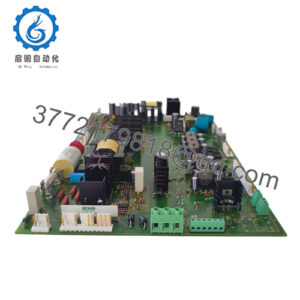
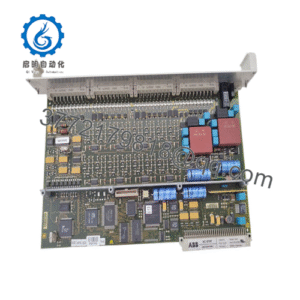
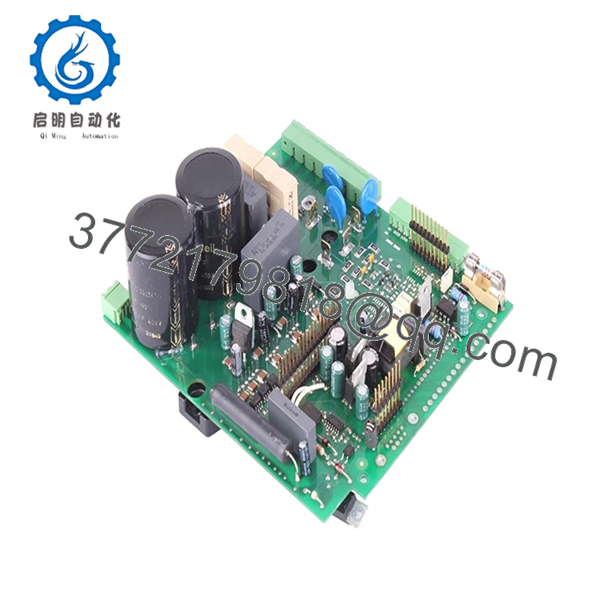
The Selema PWEC0-CS1 is a servo drive amplifier module used in motion control systems to regulate motor speed and torque in automated production lines. It interfaces with PLC/DCS controllers and executes precise drive commands for synchronized machine operations.
This product is a Brand New Surplus unit. It is not used, not pulled from a decommissioned plant, and not refurbished. Given its lifecycle maturity and limited global availability, a proactive last-time-buy strategy is essential. Securing stock now reduces exposure to lead time variability and eliminates the hidden failure risks associated with refurbished drive electronics, protecting overall TCO.

- PWEC0-CS1
5. Installation & Configuration Guide
Stage 1: Pre-Installation (Prep & Safety)
- Perform lock-out/tag-out (LOTO) on the drive cabinet.
- Verify DC bus and control power are fully discharged.
- Wear an ESD wrist strap; drives are sensitive to static.
- Document all wiring connections and encoder interfaces.
- Record parameter settings from the existing drive.
Stage 2: Removal
- Disconnect motor, encoder, and control connectors carefully.
- Release mounting screws or rail locks.
- Extract the module straight out to avoid connector damage.
- Inspect terminals for overheating or oxidation.
Stage 3: Installation (Clone & Seat)
- Match parameter settings and DIP switches exactly.
- Install the module firmly into the mounting position.
- Reconnect all cables—verify correct phase and polarity.
- Ensure grounding is secure to prevent noise issues.
Stage 4: Power-On & Testing
- Apply control power first, then main power.
- Check status LEDs (READY vs FAULT).
- Verify communication with PLC/drive controller.
- Run a low-speed motor test before full-load operation.
6. Firmware/Software Versions & Upgrade Notes
- Always match firmware revision with the existing drive network.
- Firmware mismatches can cause communication loss or unstable motion control.
- Newer firmware may not support legacy PLC drivers or parameter structures.
- Avoid firmware upgrades during emergency replacement—validate offline first.
- Backup all drive parameters before removal to ensure fast recovery
7. Frequently Asked Questions (FAQ)
Q1: Are these drives genuinely new or previously deployed?
These are New Surplus units sourced from OEM channels. No field usage, no repairs, and no component degradation.
Q2: Why not choose a refurbished drive at a lower price?
Drive electronics degrade internally—capacitors and power stages age even if visually clean. A failure can halt production instantly. New Surplus eliminates that operational risk.
Q3: Is PWEC0-CS1 still in production?
Market data indicates limited availability and lifecycle maturity. Treat it as an EOL-risk component and secure buffer stock accordingly.
Q4: What stocking strategy do you recommend?
For critical motion systems, maintain 1–2 units per line as buffer stock. For multi-line plants, consider cross-site sharing to reduce capital lockup.
Q5: Can I hot-swap this module?
No. Servo drives must be replaced with power fully isolated to prevent damage to both the drive and connected motor.
Q6: Does the module retain motor tuning parameters?
Parameters are typically stored in the drive. Always back up before replacement and reload after installation.
Q7: What warranty and lifecycle advantage do I get?
New Surplus units typically include a 12month warranty and offer a 10–15 year expected service life—significantly better than short-term refurbished alternatives.